India and the United Kingdom are set to usher in a new chapter in their economic relationship as the long-awaited Free Trade Agreement (FTA) between the two countries comes into force on July 15, 2026. The announcement was made jointly by both governments, marking a major milestone in bilateral trade and economic cooperation.
The agreement, officially known as the Comprehensive Economic and Trade Agreement (CETA), will become India's first bilateral trade deal with a major Western nation. It follows years of negotiations and is expected to significantly boost trade, investment, and business opportunities between the two economies.
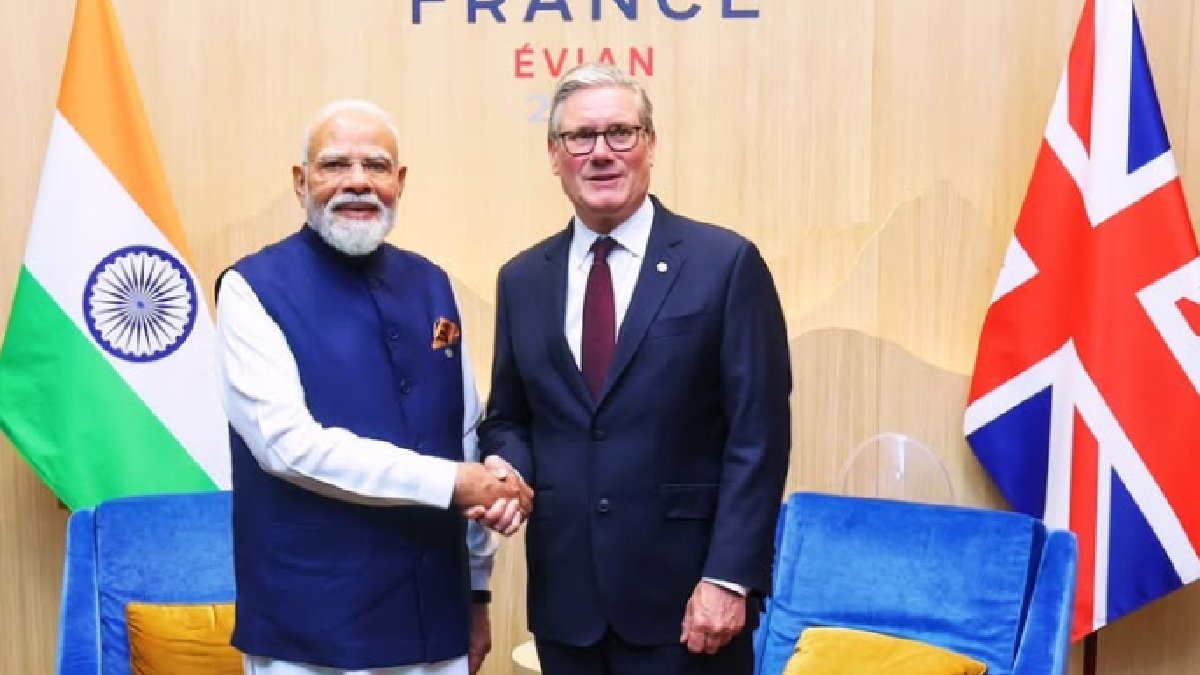
The operationalisation date was finalized after discussions between Prime Minister Narendra Modi and British Prime Minister Keir Starmer on the sidelines of the recent G7 Summit. The deal was originally signed in London on July 25, 2025, after 14 rounds of negotiations that concluded successfully in May 2025.
Major Boost for Indian Exporters
One of the biggest benefits of the agreement will be the removal of tariffs on a wide range of Indian exports entering the UK market. Under the deal, nearly 99 percent of tariff lines covering almost the entire value of India's exports to Britain will receive immediate duty-free access.
Several key sectors are expected to benefit substantially. Tariffs of up to 70 percent on processed food products, 21.5 percent on marine products, 18 percent on engineering goods and auto components, 16 percent on leather and footwear, and 12 percent on textiles and garments will be reduced to zero.

The chemical and pharmaceutical sectors will also gain from the elimination of tariffs of up to 8 percent, improving the competitiveness of Indian products in the British market.
Union Commerce and Industry Minister Piyush Goyal described the agreement as a transformational opportunity for Indian exporters. He said the deal removes long-standing trade barriers and creates a level playing field for Indian businesses while protecting sensitive domestic sectors from import volatility.
Benefits for Professionals and Businesses
Another important feature of the agreement is the Double Contribution Convention, which will come into effect on the same day. The arrangement exempts Indian professionals temporarily working in the UK and their employers from making social security contributions for up to three years.
According to government estimates, this provision could save Indian companies nearly ₹4,000 crore while improving the financial prospects of thousands of Indian professionals working abroad.
The agreement also creates a regulatory framework to facilitate the movement of business visitors, professionals, contractors, and intra-company transferees, making it easier for Indian talent to access opportunities in the UK.
Concessions and Long-Term Impact
As part of the deal, India will gradually reduce tariffs on around 90 percent of its tariff lines. Duties on approximately 85 percent of goods will be eliminated over the next decade, with full implementation extending to 2036.
British exports will also benefit. Tariffs on British whisky will be reduced from around 150 percent to 40 percent, while a new quota system will allow British automobiles to enter India at significantly lower tariff rates.
Economic estimates suggest the agreement could increase annual bilateral trade by more than £25 billion over time. The UK government expects the deal to add approximately £4.8 billion to Britain's economy each year, while India's economy could gain around £5.1 billion annually.
Strategic Significance
Beyond trade, the India-UK FTA represents a broader strategic partnership between two major economies. It includes 30 chapters covering areas such as goods, services, investment, government procurement, mobility, and regulatory cooperation.
The agreement also offers safeguards for Indian steel exports against new British trade measures and provides greater certainty for exporters navigating changing global trade conditions.
With the July 15 implementation date approaching, businesses on both sides are preparing to take advantage of what is being described as one of the most significant trade agreements signed by India in recent years. For exporters, manufacturers, professionals, and investors, the deal could unlock substantial opportunities and deepen economic ties between New Delhi and London for decades to come.