The dispute between India and Pakistan over the Indus Waters Treaty has intensified in recent weeks after Pakistan Prime Minister Shehbaz Sharif threatened that Islamabad would respond to India if it continued to violate the Indus Water Treaty in what Pakistan feels is the wrong way.
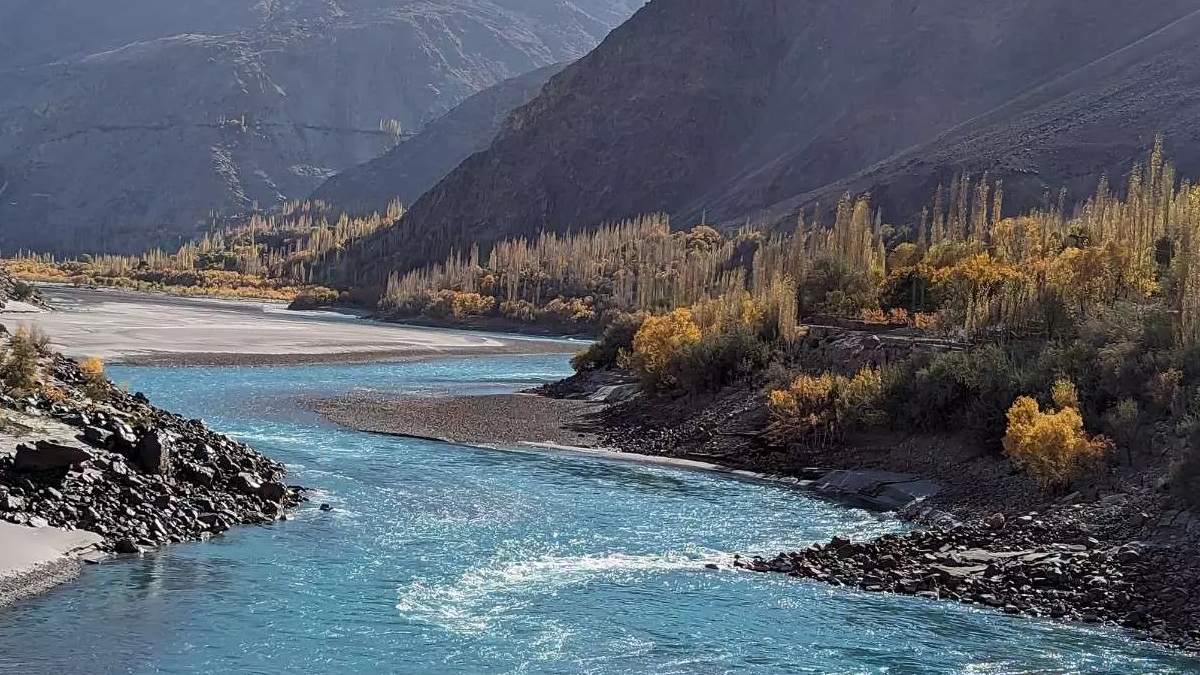
Sharif said every drop of water is an ‘indus water’ and that Pakistan wants peace but should not be seen as weak.
The comments come as India continues to argue about the Indus Waters Treaty (IWT) in the wake of the Pahalgam terror attack and Pakistan's actions. In April 2025, Delhi announced that in view of security reasons and Pakistan's alleged support in cross border terrorism the treaty would be held up.
Pakistan has rejected India’s position and repeatedly argued that the 1960 treaty cannot be unilaterally suspended.
Pakistan has also raised complaints over changes in river flows and the proposed hydropower projects on rivers given to Pakistan under the agreement. Pakistan’s Indus Waters Commissioner said he had written to his Indian counterpart several times about the flux in Chenab River flows but had not received any response.
The Indus Waters Treaty, which was signed by the World Bank in 1960, divides the waters of six rivers between the two countries.
Pakistan’s PM Shehbaz Sharif on India:
— Clash Report (@clashreport) August 13, 2026
After the defeat in the war last year, India proved itself an enemy of peace by unilaterally and illegally suspending the Indus Waters Treaty.
I declare in clear terms that every single drop of Pakistan's water is our red line.
If India… pic.twitter.com/ZvBLJDkr3s
India secured rights over the eastern rivers Ravi, Beas and Sutlej and Pakistan the western ones Indus, Jhelum and Chenab. The agreement has survived decades of wars between the neighbours and the current dispute has brought it under unprecedented political pressure.
Sharif’s latest warning also has a broader political message. Speaking on Pakistan’s Independence Day, he linked the water dispute to national sovereignty and defence saying Pakistan would respond strongly to threats.
His comments come more than a year after the military conflict between India and Pakistan in May 2025, and add further pressure to an already tense relationship.
For India, the ongoing standoff over the treaty has been looked at from the perspective of national security and diplomatic pressure.
New Delhi has said that repeated security challenges and a lack of bilateral engagement forced it to put the treaty on hold. Indian officials have said that the position will not change until Pakistan addresses the issue of cross-border terrorism.
The exchange shows how water has become a very important strategic issue between the two nuclear-armed neighbours.
Pakistan is dependent on the Indus river system for food security and water supply and India wants to be more flexible in managing water resources and hydropower projects.
Even with neither side showing signs of backing down, the Indus Waters dispute is likely to remain a major diplomatic flashpoint.
Pakistan’s latest warning might mean that the Indus Waters issue will remain one of the most immediate diplomatic flashpoints, and India’s continued stance indicates that it is unlikely to change its position not only because of diplomatic pressure but because it is so much more about the pressure from both sides.