Iran’s Islamic Revolutionary Guard Corps (IRGC) claimed it had launched a ballistic missile attack on a US Marine base in Jordan in retaliation for recent American strikes against Iran. The IRGC also claimed the attack has resulted in the deaths of a “large number” of US forces, but the casualty claim has not been independently verified and has been disputed by U.S. officials.
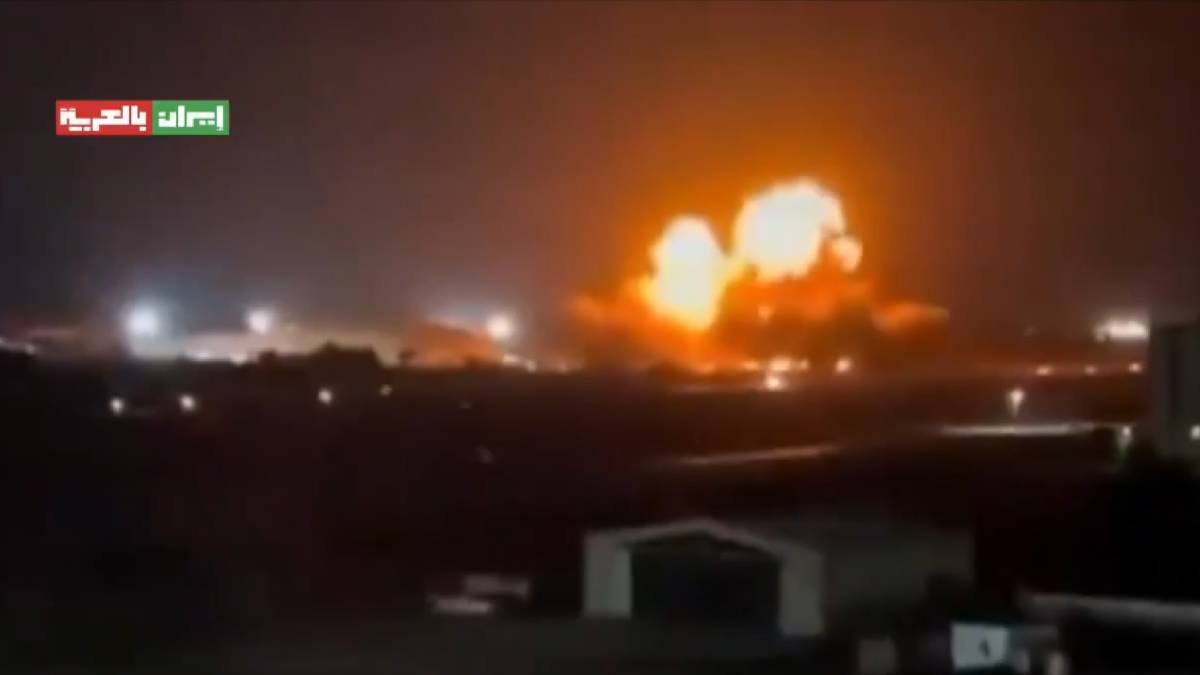
According to Iranian claims, the target was Camp Titin, a US Marine facility located in Jordan near the Gulf of Aqaba. The IRGC said its aerospace forces carried out the heavy ballistic missile attack as part of a wider retaliatory operation against US military assets in the region.
The claim comes at a time of increasing tension between Iran and the United States. U.S. forces recently conducted strikes on Iranian military targets, including IRGC facilities. The Iranian government soon threatened missile and drone strikes against American military bases in Jordan, Bahrain, and Iraq.
Jordanian authorities confirmed that Iranian ballistic missiles entered the country’s airspace. Air-defence systems detected and intercepted 13 missiles, the Jordanian army said. Ten were successfully intercepted, and three landed in remote areas away from populated centres. There were no casualties or deaths due to the missile attack, Jordan said.
BREAKING: Iran's IRGC claims it struck a US base in Jordan with ballistic missiles, killing "a large number of US forces." pic.twitter.com/nhws3bF8J5
— Megh Updates 🚨™ (@MeghUpdates) September 2, 2026
The Jordanian military has advised residents not to approach missile debris or unverified objects and not to spread unverified information, the statement said.
The United States has also denied Iran’s claim that many American personnel were killed. US officials said no US personnel had been injured in Jordan following the Iranian attack, Reuters reported. But the conflicting accounts mean the extent of damage to the US facility and any possible military casualties remain unclear.
The attack is a big escalation because Jordan hosts US military personnel and has become an important location in the wider regional conflict. Iran’s decision to target US-linked facilities in Jordan shows how quickly the conflict can extend beyond Iranian and American territory.
The recent exchange also comes at a time when tension over the Strait of Hormuz is rising. The strategically important waterway is one of the most important routes for global energy shipments, and continued military confrontation in the region has already resulted in higher oil prices and growing fears of disruption of international energy supply.
The situation is fluid, with Iran threatening further retaliation and the U.S. threatening more strikes against Iranian military bases. As the battlefield situation remains highly fluid and combatants are at a standoff, independent evidence of casualties and damage will be key.
The latest missile attack presents a new security threat for Jordan as it tries to secure its airspace and not get sucked further into the deepening US-Iran conflict. The interception of almost all the missiles proves the depth of the Jordanian and allied air defence systems to be used in the area but also highlights the growing threat for countries further from the conflict zone.
The alleged strike on Camp Titin and competing claims about casualties will further deepen Middle Eastern tensions. The military campaign is ongoing, the diplomatic efforts are under siege, and more Iranian retaliation and US military action are major concerns for the region.