The Middle East was on the brink of a new wave of tension Saturday when Bahrain accused Iran of sending multiple drones to Bahrain just hours after the United States launched overnight strikes on Iranian military targets. The tension is raising new fears that the delicate ceasefire between Washington and Tehran is at risk of unraveling in a region of the Gulf.
According to Bahrain's Foreign Ministry, some Iranian drones targeted the kingdom in a “flagrant violation” of the country’s sovereignty and an imminent threat to the safety of the kingdom’s citizens and residents. Bahrain provided no immediate damage or casualties but did not back down from the attack and pledged to uphold its national security.
The incident occurred in a time of rapidly rising tension between the United States and Iran. The U.S. military conducted strikes on Iranian missile and drone facilities and coastal radar facilities overnight. The strikes were in response to an earlier Iranian drone attack on a ship attempting to move across the strategically vital Strait of Hormuz.
Iran’s Islamic Revolutionary Guard Corps (IRGC) later confirmed that it had targeted several locations linked to what it called the “US terrorist army” in the region. But Iranian authorities did not specifically identify Bahrain among the targets.
The strategic significance of Bahrain makes the alleged drone attack especially significant. Bahrain hosts the US Navy’s Fifth Fleet and for decades has been Washington’s closest security partner in the region. It recently hosted U.S. Secretary of State Marco Rubio at a meeting of Gulf Cooperation Council (GCC) foreign ministers. Regional leaders called for a stop to Iranian attacks and stressed the need to keep the Strait of Hormuz open for global trade.
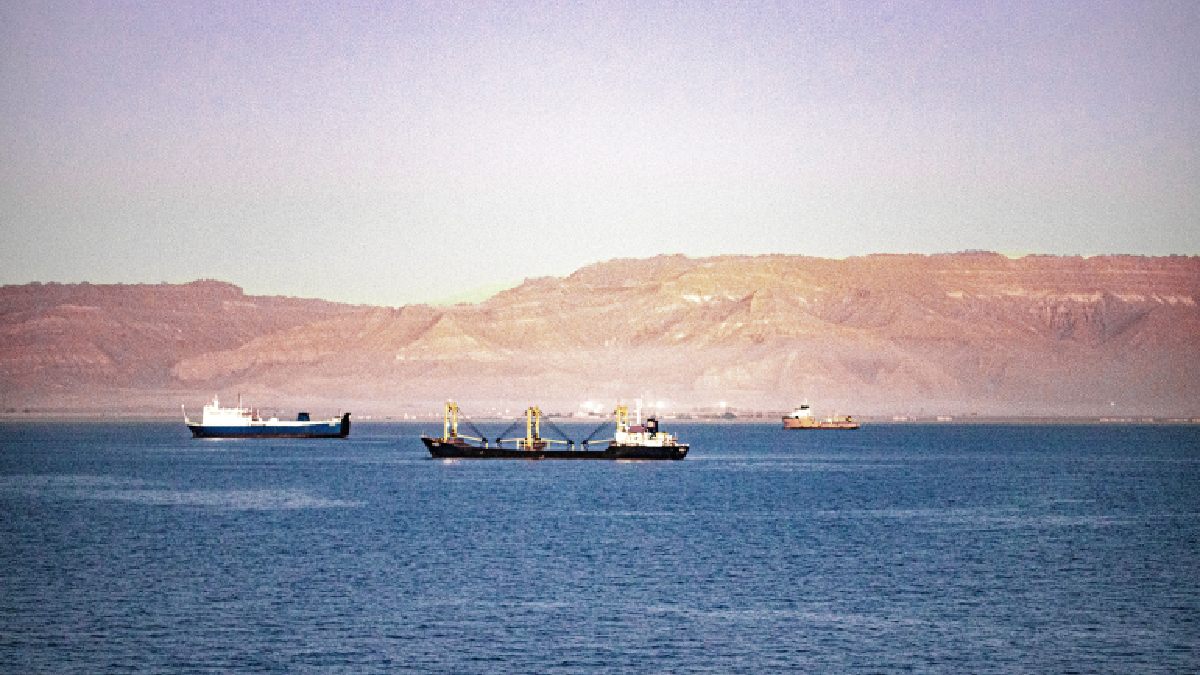
Also on Saturday, in addition to maritime security, another vessel also came under attack in the Strait of Hormuz. The incident underlined the growing danger facing one of the world's busiest shipping lanes through which nearly a fifth of oil supplies are shipped worldwide and also highlighted the challenges.
To tackle the security situation, a multinational maritime coalition of nations led by the US Navy announced plans to expand a shipping corridor near Oman to make it safer for vessels to move through and leave the Strait of Hormuz.
But Washington has also made clear it is willing to try diplomacy. The United States’ vice president JD Vance, who is involved in talks with Iran, made a call for Tehran to return to dialogue.
"Iran should pick up the phone if there are disagreements about the ceasefire agreement," Vance wrote on social media, showing that the United States still wants to preserve the fragile diplomatic process.
The recent escalation of military activity illustrates how rapidly tensions can escalate in the Gulf, and fears that more regional actors might be drawn into the conflict and make the region one of the world’s most strategic.