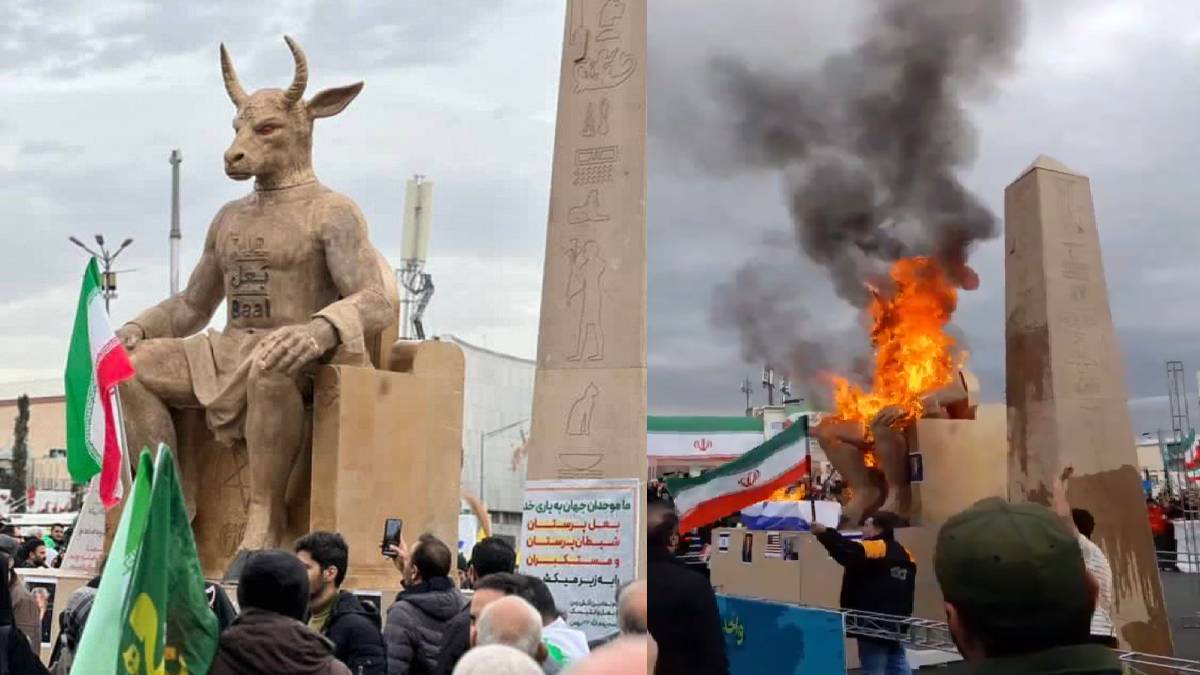
But in recent gatherings in Iran, demonstrators set ablaze an effigy whose name was “Baal.” In particular, the Star of David was inscribed on the figure, symbolizing satanic power itself. Crowds chanted “Death to Israel” as the effigy burned. It used ancient religious imagery, blended it with contemporary political anger for one powerful and controversial moment, and turned attention globally.
Who Was Baal?
Baal was an ancient Canaanite deity that was worshipped thousands of years ago in the Levant. Baal was linked, historically, to fertility, storms and power. But, in such later traditions as the biblical stories, Baal was taken to be a false god and a competitor to monotheistic worship. Baal soon became a kind of evil, and idolatry. At least in recent reports of Baal being associated with Satanism, elite corruption, sometimes child murder and child sacrifice. Some conspiracy theories link Baal to the likes of Jeffrey Epstein, using the name to signify concealed exploitation and subversion.
Iranian protesters burned an effigy labeled Baal, depicted with a Star of David and portrayed as a satanic figure, while chanting “Death to Israel.”
— Clash Report (@clashreport) February 11, 2026
Baal is an ancient Canaanite deity, often used in modern narratives as a symbol of Satanism, elite corruption, child sacrifice, or… pic.twitter.com/n5jqoWfc1C
The Protest Context
The burning of the Baal effigy in Iran was not only a matter of ancient religions. It was a political statement. Through their pairing of Baal with the Star of David, protesters had the act of associating Israel with corruption, evil, and satanic influence with the latter through Baal. The chants of “Death to Israel” articulated their intent: the effigy was meant to symbolize enmity toward Israel and its role in regional strife. This is part of a long history of political anger being expressed through religious or mythological imagery.
Symbolism and Impact
The choice of Baal as the effigy is important. It reveals how the ancient symbols we use today in modern contests are adapted and recast. For protesters, Baal was a false god, sure, but also a more general, ubiquitous image of corruption and oppression. By linking Baal to Israel they were sending the message that Israel is associated with such negative things. The use of fire, destruction and chanting added to the emotional charge that the demonstration felt, turning it from a mere theatrical exercise into something more meaningful and tangible. Images and pictures of the burning were shared through the Internet and some people talked about them.
In Iran, the burning of a Baal effigy reveals how ancient myths and sacred figures can be employed in contemporary political demonstrations. For some, it was a dramatic display of anger toward Israel. For others, it had stoked fears over religious symbols’ potential role in feeding hatred. However one interprets this, the event shows how history, religion and politics frequently blend into an intense and controversial intermingling.