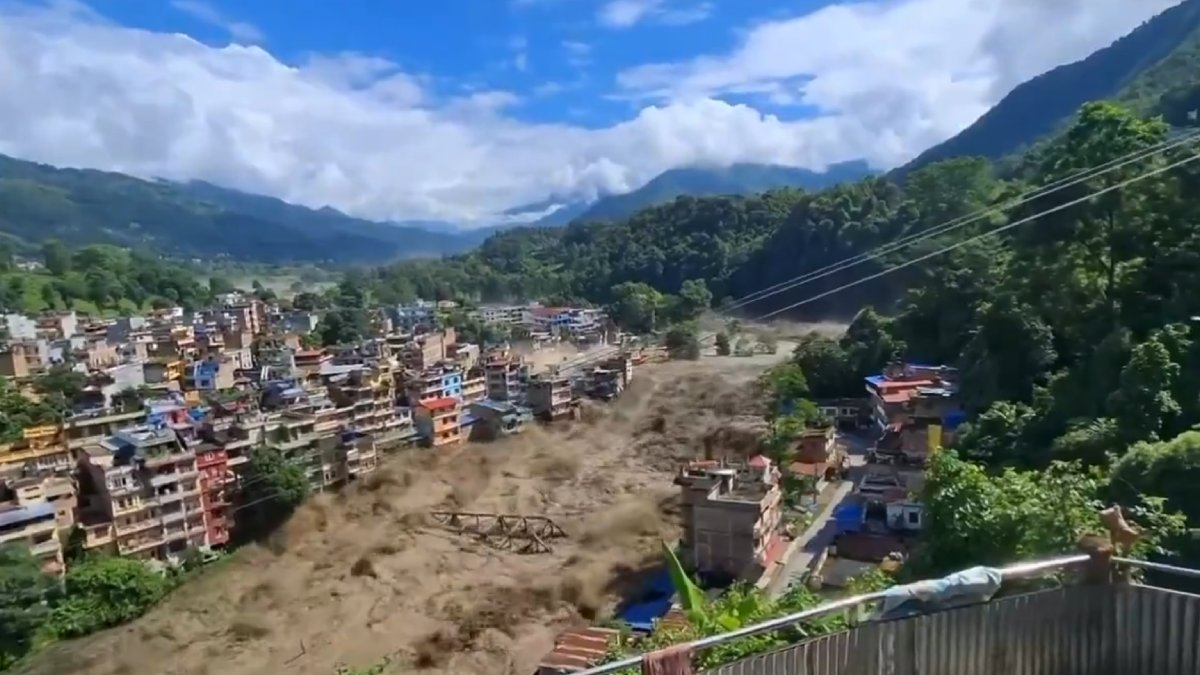
A huge flash flood has hit northern Nepal near the country’s border with Tibet, flooding villages and damaging roads, bridges and power infrastructure.
The flooding has so severely affected Syapru Besi and Timure in the mountainous Rasuwa district, local officials said. Local officials said casualties and property losses were expected to be high but a quick death toll was not available.
People living along the Bhote Koshi River have been advised by officials to move to safer and higher places as rescue teams are still working in the aftermath of the disaster.
Terrifying flood situation caught on camera in Rasuwa, Nepal pic.twitter.com/DTXFbudnDB
— Surajit (@surajit_ghosh2) August 26, 2026
Villages, Bridges and Infrastructure Swept Away
The scale of the destruction was evident when floodwater poured through settlements and infrastructure sites in the mountainous area.
Rasuwa district administrator Narendra Pariyar said authorities had received reports of villages and infrastructure project sites washed away. The government is still assessing the extent of the damage and could not immediately give figures for casualties or financial losses.
Nepal water resources ministry said several infrastructure facilities had been damaged including hydroelectric projects, roads and bridges.
The damage also has disrupted electricity supplies in the affected area.
The Bhote Koshi River originates in Tibet and passes through Nepal before entering the Trishuli River system. Since there are some communities and infrastructure projects close to the river, sudden flooding can cause widespread damage within a short period.
Images of the area and video images circulating online show powerful floodwater moving through the area, with roads and structures affected by the force of the water.
The situation remains dangerous because more flooding may affect people who have not yet moved to safer locations.
Rescue teams sent as Casualties Feared
Nepalese authorities are also in charge of rescue and relief in the affected areas.
The Prime Minister Balendra Shah, as well as the police and military personnel, were sent rescue and relief teams to help the affected people in the flood. Residents living in lower areas have also been told to move to safer places.
Officials say people living close to the Bhote Koshi River should now be kept on high alert and move to higher ground if necessary.
There were no casualties at that time, officials said. But the district administration said the destruction could cost heavy lives and properties.
The absence of an immediate figure of casualties indicates the difficulty of assessing damage in the mountainous region. Flooded roads and damaged bridges make it difficult for rescue teams to reach isolated communities.
The latest disaster has also brought back memories of a deadly flash flood that struck the same river last year.
That flood killed nine people and reported 24 others missing. It also destroyed a bridge between Nepal and China, blocking transportation and trade between the two countries for months. It was later linked to the sudden drainage of a glacial lake, authorities added.
The reason for the latest flooding is not yet known.
So authorities will have to determine whether the disaster was due to heavy rain, a glacial lake event, or another cause.
As far as we know, the priority is to save people and to get residents away from the danger of riverbanks and to assess the damage to critical infrastructure.
The destruction of roads and bridges could also make relief efforts more difficult and leave some communities temporarily cut off.
The effect of hydropower projects and electricity supply adds another challenge for residents and emergency teams working in the affected areas.
Northern Nepal’s mountainous terrain makes communities particularly vulnerable to sudden flooding because rivers can rise rapidly and floodwaters can carry large amounts of rocks, mud and debris.
The situation is still fluid, and authorities are still assessing the extent of the destruction.
When rescue teams reach more areas, officials will be able to provide clearer information on casualties, missing people and property damage.
Residents living along the Bhote Koshi River have been advised by authorities to be extremely cautious and to move away from low-lying areas.
Flash floods have already been catastrophic for villages and key infrastructure, and the next 48 hours will be crucial for rescue operations and to minimize the mortality rate.