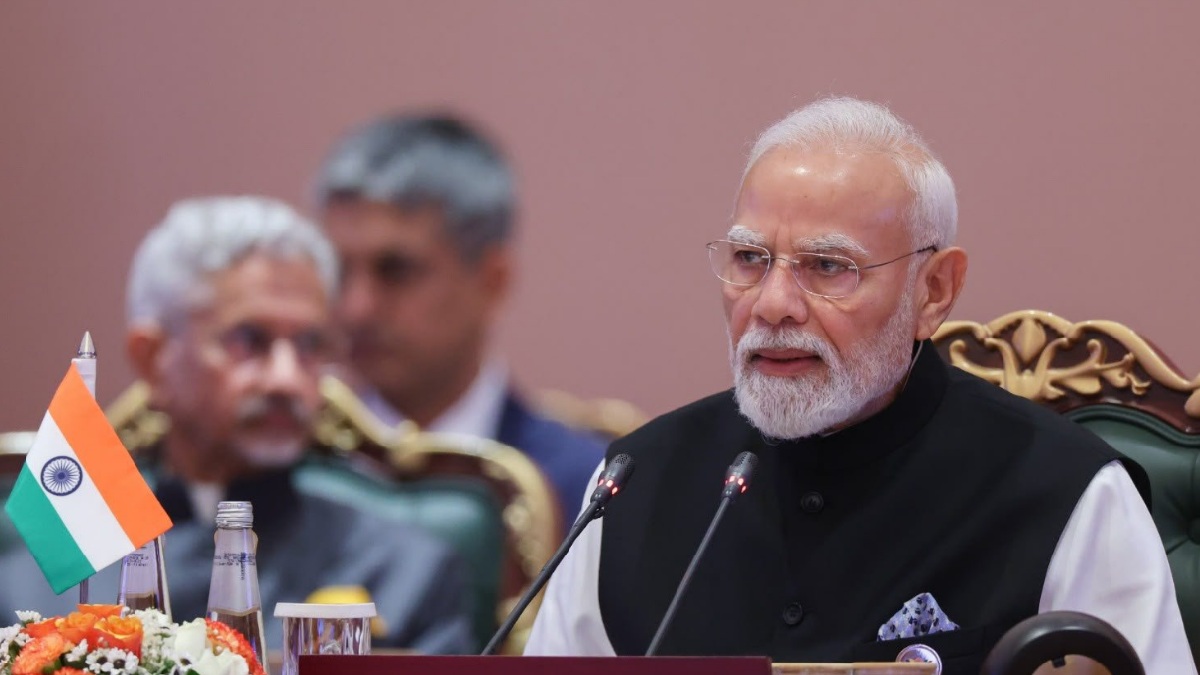
Nepal Prime Minister Balendra Shah has used his speech at the 81st UN General Assembly to warn of the mounting climate risks facing the mountains. To cite the devastating Bhotekoshi-Trishuli floods, Shah said that the disaster was a warning that was far beyond Nepal and called for countries to expand their partnerships with each other in the face of climate-driven catastrophes.

Shah, speaking at an address to world leaders in New York, said the recent floods had brought such a big mess to earth that at least 1,400 confirmed deaths and more than 6,000 people were missing. Nepal’s initial assessment has been that physical recovery needs to account for about 10 percent of the country’s GDP. The disaster has disrupted years of development and exposed the vulnerability of communities living in the Himalayan region, Shah added.
The prime minister described the floods as a "Himalayan Tsunami" and said that the disaster must be seen as a global warning as well as a national tragedy. Shah says a warming climate is leading to the retreat of glaciers, instability on mountain slopes and more unpredictable river systems. These are factors that can increase the danger of flooding, landslides and ice-rock avalanches and other cascading disasters.
Shah’s speech also stressed that climate-related hazards do not stop at national borders. The Bhotekoshi-Trishuli disaster impacted areas around the Nepal-China border and floodwater continued downstream to India. He proposed the formation of a Himalayan Climate Resilience Mechanism involving Nepal, India and China.
The three countries would share satellite information and technical knowledge and monitor potentially dangerous glacial lakes, and build stronger joint early-warning systems together as well. Shah also called for coordinated assistance when disasters cross borders. He said the Himalayas should be used as a platform for international cooperation and not in a region where critical environmental information is still siloed.
Himalayan countries face increasing concerns with climate-related risks due to climate change. Shah also emphasized that better preparedness should be made a priority and that emergency response to disasters should take precedence rather than just the emergency response to be made once they occur after disasters. Resilient infrastructure, insurance, innovation, and institutions to make sure that communities can be warned and save lives must be funded in response to disaster, rather than just the immediate response to emergencies.
Shah also touched on climate finance heavily in his speech. Nepal contributes less than 0.1 percent of global greenhouse-gas emissions and the impact of climate-related disasters is severe, he said. More grant-based support for vulnerable nations in the face of climate-related disasters would be better, he added, so they would not have to incur further debt to recover from the destruction of infrastructure.
Shah also questioned whether existing international climate-financing mechanisms are sufficient to meet the needs of vulnerable nations. He referred to mechanisms like the Loss and Damage Fund and the Global Environment Facility and said access to climate finance should be faster and less complicated for countries facing emergencies.
#WATCH | New York | At the 81st United Nations General Assembly, Nepal’s Prime Minister Balendra Shah says, "...We propose that we establish a Himalayan climate resilience mechanism led by Nepal, India and China. Through this mechanism, let us share satellite data and expertise.… pic.twitter.com/6rENgDcIfo
— ANI (@ANI) September 25, 2026
The Nepalese prime minister also linked climate resilience with broader questions about global priorities. In his UN speech, he contrasted the efficiency of international systems that facilitate military logistics with the struggles of the most vulnerable in the world from a lack of food, fertilizer, and fuel. He argued that global systems should be focused more on human security and development than security concerns.
Shah noted that Nepal was not looking to turn climate change into another geopolitical conflict. He called for shared responsibility and international solidarity. He said this was based on the concept of common but differentiated responsibilities under the UN climate framework and that countries with heavier historical contributions to greenhouse-gas emissions and the capacity to respond should do more.
The speech also highlighted the wider importance of the Hindu Kush Himalaya, a region that provides water, ecosystems, agricultural resources, and livelihoods to populations across South Asia. Shah said developments in the mountains could have repercussions far beyond Nepal’s borders, thus regional monitoring and cooperation are all the more important.
As Nepal begins the difficult process of recovery and reconstruction after the floods, Shah’s UN address has placed Himalayan climate resilience at the centre of the country’s international message. His proposed mechanism with India and China, along with calls for better early-warning systems and grant-based climate finance, also reflect Nepal’s efforts to make greater regional preparedness and international support as climate-related risks increase.