As more satellites orbit Earth, so does one of the biggest challenges facing the global space industry—space junk. Engineers have now developed a new robotic satellite to track abandoned spacecraft and orbital debris and direct them safely into Earth's atmosphere, where they would burn up upon re-entry.
The new mission is also a big step toward making Earth's orbit cleaner and safer for future space exploration and satellite use. With thousands of inactive satellites, discarded rocket stages, and fragments from previous collisions circling the planet at speeds over 28,000 kilometers (km) per hour, even a tiny piece of debris can be hazardous to operational satellites, crewed spacecraft, and future missions.
New #Robot Satellite Will Grab Space Junk and Burn It Up in Earth's Atmosphere
— Ronald van Loon (@Ronald_vanLoon) July 17, 2026
by @sutoroveli_news#Robotics #SpaceTech #Innovation #EmergingTech #Tech #Technology pic.twitter.com/mgxu1RBLjI
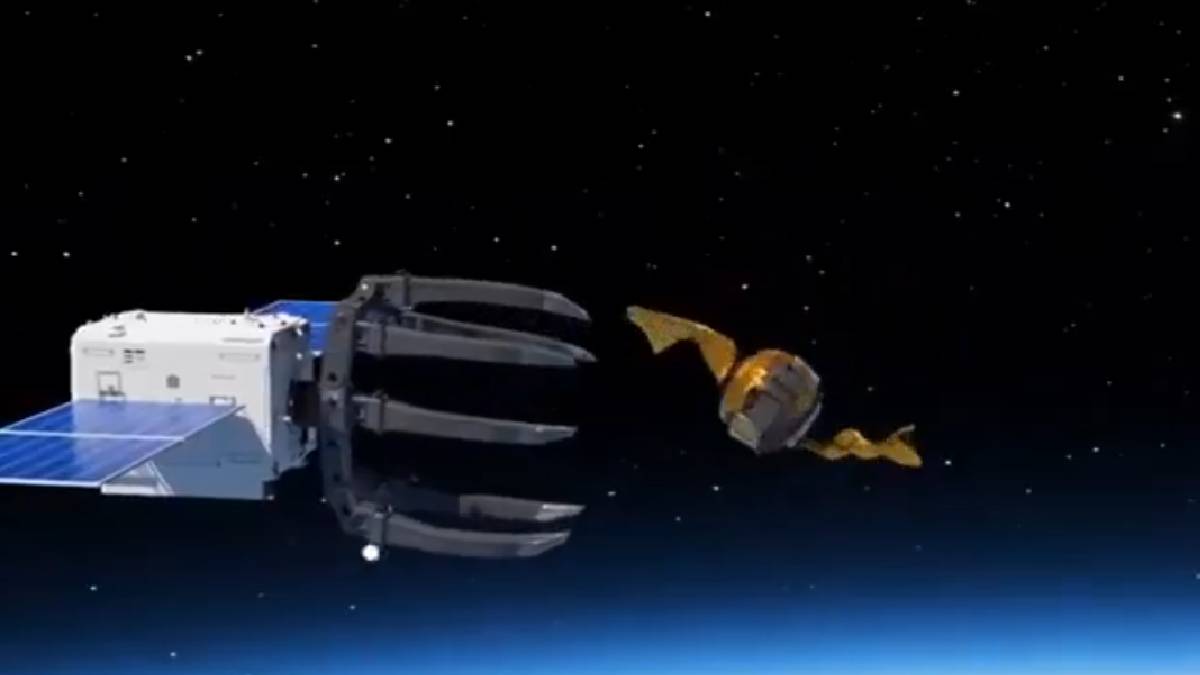
The robotic satellite is equipped with advanced navigation systems, autonomous guidance, and capture mechanisms to reach and collect fallen satellites or large pieces of debris. Depending on the mission design, these mechanisms could be robotic arms, docking systems, nets, or gripping devices that are capable of attaching to uncontrolled objects in orbit safely.
Once the target is captured, the robotic spacecraft will change its orbit and guide itself and the debris toward the Earth's atmosphere. During atmospheric re-entry, the high friction generates extremely high temperatures, and most of the debris will burn up before it reaches the ground. This controlled disposal method prevents congestion in low Earth orbit and mitigates the risk of harm to people and property.
The need for active removal of debris has become ever more urgent. According to international space agencies, millions of pieces of debris—from tiny paint flakes to whole inactive satellites—now orbit Earth. While only a small fraction are large enough to be tracked continuously, even small fragments can damage spacecraft because of their tremendous orbital velocity.
International satellite constellations for global internet services in space, global earth observation, communication, and science research have made orbital sustainability a top priority. In the absence of sensible debris management, experts say collisions could produce even more fragments, and so there is a risk that a chain reaction known as the Kessler Syndrome occurs, in which some orbital regions of space become even more hazardous to future missions as a result of collisions.
The new robotic satellite is part of a global effort to develop technologies for active space debris removal. Space agencies and private aerospace companies are experimenting with robotic servicing vehicles, magnetic capture systems, harpoons, nets, and laser tracking technologies; all of these are designed not only to remove debris but also to prolong the life of satellites with servicing and repairs at least in orbit.
Satellite clean-up is also beneficial to the economy because it helps to clean up orbital debris. Today's society relies on satellites for navigation, weather forecasting, telecommunications, banking, disaster monitoring, agriculture, and national security. If collisions are prevented, billions of dollars' worth of infrastructure is saved, and people around the world can still live.
The mission also illustrates the increasing role robotics and artificial intelligence will play in space. Autonomous spacecraft that can identify, approach, and interact with objects in orbit are expected to be more and more important as the space traffic continues to grow. Future robotic systems might perform satellite maintenance, refueling, assembly of huge space structures, and even support missions to the Moon and Mars.
Sustainable orbital management is as big a challenge for the space economy at present as technological advances. The removal of obsolete satellites and dangerous debris will help to protect safe space access for future generations.
The new robot satellite illustrates how advanced engineering can tackle one of the most urgent environmental issues beyond Earth. With its capture of space junk and protection in the atmosphere, the mission is a success in ensuring a safer and cleaner orbital environment.