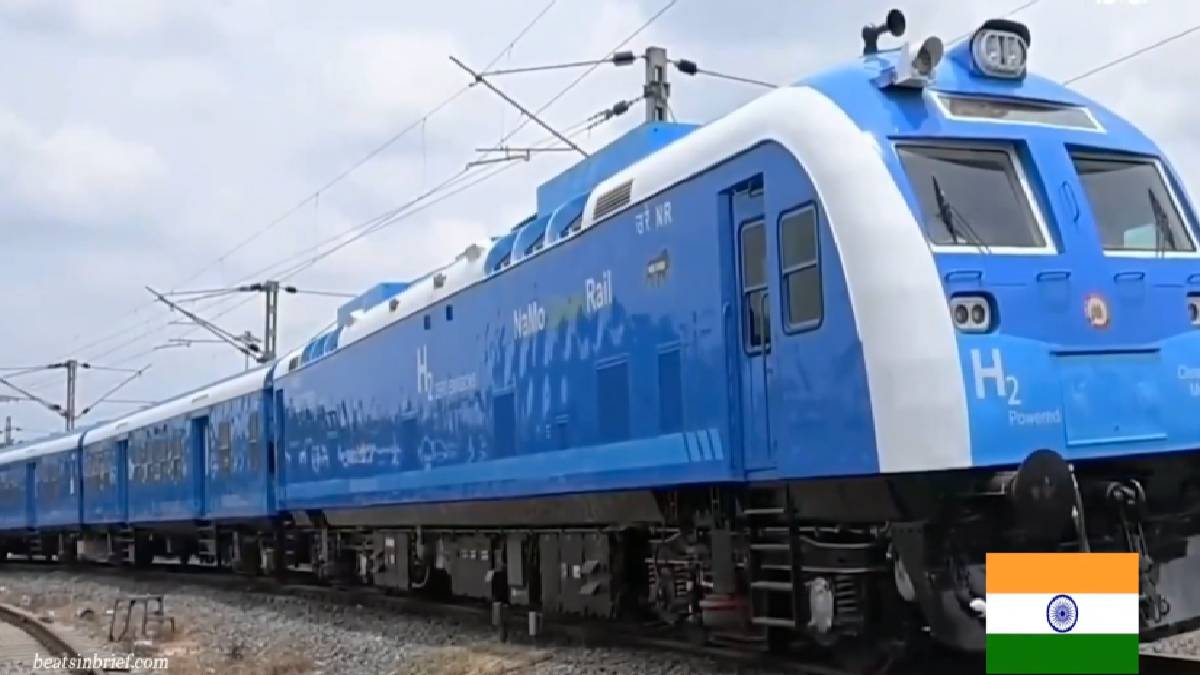
Narendra Modi will inaugurate India’s first indigenous hydrogen-powered train on the Jind-Sonipat route in Haryana on July 17, 2026, in a big step in the country's shift towards green and sustainable rail transportation.
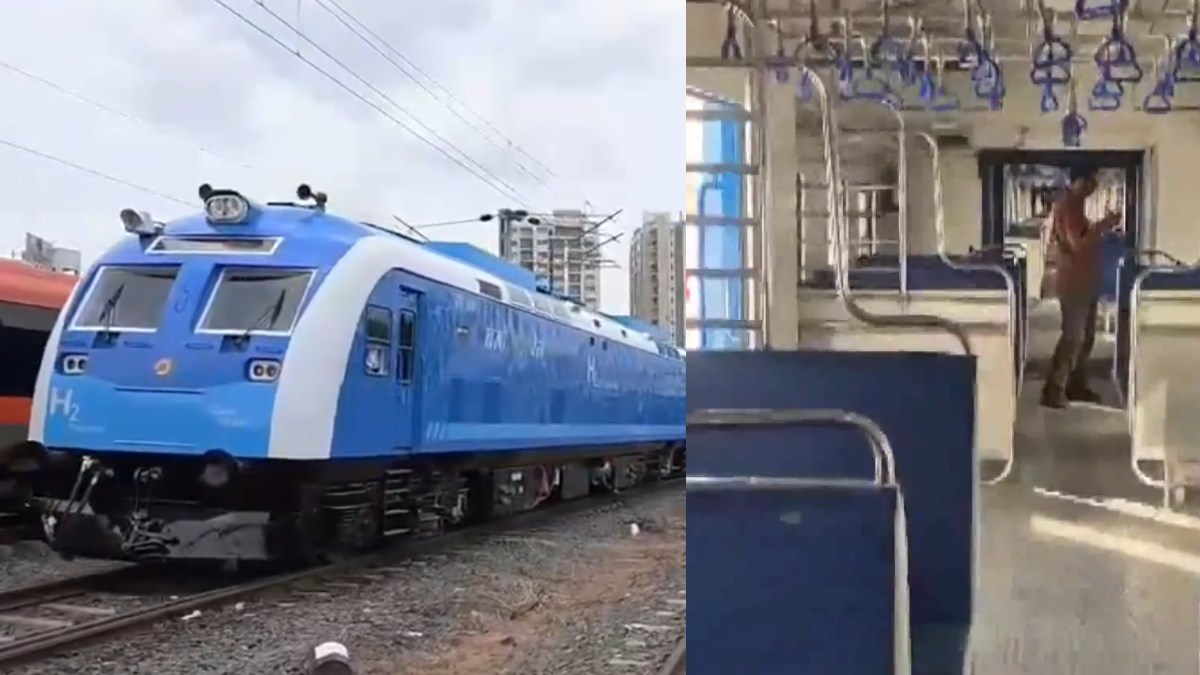
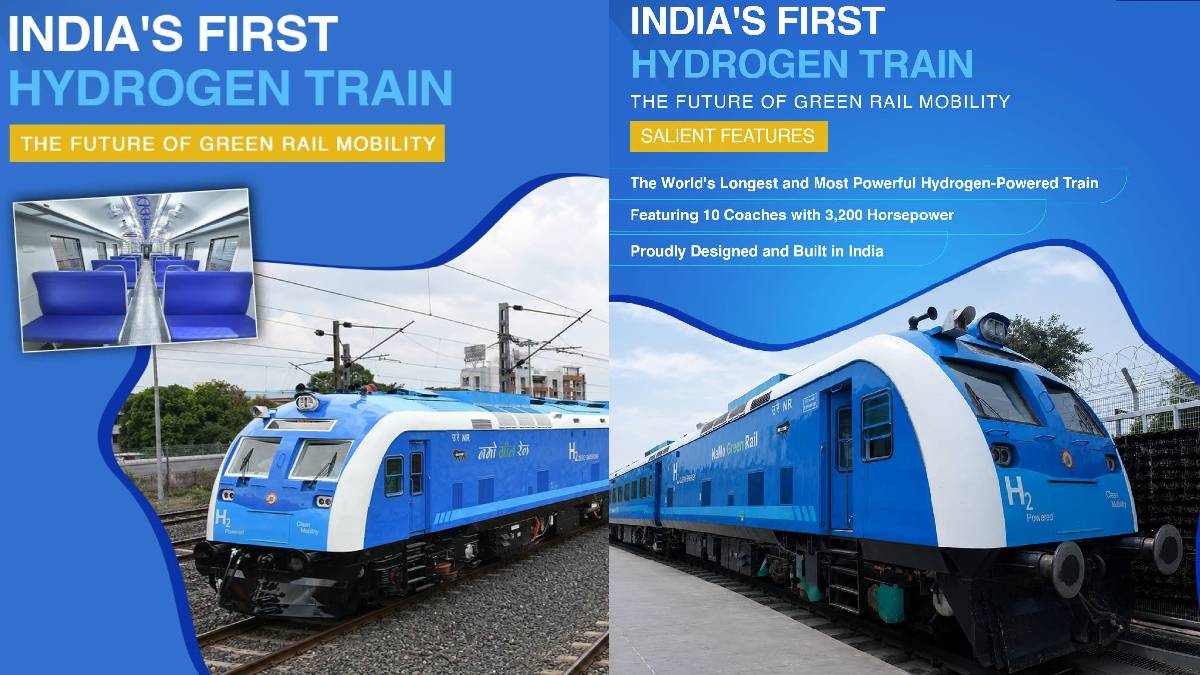
Named Namo GreenRail, the 10-coach hydrogen fuel cell train is considered the world’s most powerful hydrogen-powered train with a 1,200 kW hydrogen fuel cell propulsion system. The project brings India into a handful of countries— including Germany, Japan, China and the US— that are experimenting with the use of hydrogen-powered rail technology.
A major boost for green mobility
The hydrogen train has been designed and developed entirely in India under the Atmanirbhar Bharat initiative and is expected to contribute to reducing carbon emissions from railway operations.
The train generates electricity in hydrogen fuel cells onboard, unlike conventional diesel-fueled locomotives. The technology combines hydrogen with oxygen in a Proton Exchange Membrane Fuel Cell (PEMFC) to generate electricity and only water vapour and heat are produced as by-products. This is one of the cleanest rail transport technologies available today.
The project also supports India’s National Green Hydrogen Mission and India's long-term plan to achieve net-zero carbon emissions.
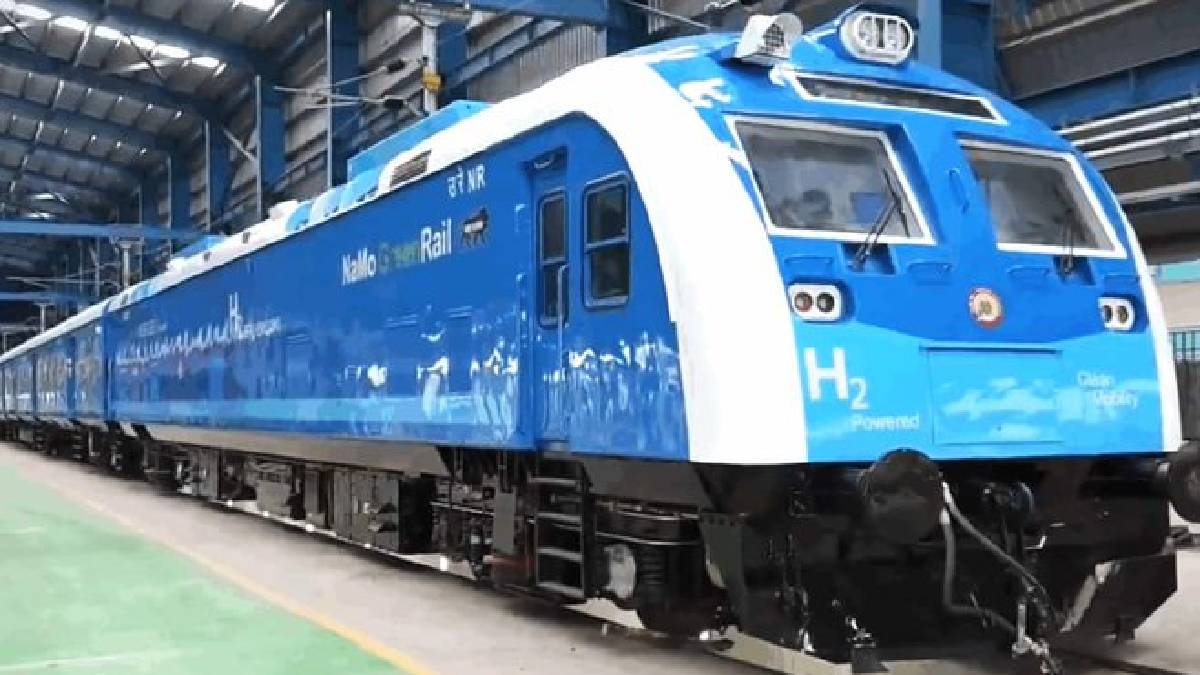
Key features of India's first hydrogen train.
The hydrogen-powered train has been built as a 10-coach trainset, consisting of:
2 Hydrogen Driving Power Cars (DPCs) and 8 Trailer Coaches (TCs).
Some of its key specifications are:
1,200 kW hydrogen fuel cell propulsion system. Design speed: 110 kmph. Operational speed: up to 75 kmph. Passenger capacity: approximately 2,600 passengers. Lithium Iron Phosphate (LFP) batteries for energy storage. Indigenous hydrogen storage cylinders for onboard fuel supply.
The train will operate daily commercial services on the Northern Railway’s Jind–Sonipat line connecting Jind Junction, Gohana Junction, Sonipat and several intermediate stations including Jind City, Pandu Pindara Junction, Lalit Khera Halt, Bhambhewa, Butana Halt, Khandrai Halt, Rabrah Halt, Lath Halt, Mohana, Barwasni Halt, and Sonipat New.
#WATCH | Jind, Haryana: Prime Minister Narendra Modi will flag off India's first hydrogen-powered train between Jind and Sonipat tomorrow
— ANI (@ANI) July 16, 2026
The train has been developed using indigenous technology. The train is powered by hydrogen fuel cell technology, which converts hydrogen into… pic.twitter.com/JUbWycjE9N
Advanced Hydrogen infrastructure at Jind
To support this project, Indian Railways has established the country's largest railway hydrogen storage and refuelling facility at Jind, Haryana.
The facility can store almost 3,000 kilograms of hydrogen and has received approval from the Petroleum and Explosives Safety Organisation (PESO) for storing and dispensing compressed hydrogen gas.
Our hydrogen ecosystem is constructed in accordance with the internationally recognised NFPA-2 and ISO 19880 standards and has been subjected to an independent safety assessment through TÜV SÜD Germany, one of the world's leading technical inspection and certification organizations.
The refuelling facility includes:
Hydrogen compression systems
Standby compressors
Dedicated technical support infrastructure
Critical spare equipment for uninterrupted operations.
Safety measures and operational readiness.
The Indian Railways has developed a complete operational framework to ensure the safe deployment of hydrogen-powered trains.
Safety systems include:
Hydrogen leak detectors
Flame detection systems
Continuous ventilation inside coaches
Automatic shutdown of hydrogen supply in case of heat, smoke or fire detection. Real-time system health monitoring in the locomotive cab. Emergency operating mode so train can be transferred to a safe location in case of fire or emergency.
The maintenance facility at Shakurbasti in Delhi has been upgraded for hydrogen train operation. During the first phase, trained and certified technical personnel will accompany the train, while the hydrogen refuelling station will remain under 24x7 monitoring.
Developed Under Atmanirbhar Bharat
The RDSO (Research Designs and Standards Organisation) has designed the project according to technical specifications, which is an example of how India is rapidly developing indigenous railway technology.
And officials say the hydrogen train is more than just a new mode of transport. It is a pilot project to validate hydrogen propulsion technology, operational procedures, maintenance practices and safety protocols for future large-scale deployment across the Indian Railways network.
A New Chapter for Indian Railways
With the Namo GreenRail, Indian Railways is now making a significant step to cleaner and more energy-efficient transportation. Hydrogen is a less carbon-intensive and more eco-friendly alternative for rail propulsion with an energy density of about 120 MJ/kg (and more than diesel's 43 MJ/kg).
As India modernises its railway system, the successful operation of this hydrogen-powered train could pave the way for green mobility technologies to be widely adopted in India, and it would help make the country a global player in sustainable transportation as well as a clean energy champion for technology development in the transport and clean energy space.