India’s space programme is facing an unusual problem. It is not a failed rocket launch and a major technical setback but an ever-falling number of experienced scientists from the Indian Space Research Organisation (ISRO) who are leaving the country as space ambitions escalate, too.
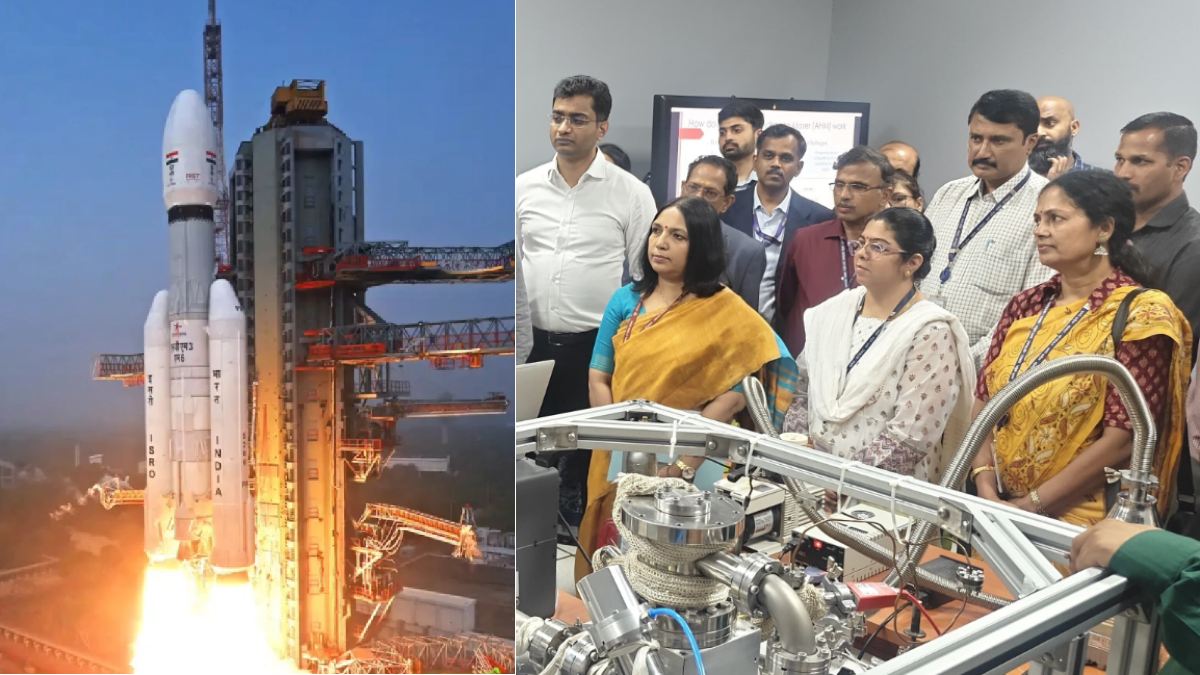
More than 100 scientists have resigned or taken voluntary retirement from ISRO in the past few months. And the number of resignations is too high for the Department of Space (DoS) to act. A recent directive has tightened the standards for resignations and voluntary retirement among scientists involved in flagship programmes like Gaganyaan, India's first human spaceflight mission.
The move underlines the strategic importance of keeping experts, but also raises a bigger question: Why are scientists leaving ISRO when India is investing a lot in space exploration?
Private Space Startups Are Changing the Equation
India's private space sector seems to be the biggest factor.
Since the government opened the space sector to private participation in 2020, companies like Skyroot Aerospace, Agnikul Cosmos, Pixxel, Bellatrix Aerospace, Dhruva Space, and Digantara have transformed India’s aerospace landscape. These startups are developing rockets, satellites, propulsion systems, and space-based services with a lot of private funding.
For many ISRO scientists, the attraction is clear. Startups often offer:
- Higher salaries
- The long-term financial upside of stock options
- Greater flexibility
- Faster decision-making
- Leadership opportunities earlier in a scientist's career
Private companies, unlike government organisations, can quickly move from concept to hardware so that engineers can work on new technologies with less bureaucracy.
- Mission Delays Add to Frustration
- The talent shift has much more to do with money than just money.
There have also been delays on other high-profile missions from ISRO including Gaganyaan G1 test flight, SSLV-L1, GSLV-F17, and the industry-built PSLV-N1 mission. PSLV setbacks and a series of PSLV failures in recent months have also led to delays to launch dates.
But there is growing concern among the members of the organisation that decision-making is becoming more and more centralized. Technical and administrative approvals are reportedly concentrated within the Chairman's Office, which has slowed operational flexibility, several former officials say.
It is frustrating for scientists who are in a job to work on ambitious missions that they have to deal with long delays and more layers of approval.
Why the Department of Space Stepped In
The DoS memorandum issued on 14 July shows that the departures could affect nationally important programmes.
Scientists working on Gaganyaan and other flagship missions will no longer be able to leave through routine approvals. Their resignations must now be cleared directly by the Department of Space.
But with more than 100 departures and the size of ISRO's workforce of about 14,600 employees, the impact is far greater because many of those who leave have some of the more specialized knowledge gained through missions like Chandrayaan-3, SpaDeX, and Gaganyaan.
In fact, replacing such expertise is not as simple as hiring new graduates.
Does ISRO Need a New Employment Model?
Some senior officials think ISRO needs to rethink its workforce structure.
Agencies such as NASA and the European Space Agency employ a mix of permanent personnel, contractors, and project-based hires. This hybrid model allows them to maintain institutional knowledge while bringing in specialized talent for specific missions.
In the future, experts in space policy say ISRO may increasingly focus on:
- Mission design and systems engineering
- Human spaceflight
- Deep-space exploration
- Research into reusable rockets and nuclear propulsion
On the other hand, private companies could take on a larger portion of routine launch and satellite activities.
A New Era for India's Space Ecosystem
For decades, ISRO was almost the only destination for ambitious aerospace engineers in India. Now it is the anchor of a much larger ecosystem where private companies offer alternative career paths.
This is not a sign of decline. In many ways, it is an inevitable outcome of India’s space reforms. But it has presented a new challenge for ISRO: finding top talent is no longer enough. The agency has to provide career growth, flexibility, and opportunities that can compete with a rapidly expanding private space industry.
As India prepares for Gaganyaan, the next lunar missions, and ambitious space exploration ahead, keeping experienced scientists will be even more important than building the next rocket.