Heavy rains brought widespread flooding over New York City following just a few hours of heavy downpour, disrupting traffic, flooding roads, and affecting public transport systems.
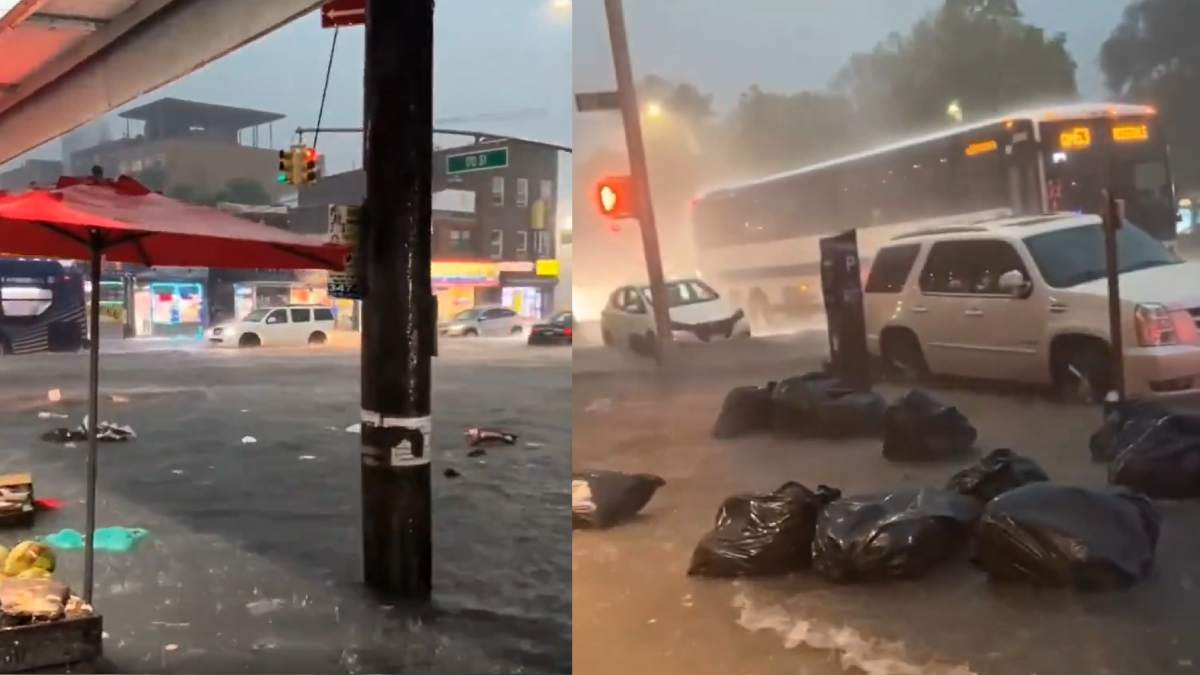
Videos and pictures posted through social media depicted flooded streets, submerged cars, overflowing drains, and commuters struggling to navigate flooded neighbourhoods in one of the world’s most developed urban areas.
The incident has rapidly been embroiled in global conversation online, especially among users who compare Western cities' urban flooding conditions to conditions they regularly see in Indian metros such as Bengaluru, Mumbai, Chennai and Delhi.
Many stressed that flooding from extreme rainfall is not unique to developing countries, and even highly developed cities with huge infrastructure budgets are grappling with rapid weather events driven by climate change.
It is widely reported that extensive water accumulation in many parts of New York occurred when drainage systems did not cope with the amount of rainfall in a short period.
Subway stations, roads and low-lying areas were some of the hardest hit. Many emergency teams were dispatched to manage traffic disruptions and ensure public safety in multiple locations. Urban experts say the New York flooding is a global rather than an isolated infrastructure problem.
Many cities all over the globe were built decades ago for years ago. Many cities in most places around the world were built on a long-established pattern of the same scale that took place in an older, older time with an older climate and lower population density. In India, drainage systems everywhere suffer from extreme pressure from rapid urbanisation, increased concretisation, a shrinking openness to the open and stronger rainfall events.
New York City flooded after a few hours of rain today
— Vineeth K (@DealsDhamaka) May 22, 2026
No global city is equipped for heavy rains. An Indian city just gets called out more, as there is trash on the streets, which is more evident in the rain
pic.twitter.com/qGM5Z0d1As
Flooding in cities is very much a focus of criticism in India, particularly on social media, where images of the streets flooded with garbage-strewn drains, full of sewage, have become prominent in the public discussion. But the experts say that although issues of garbage disposal contribute to flooding in many Indian cities, the broader issue of poor urban planning and antiquated drainage systems in global cities is more acute.
The new NY flooding disaster was a sobering reminder that no city is completely immune to extreme weather. As developed states have much stronger emergency response systems and better infrastructure maintenance capabilities in place, they still face serious challenges when rainfall intensity rises above what these systems are able to support.
Climate scientists for decades have cautioned that global warming is increasing the incidence and magnitude of extreme weather events. Cloudbursts, violent storms and new record rainfall come upon continents, stretching drainage systems that were never made just to cope with them.
Reactions to the New York flooding on social media were contradictory. Some users mocked the city’s inability to endure at best a few hours of rain; others wrote that urban flooding is increasingly being recognised as a problem for which long-term planning rather than selective criticism is key.
Many Indian users pointed out that the problem of local cities was unfairly singled out by others internationally, while analogous situations in Western countries take comparatively less attention. Urban planners think city development in the future must be centred on climate resilience.
Today and in both developed and developing countries, many solutions such as modern drainage networks, rainwater collection systems, flood-resilient roadways, the restoration of wetlands, and tougher urban zoning regulations are coming into force. They also say public behaviour plays a role in causing floods to get worse.
Improper disposal of waste, encroachment on lakes and stormwater drains, and uncontrolled construction greatly reduce a city's ability to manage and channel rainwater efficiently. Consequently, the flooding in New York only confirms a growing reality around the world that cities are struggling to respond to.
Climate change not only is undermining this infrastructure throughout the entire world but also its residents. From India and the United States to Europe, the issue of constructing cities that can confront extreme weather is now one of the most pressing challenges confronting contemporary urban governance.