Nvidia CEO Jensen Huang recently showed his popularity worldwide as he met with the Japanese companies that are key to the global AI supply chain when he visited Tokyo. Not only did Nvidia’s presence on the AI revolution highlight Japan’s unique place in the semiconductor ecosystem that is the backbone of the next generation of computing.
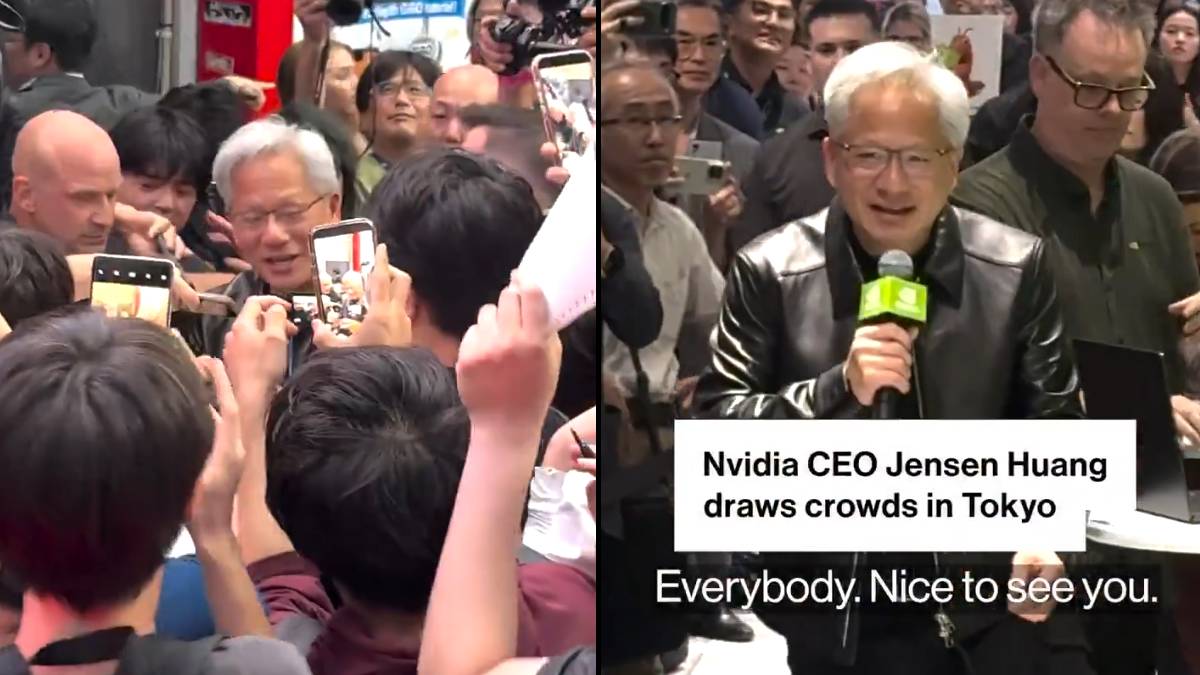
Huang’s fans flocked to Tokyo to catch a glimpse of the technology executive who has gone on to become one of the most recognizable figures in the AI industry. A moment that spread over social media quickly made Huang’s presence instantly noted as his fans quickly gathered to hand out traditional Japanese red bean cakes, creating an atmosphere more like a celebrity visit than a corporate one.
Nvidia CEO Jensen Huang drew crowds in Tokyo after meeting the Japanese companies that power the global AI supply chain. He even stopped to hand out red bean cakes as fans gathered for a glimpse of him: https://t.co/OxjjVXuGSL pic.twitter.com/iALMv9qUDu
— Bloomberg (@business) July 16, 2026
The overwhelming public response reflects the dramatic growth of Nvidia over the last few years. Once known mainly for its graphics processing units (GPUs) used in gaming, Nvidia has become one of the world's leading AI accelerators for large language models, generative AI platforms, autonomous systems, and advanced scientific computing.

Huang's visit to Japan has come at a time when Japan is a major player in the world of the semiconductor supply chain. Japanese companies provide much of the advanced materials, manufacturing equipment, precision components, and production technologies needed to build high-quality AI chips. From semiconductor chemicals and silicon wafers to chip manufacturing equipment and packaging technologies, Japan is a core part of the electronics industry.
In his meetings, Huang had discussions with the companies that built the manufacturing ecosystem that supports Nvidia's next generation of AI processors. As demand for AI infrastructure continues to increase worldwide, collaboration across the semiconductor supply chain is more critical than ever. The rapid growth of AI data centers and high-performance computing requires a coordinated effort from suppliers from many countries in the semiconductor supply chain, and Japan is one of the most strategically important partners.
The CEO’s friendly interaction with fans further solidified his bond with fans and his reputation for being a good guy with people and showed that he is still in charge of one of the world’s most valuable technology companies. Huang took to giving out red bean cakes (a favorite Japanese treat), creating memorable moments that resonated with the crowd to welcome him.
Jensen Huang is one of the most influential technology leaders. Under his leadership, Nvidia is very much a part of the AI revolution, with GPUs powering research institutions, cloud service providers, startups, and companies to develop advanced artificial intelligence applications.
Japan is investing in the development of its own AI hardware and in boosting domestic semiconductor production. Global technology leaders such as Nvidia and Japanese manufacturers will be key partners to secure a robust supply chain and to support AI hardware demand growth.
Industry analysts believe that closer collaboration between Nvidia and Japanese companies will accelerate innovation in AI computing, robotics, autonomous systems, healthcare, manufacturing, and scientific research. As governments and businesses around the globe invest billions in AI infrastructure and there has been a growing demand for reliable semiconductor supply chains, it is now a priority.
Huang’s visit is also a manifestation of the wider transformation that technology leaders have gone through in becoming recognizable public figures globally. Just as in the past decades, his influence is now being felt beyond boardrooms and investor events and into the mainstream as AI becomes more integrated into our everyday lives.
The enthusiastic reception in Tokyo is an example of Nvidia’s central role in the future of artificial intelligence in Japan. It also illustrates Japan’s strategic role as one of the centerpieces of the global semiconductor industry, as innovation, manufacturing excellence, and international collaboration drive the next generation of AI technology.