Trump administration official Peter Navarro has faced an online backlash in India after making controversial caste-based comments on India’s continuing purchase of Russian energy. Navarro, who is one of the top trade and economic policymakers in the US and a leading voice on Indian trade policy, has tried not to take the response too personally and seems to have tempered expectations about India’s huge population.
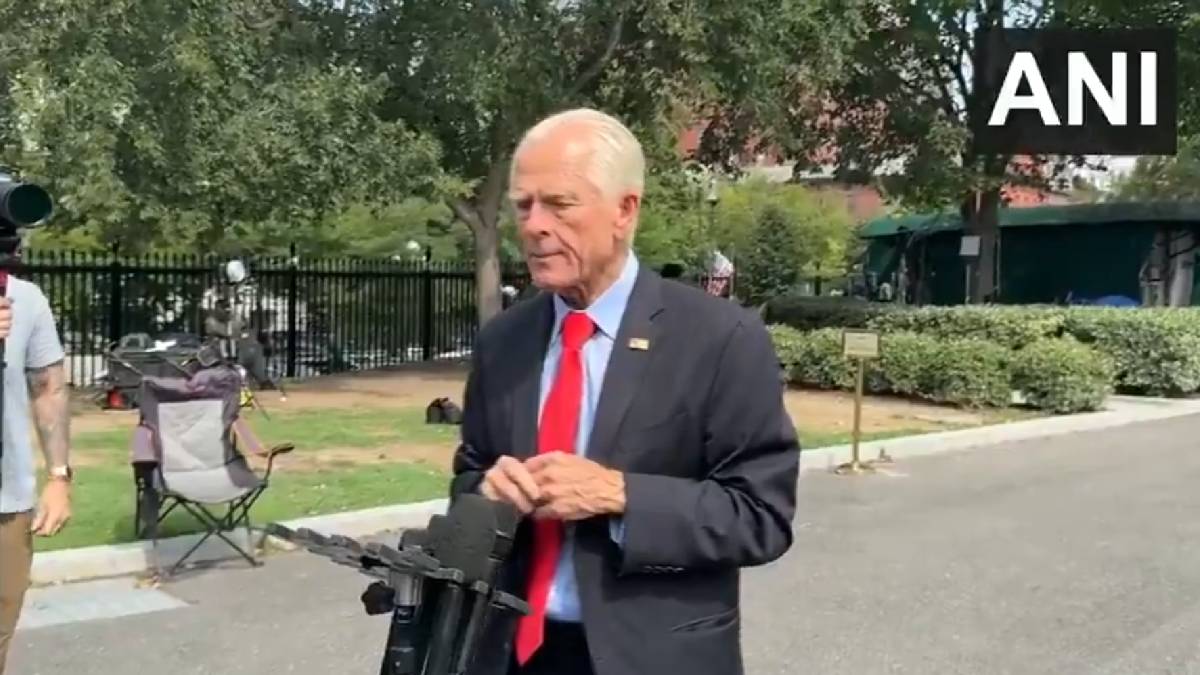
Against this backdrop, Navarro said: “I got firebombed by the Indian continent on the internet. All I would say to you, don’t do that…” He added a point that soon became the central takeaway from his remarks: “Never mess with 1.4 billion people.”
Navarro’s comments come as there is continuing tension between Washington and Delhi over India’s energy relationship with Russia. The United States has long been concerned about countries importing Russian oil and other energy products, especially as sanctions and attempts to reduce Moscow’s revenue after the Ukraine-Russia conflict have been taking place.
But India has maintained that its energy decisions are motivated mainly by national interests, energy security and the needs of the population. Russian crude became even more important to Indian refiners because Western sanctions disrupted the traditional energy market, and cheap supplies have made it easier for Indian companies to get cheaper supplies.
Trump official Peter Navarro, made controversial caste-linked remarks about Indians over buying Russian energy, now says:
— Megh Updates 🚨™ (@MeghUpdates) August 12, 2026
"I got firebombed by the Indian continent on the internet. All I would say to you, don't do that..."
=> Never mess with 1.4 billion people. 🔥 pic.twitter.com/hnQtYAlaYk
The dispute has also exposed a very complicated US-India relationship. Washington and New Delhi have much improved cooperation on defence, technology, trade, and strategic security, but disputes over tariffs, energy policy and relations with Russia continue to create diplomatic sensitivities.
Navarro’s original comment was particularly striking in terms of the reference to caste and Indian society. Critics argued that such comments would reduce a complex economic and geopolitical issue to stereotypes of Indian society. The online response demonstrated how quickly senior American officials can trigger widespread criticism among Indian social media users.
His latest answer seems to acknowledge the scale of that reaction. The phrase “Never mess with 1.4 billion people” has also emerged as a broader reference to India’s enormous population and increasingly influential digital public sphere.
India has the world’s largest internet population, and political and diplomatic statements regularly lead to a storm of debate on social media. Comments about national identity, foreign policy, or perceived disrespect towards Indians can quickly gain traction, especially when made by top international figures.
The episode also demonstrates the importance of diplomatic language at an age when India and the United States are trying to deepen the strategic partnership. There are many economic and geopolitical interests in both countries—supply chain diversification, defence cooperation, critical technology, semiconductor manufacturing, and Indo-Pacific security.
For India, the Russian energy issue is closely linked to domestic economic problems. As one of the largest energy-consuming countries in the world, affordable crude oil is key to managing inflation, transportation costs, and economic stability.
For Washington, reducing Russia’s ability to generate revenue from energy exports remains a major foreign-policy objective. That creates an inherent tension between US sanctions policy and India’s long-standing approach of maintaining strategic autonomy in its foreign relations.
So Navarro’s response might be seen as more than a response to social media criticism. It demonstrates a sensitivity to India’s domestic politics, social structure, economic interests, and foreign policy choices.
The controversy is also a reminder that India’s ever-growing global influence goes beyond government-to-government diplomacy. The global scale of people with more than 1.4 billion and one of the world’s largest online communities can make public responses a significant part of global discussions.
Whether the episode develops into a larger diplomatic issue remains to be seen. For now, Navarro’s warning has been the focus of the controversy: “Never mess with 1.4 billion people.”