The kingdom’s nuclear ambitions are now under renewed scrutiny following a US intelligence assessment that the kingdom has not ruled out developing nuclear weapons. The report comes as the U.S.-Saudi civil nuclear agreement is under discussion in Washington and the Middle East, and Riyadh has the potential for uranium enrichment for its civilian nuclear programme.
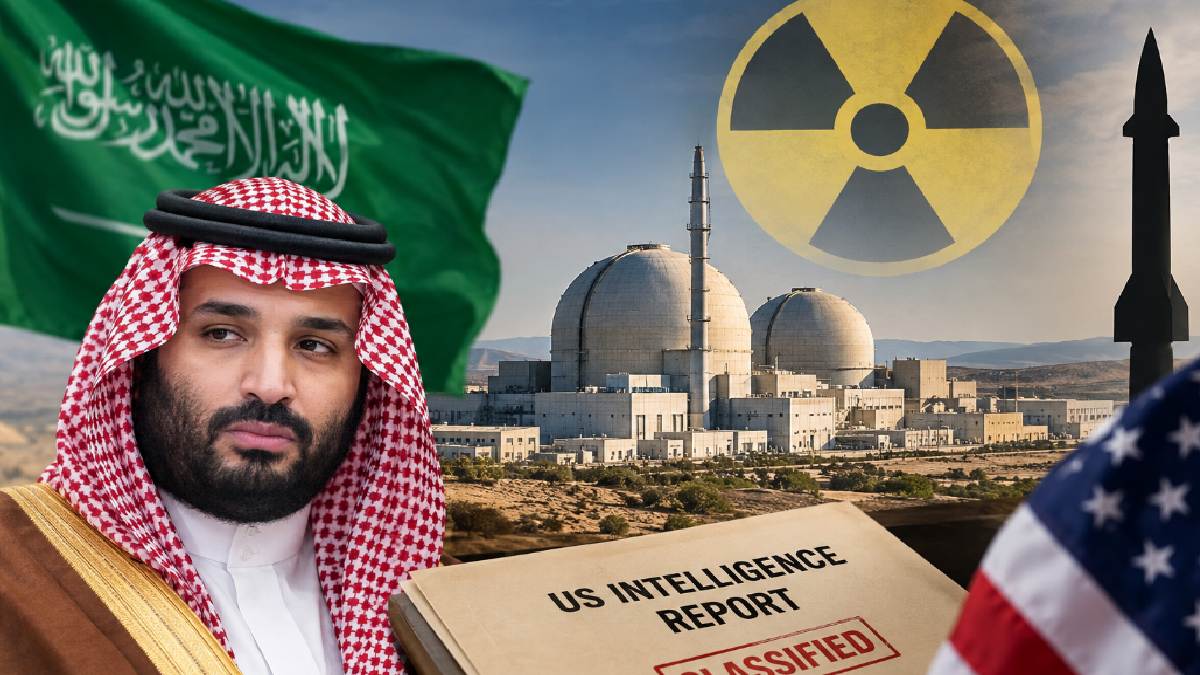
According to classified documents made public to the US Congress, the US intelligence community believed Saudi Arabia was interested in pursuing a nuclear weapons programme.
This is not the indication of Saudi Arabia’s decision to build a nuclear weapon or that it currently has one. Rather, it is indicative of concerns of the US intelligence community about Riyadh’s long-term intention and its unwillingness to completely close the door on nuclear weapons.
The situation has increased since the nuclear cooperation agreement signed by the United States and Saudi Arabia in July 2026. It is a US-Saudi “123 agreement” which sets up a framework for American nuclear technology and companies to be part of Saudi Arabia’s civilian nuclear programme. At the time, the agreement could open the door to uranium enrichment on Saudi territory, after further study, the report predicted.
Uranium enrichment is not proof of a nuclear weapons programme. Enriched uranium is used for peaceful purposes such as nuclear power generation. Yet the same technology can be used to produce highly enriched uranium suitable for nuclear weapons, depending on the level of enrichment and other technical steps. This dual-use nature of enrichment has made Saudi Arabia's plans a major issue for nuclear non-proliferation experts.
The July agreement has therefore been criticized by U.S. lawmakers and Israeli officials. And there have been questions about the safeguards in place and the risks of allowing Saudi Arabia to develop domestic enrichment capabilities, which could pose a proliferation risk, as well as the nuclear programme being developed by American companies.
The International Atomic Energy Agency has also been involved in the discussion. Recent reports say Saudi Arabia is preparing to grant the IAEA enhanced monitoring and inspection powers under its civil nuclear cooperation agreements, but Riyadh has not ratified the Additional Protocol of the IAEA. Rafael Grossi, IAEA Director General, has said that the provisions being discussed could give the agency control over sensitive nuclear activities like conversion, enrichment, and reprocessing.
The Saudi Crown Prince Mohammed bin Salman has previously linked the kingdom's nuclear ambitions with Iran's nuclear capabilities. Saudi Arabia would go for a nuclear weapon if Iran developed an atomic weapon, he said in earlier comments. Those statements have been at the heart of the debate over Riyadh's insistence on having its domestic nuclear capabilities preserved.
The issue is especially sensitive because of the wider security environment in the Middle East. Iran’s nuclear programme has long been an issue for the world, and Israel is well-known to have nuclear weapons but at the same time has kept its position ambiguous. Any decision by another key country in the region to develop a nuclear weapon capability could have repercussions for other countries in the region.
The US-Saudi agreement has also become connected with Washington’s broader diplomatic goals. When the nuclear deal was signed in July, President Donald Trump said the arrangement was connected to Saudi Arabia joining the Abraham Accords and normalising relations with Israel. The White House has continued to claim that condition.
The agreement is now in the U.S. congressional review process. The Trump administration submitted the civil nuclear agreement to Congress as required by US law in August. Lawmakers have continued to question the deal and how much it will protect Saudi Arabia’s potential nuclear operations.
And the agreement’s supporters feel if cooperation is maintained with the United States, then it will ensure that Saudi Arabia’s nuclear programme remains focused on civilian energy production and will also give Washington more control over sensitive operations.
The US agreement also stipulates that American involvement in key parts of the programme could also be a source of additional control over nuclear technology.
The latest intelligence assessment, however, adds another layer to the debate. If Saudi Arabia has not ruled out a weapons option, as reported, questions about the country’s long-term nuclear intentions are likely to remain central to discussions in Washington and among regional governments.
For now, Saudi Arabia's publicly stated nuclear programme is focused on civilian energy, while the kingdom continues to seek greater control over nuclear fuel-cycle capabilities. The distinction between civilian nuclear development and weapons development will therefore depend heavily on safeguards, inspections, enrichment levels, and the decisions Riyadh makes in the next years.
The US intelligence assessment, however, does not indicate that Saudi Arabia is at work on a nuclear weapon at the present time. It points to the possibility that the kingdom might retain an option for a future nuclear power. And with the US-Saudi nuclear agreement under scrutiny in Congress and talks for international monitoring of Saudi Arabia's nuclear policy continuing to be a topic of debate in Middle East security and global non-proliferation discussions.