Authorities in Qatar have officially called on Muslims across the nation to observe the Shawwal crescent moon on Wednesday evening, marking a crucial step toward determining the date of Eid al-Fitr in 2026.
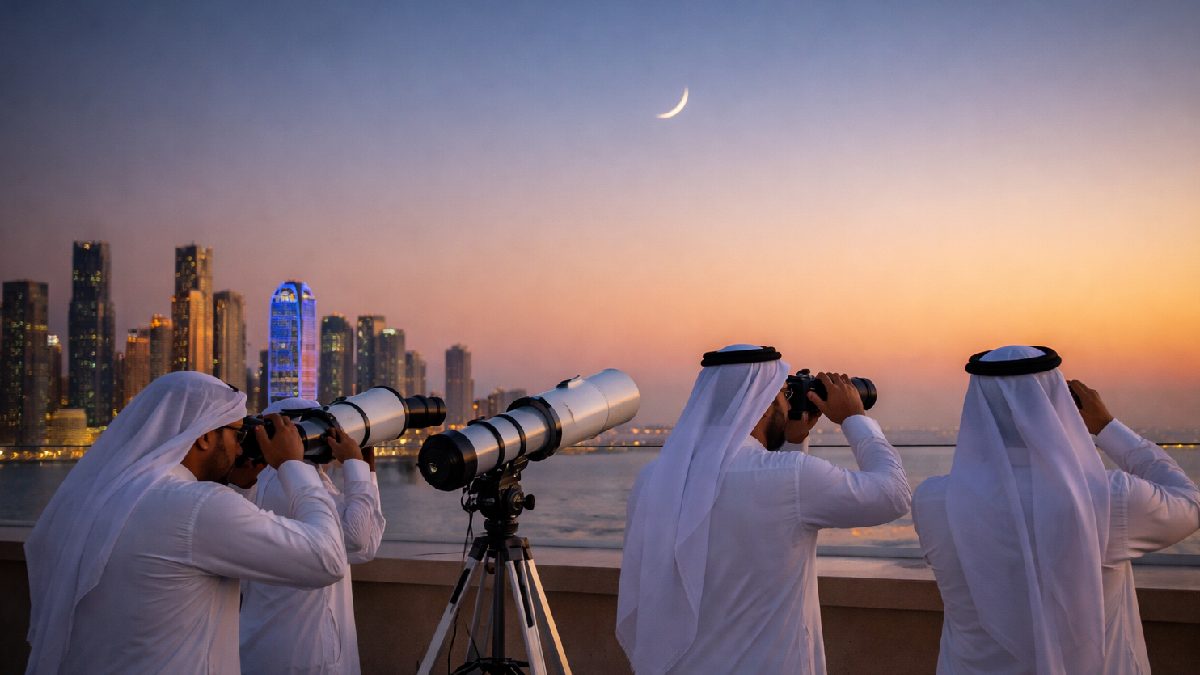
The crescent sighting signals the end of the holy month of Ramadan and the beginning of Shawwal, the tenth month in the Islamic lunar calendar. Religious authorities have urged citizens and residents to participate in moon sighting and report any confirmed observations to designated committees.
Official Appeal for Moon Sighting
Qatar’s moon sighting committee has requested that anyone who sees the crescent moon on Wednesday evening should promptly inform the authorities. The final decision on the date of Eid al-Fitr will depend on verified sightings.
If the crescent is sighted, Eid will be celebrated the following day. If not, Ramadan will complete 30 days, and Eid will be observed a day later.
Importance of Shawwal Crescent
The sighting of the Shawwal moon is a deeply significant religious practice for Muslims worldwide. It determines the end of fasting and ushers in a festival of joy, gratitude, and communal celebration.
Eid al-Fitr is marked by special prayers, charitable giving (Zakat al-Fitr), and gatherings with family and friends.
Regional Coordination
Countries across the Gulf region, including Saudi Arabia, typically follow similar moon sighting practices. However, slight variations in observation can lead to differences in Eid dates between countries.
Anticipation Builds
With Ramadan drawing to a close, anticipation is high among Muslims as preparations for Eid celebrations begin. Markets, mosques, and households are already gearing up for the festive occasion.
Authorities have reminded the public to rely on official announcements for confirmation of Eid dates and avoid spreading unverified information.