Narendra Modi, Chinese President Xi Jinping, Russian President Vladimir Putin, Iranian President Masoud Pezeshkian and other world leaders came together in Bishkek, Kyrgyzstan, for the 26th Shanghai Cooperation Organisation (SCO) Summit, where leaders signed the summit declaration.
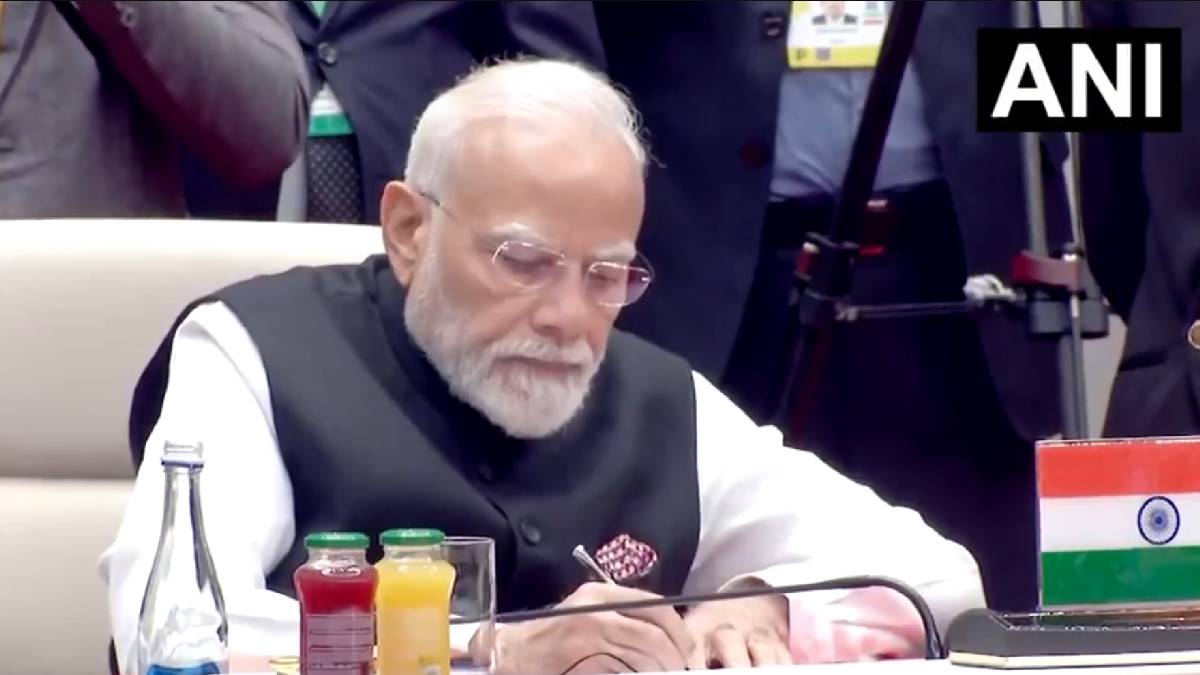
The gathering was attended by leaders and senior representatives from the SCO member states who discussed regional security, economic cooperation, connectivity and the changing global geopolitical landscape. The signing of the declaration was a critical point of the summit and represented the commitment of the participating countries to cooperating with each other through the organisation.
The presence of Modi, Xi, Putin and Pezeshkian at the same summit attracted global attention. India, China, Russia and Iran play important positions in the Eurasian strategic landscape, and their participation underlines the role of the SCO as a focal point for discussions between powerful regional powers.
For India, the SCO is a very important diplomatic platform with countries in Central Asia and Eurasia. New Delhi has always been using multilateral forums to advance its interests in areas like counter-terrorism, connectivity, trade, energy security and regional stability.
#WATCH | Kyrgyzstan: Prime Minister Narendra Modi, Chinese President Xi Jinping, Russian President Vladimir Putin, Iranian President Masoud Pezeshkian and other world leaders sign the Declaration at the 26th Shanghai Cooperation Organisation (SCO) Summit in Bishkek.
— ANI (@ANI) September 1, 2026
(Source:… pic.twitter.com/dT6r6D8aES
The summit in Bishkek also takes place in the face of a rapidly changing international environment. There is growing competition among the largest powers in the world, conflicts in different parts of the globe, economic uncertainty, and changes in global supply chains, making multilateral dialogue very important.
The participation of Chinese and Russian leadership is important because of the significance of the SCO. China and Russia are some of the most influential members. India has tried to remain independent diplomatically and engage with other world powers.
Iran's participation adds another important dimension to the grouping. Tehran's geographical location and relationships across Central and South Asia are also relevant to regional connectivity, energy and trade discussions.
A signing ceremony was so symbolic: leaders from different political backgrounds coming together for a common vision in the name of a common declaration. The countries don’t necessarily have the same view on every major international issue, but the SCO is a way to keep the countries engaged in dialogue and pursue areas of mutual interest.
Security cooperation is still one of the organisation’s core priorities. Counter-terrorism, extremism and transnational security are still issues on the SCO agenda. Economic cooperation and regional connectivity have also been gaining more emphasis as member countries work to create better trade, transportation and energy links.
The summit declaration is the consensus of all countries involved. Such declarations usually indicate areas where groups need to cooperate more, and set a framework for future cooperation.
The presence of several world leaders also underscores the increasing geopolitical significance of multilateral organisations outside the Western-led organisations. The SCO has expanded considerably since its establishment and now constitutes a large part of Eurasian space.
For India, participation at the highest level allows New Delhi to remain engaged with partners and strategic competitors. India is increasingly focused on relations with both centres of power but has to focus on national interests.
The Bishkek summit therefore has a larger meaning than a symbolic signing of a document. It underscores the SCO’s still significant role as a forum where major Eurasian powers can meet, communicate and find areas for cooperation even if they cannot agree on the issues of wider geopolitical interests.
The image of Modi, Xi, Putin, Pezeshkian and other leaders signing the declaration will likely remain one of the defining images of the 26th SCO Summit in terms of its relevance to the international diplomatic world.