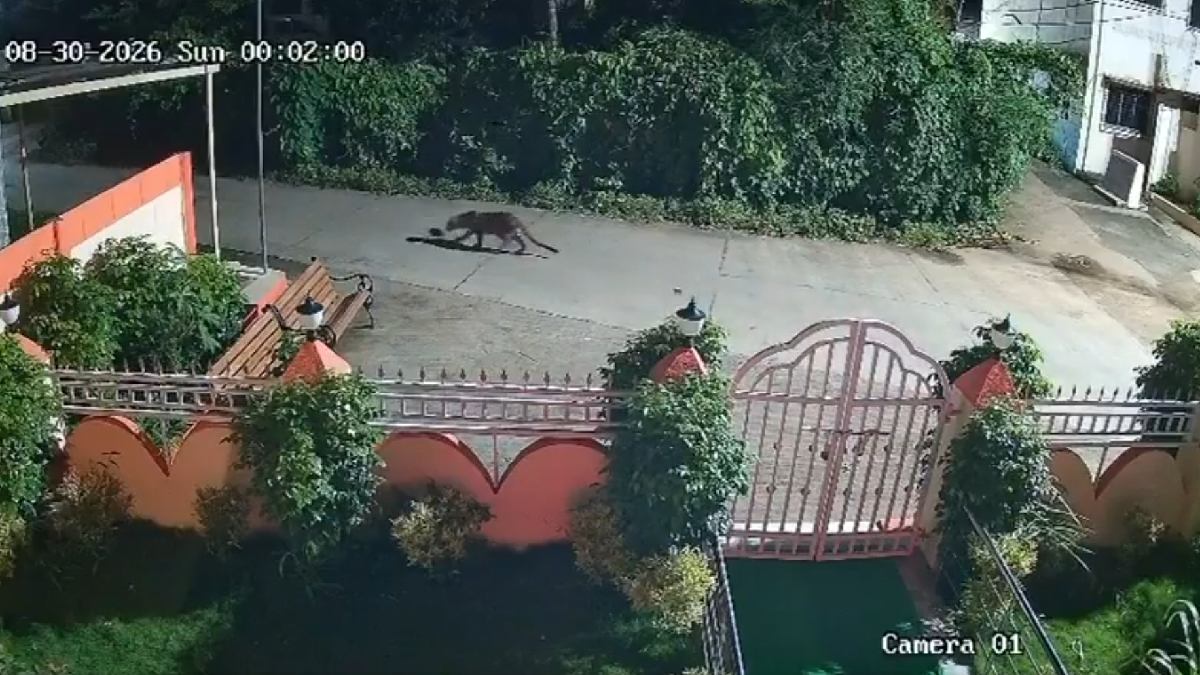
A surprising wildlife encounter in Palghar has caught the eye of people after a leopard that entered a populated territory and rushed in to hunt for food caught a tiny puppy but ultimately chose not to attack it. However, the big cat was very friendly and let the small puppy go when the pet got away and escaped unharmed, residents say.
Leopards are opportunistic predators and are known to venture close to human settlements when hungry. In villages and residential areas near forests or natural habitats, people, domestic animals and wild predators often encounter. But this was far from such a typical hunting encounter.
The leopard had entered the area and obviously was looking for prey, the report said. It found a small puppy. The predator held onto the puppy and it was a potentially dangerous situation for the helpless puppy.
Instead of attacking or carrying the puppy away, the leopard unexpectedly released it. The puppy was uninjured, turning a tragedy into a great example of the wild animals’ unpredictable behaviour.
The incident also demonstrates how quickly a wild predator can change if it is under attack. Leopards are good hunters, but they don’t attack every animal they encounter. Movement, size, perceived threat and whether an animal is a good prey type affect how a leopard behaves.
For Palghar residents who live in forests and have people living next to them, the incident is a reminder of how to be vigilant when wild animals come in and invade our houses. Leopards can move quietly and cover vast distances and are almost always unseen until they are discovered. Their presence near homes can trigger fear, especially if stray dogs, livestock and other domestic animals are present.
The puppy’s survival is very striking. A leopard coming face-to-face with such a small animal would normally raise concerns about an attack, but the predator’s decision to let it go has given an unusual glimpse into animal behaviour. The situation may seem extraordinary, but wildlife experts often caution against viewing such behaviour as deliberate compassion or human-like emotion.
Wild animals generally act on instinct and the present moment. The leopard could have simply felt the puppy was not good prey or could have been reacting to factors that were not apparent to those around. But the outcome was evidently good for the young dog.
Such encounters also underscore the importance of maintaining a safe distance from wild animals. Residents should not approach, chase, surround or attempt to photograph a leopard at close range. If a leopard is spotted near a residential area, authorities and local wildlife teams should be informed so that the situation can be monitored and handled appropriately.
Leopard on the hunt... but spares a puppy!
— Suhas Birhade ↗️ (@Suhas_News) August 31, 2026
Palghar: The leopard, which had ventured into the area in search of prey, caught a tiny puppy in its grasp but, instead of attacking it, released the animal unharmed. pic.twitter.com/BLpMkdoM2r
Human activity around wildlife habitats can also lead to increased encounters, experts have previously noted. As settlements grow in size and natural areas become increasingly fragmented, animals may go to agricultural land, villages and residential areas looking for food and shelter.
Palghar residents are familiar with the situation and the incident, both as a great wildlife story and a cautionary tale. The little puppy survived an encounter with one of Maharashtra’s most elusive predators while the leopard simply disappeared without injury.
The unexpected encounter has also led to the question of how leopards are able to act among other animals in human settlements. The reason why the leopard released the puppy may never be clear, but the incident shows that wildlife behaviour is rarely what one would expect.
For now, the puppy is uninjured. The whole episode is an extraordinary one in the course of a routine hunt for prey and a very special example of the wild leopard’s true nature.