A SpaceX Falcon 9 rocket’s upper stage accidentally crashed into the Moon at the end of almost 19 months drifting through space an embarrassing incident that underscores growing concern about how poorly the tracking system in deep space is designed.
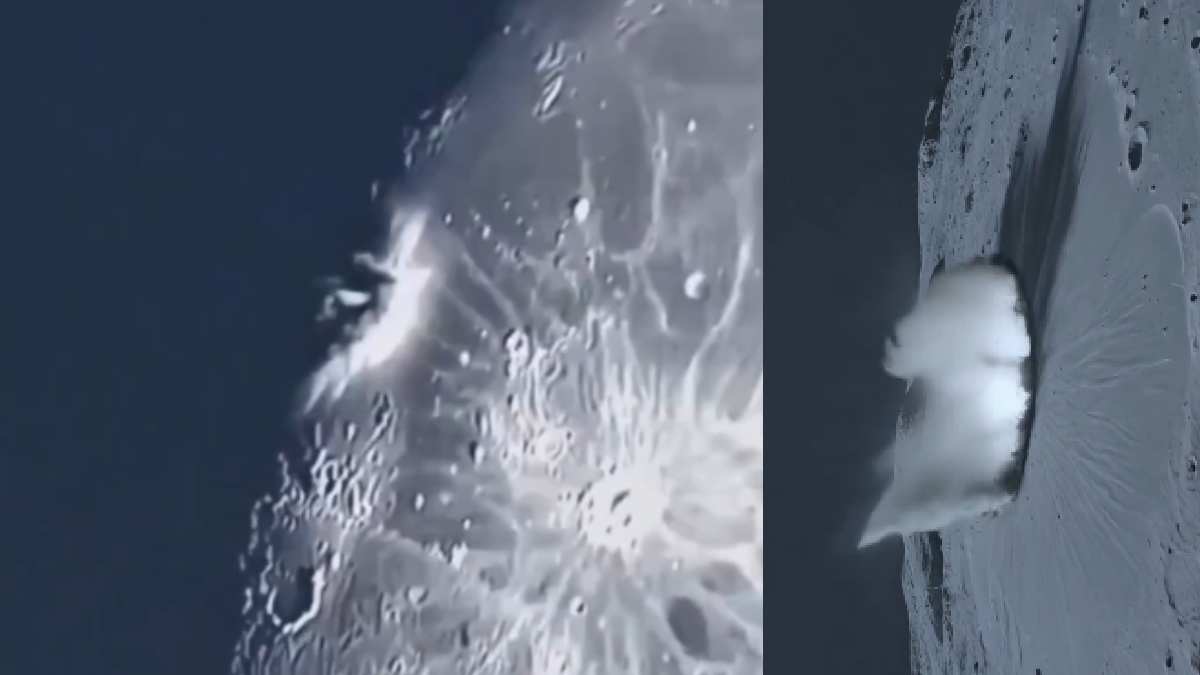
The impact happened at 2:35 a.m. ET on Wednesday, August 5, when the rocket's second stage struck the Moon near the Einstein and Bell craters on the western limb of the Moon.
Scientists estimate the stage impacted the Moon at nearly 5,400 mph (8,700 km/h).
The rocket stage was originally launched on January 15, 2025, with Blue Ghost and Resilience lunar landers on board and sent toward the Moon. The upper stage remains in an orbit crossing the Moon and finally hits the Moon less than a year later.
Unlike the reusable first-stage booster which returns back to Earth after launch, the impacted object was an expendable second stage of the Falcon 9 rocket. These upper stages are typically in space after their mission unless specific disposal plans are implemented.
Astronomers did not directly see the collision but rather detected its aftermath with sophisticated telescopes. Scientists with the Very Large Telescope (VLT) in Chile saw a plume of sodium and lithium gases, which were very strong evidence of the impact. The findings were also supported by sodium emissions from Massachusetts.
🚀🌙 The upper stage of a SpaceX Falcon 9 rocket struck the Moon early Wednesday, Aug. 5, around 2:35 a.m. ET — an unintentional impact near the Einstein and Bell craters on the western lunar limb, at roughly 5,400 mph.
— 🔥🗞The Informant (@theinformant_x) August 5, 2026
The stage had been drifting since Jan. 15, 2025, when it… pic.twitter.com/qm2tUU9AJZ
Now a lunar orbiter will be sent to capture images of the newly formed impact crater in the next weeks, and this will provide additional evidence and scientific information about the collision.
This is not the same incident as the Falcon 9 Moon impact in March 2022, when a different SpaceX upper stage had been launched in 2015. The current impact was a totally different mission and path.
The collision had been predicted months in advance by Bill Gray, who created the Project Pluto orbital analysis software and predicted the abandoned rocket stage to reach the Moon.
The scientific study of these observations is available as a preprint and is now being peer reviewed.
Although the impact is no major threat to the Earth or future lunar missions, it has renewed discussion about the increased amount of human-made debris beyond the orbit of Earth. There is currently no international system to track spacecraft and discarded rocket components beyond low-Earth orbit.
As more and more space agencies and private companies plan to launch more frequent lunar missions through NASA’s Artemis program and commercial lunar exploration efforts, experts say deep space traffic management will be important at the helm.
The accidental lunar impact is an additional reminder that humanity’s growing presence in space also has new responsibilities and we need to be more coordinated, better coordinated, and properly dispose of spacecraft to reduce the chances of collision and also protect the environment around the Moon as our exploration on the Moon grows.