Engineers at MIT and EPFL have built a new robotic system inspired by puffins that can fly through the air and swim underwater using the same flapping-wing mechanism.
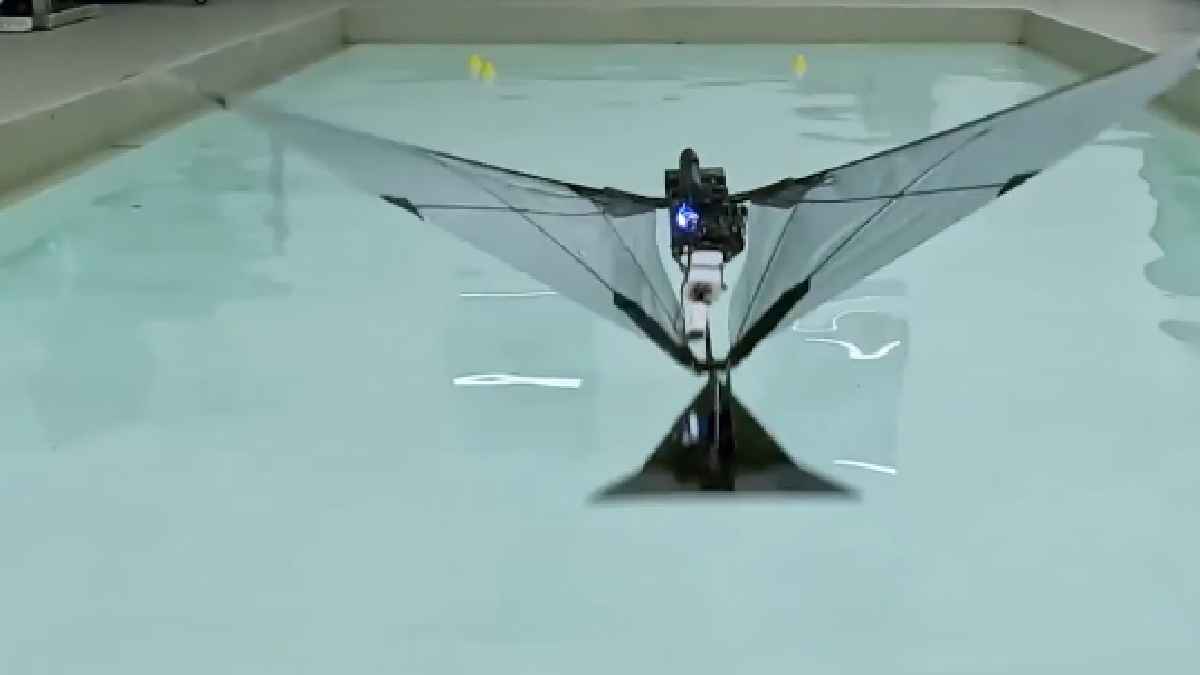
The technology will eventually help scientists in the field study difficult ocean environments, monitor wildlife and collect samples from places that are too remote for robots to reach.
The robot takes inspiration from puffins, seabirds known for their ability to move efficiently both above and below the water. Rather than separate propulsion systems for flight and underwater movement, the robotic design uses flapping wings to generate motion in both environments.
This approach would allow the robot to be more flexible and not need additional motors, propellers, and other propulsion tools. It is also a good robot for science missions to travel between air and water in the same operation.
A possible application is to study icebergs, the researchers say. A small robot that can fly towards an iceberg and then swim underwater would allow scientists to examine areas that are too difficult or dangerous for humans and larger research vehicles to reach.
The robot could also be used in marine biology. Similar machines could be used to monitor whales and other marine animals without the need for traditional boats or underwater vehicles.
MIT and EPFL engineers built a puffin-inspired robot that can fly and swim underwater.
— Space and Technology (@spaceandtech_) September 18, 2026
It uses flapping wings to move through both environments without extra propulsion.
The robot could study icebergs, monitor whales, and collect water samples. pic.twitter.com/Y1D9p6z02y
A modest robot platform may be able to study the marine ecosystem in a way that is adaptable to the environment and to the locations that are difficult to reach.
Another possible use is water sampling. The robot's ability to move between air and water could allow it to travel to a certain place before entering the water to collect samples. This could be useful for environmental monitoring and scientific research.
And this is also a trend in robotics that looks like animals evolved to operate effectively in challenging environments—birds, fish and other animals are inspiring the way machines can move in more than one medium.
The puffin-inspired robot shows how a single movement system can potentially perform different functions depending on the surrounding environment. Instead of building separate machines for aerial and underwater missions, researchers could eventually use hybrid robots capable of handling both tasks.
Although the technology is still at the research stage, it has potential for ocean science, environmental monitoring and wildlife research. Further development could be achieved in terms of the robot’s endurance, maneuverability, sensing capabilities and ability to work autonomously.
The MIT and EPFL project is one more step toward versatile robots that can operate across environmental boundaries.
The combination of flight and underwater swimming by the researchers could be a new way to do robotics that could eventually support scientific research in some of the world’s most remote environments.