Syria is facing a new wave of public anger after sharp increases in fuel prices have driven a national outcry and led to widespread protests across the country, a major challenge for President Ahmed al-Sharaa’s government as it tries to put in place a fragile post-Assad transition for the country.
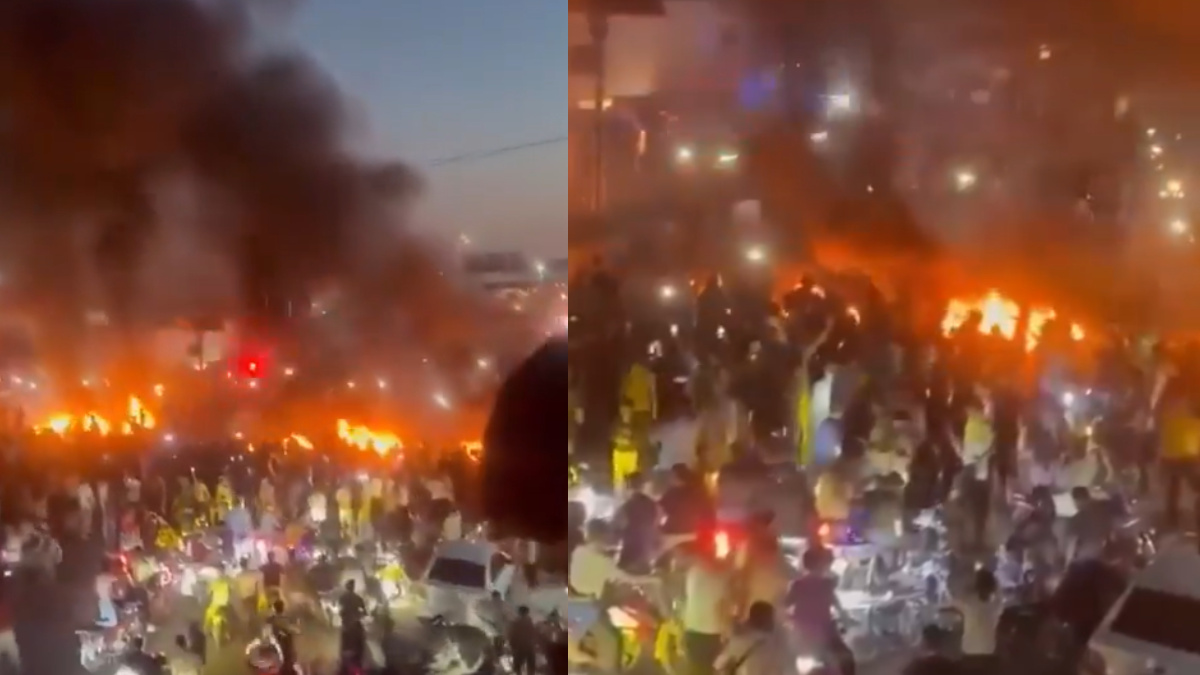
Protests erupted in several cities and towns since authorities raised fuel prices and protesters burned tyres, blocked roads and demanded the government reverse the decision. The unrest is seen as one of the greatest tests of public patience since the fall of former President Bashar al-Assad in December 2024.
The immediate trigger for the protests was a new increase in the price of petroleum products. Diesel prices rose by more than 40% from 125 to 175 Syrian pounds per litre, and 95-octane petrol from 152 to 195 Syrian pounds per litre. The price of 90-octane petrol also increased to 185 pounds per litre.
Protests were reported in several parts of Syria, including areas around Aleppo, Idlib, Raqqa and Hasakeh. Demonstrators blocked highways and burned tyres, blocking roads and, in some areas, preventing oil tankers from being driven along the key roads. The Damascus-Aleppo highway, which links central populations with major population and industrial centres, is also one of the roads hit by protests. Protesters in some areas also called for the resignation of Energy Minister Mohammed al-Bashir, expressing anger at the government’s handling of the fuel crisis.
But the demonstrations are particularly significant because Syria’s new government is trying to establish political stability and rebuild a country that has been traumatised for more than a decade. The country is still suffering from massive economic hardships - broken infrastructure, shortages, reliance on imported fuel. Around 90% of Syrians were living below the poverty line by the end of 2024, Reuters reported, proving how little ability there is for many families to cope with sudden increases in essential costs.
Fuel prices affect drivers beyond the motorists. Higher diesel and petrol costs can quickly translate into higher transportation costs, more expensive goods and higher operating costs for businesses. In rural areas, diesel is critical in agriculture, machinery, transportation and heating. The high fuel price increase has worried farmers, workers and low-income families.
Transportation costs have already begun to rise in some areas. Fares in northeastern Syria increased after the fuel price decision, adding another burden to those who rely on public or private transport to get to work, to the markets and to get basic services. And as prices of everyday goods go up because distributors and traders have to move goods between cities and regions, the increase will also put a strain on the economy.
The Syrian government has defended the move as a temporary change in the country’s fuel pricing policy and not a permanent one. It said the rise was driven by exceptionally high global costs to get petroleum products, higher transportation and shipping costs and outages in energy supplies. Maintenance work at the Baniyas refinery has also been blamed for the reduction in domestic refining capacity and increased the dependence of the country on imported refined fuel, authorities said.
Syria’s domestic oil production is still far below its consumption levels. The country is producing about 102,000 barrels of oil per day, and domestic demand is around 325,000 barrels per day, and is therefore importing a lot of oil. That makes Syria especially susceptible to international energy market disruptions and rising transportation costs.
It is also a matter of the timing of the price hike. Global energy markets have been under pressure because of conflicts and disruptions in the Middle East. Higher oil and refined-fuel prices have driven up procurement costs for countries that rely heavily on imports. Syria’s government says that external pressures, as well as the temporary reduction in refinery capacity, forced it to raise prices in order to protect the country’s fuel supplies.
But the economic explanation has not made public anger go away. For many Syrians, the fuel increase is just another example of the disconnect between promises of economic recovery and the hard reality of daily life. So the protests are bigger than fuel prices. They epitomise broader concerns about wages, inflation, employment, public services and the pace at which living standards can recover from decades of war.
The unrest could be an important test for the government of al-Sharaa. But it is difficult to balance economic reforms with public expectation and rebuild institutions and infrastructure. In order to keep government finances stable and to secure supplies, subsidies and prices may have to be slashed, but so does immediate hardship for a population that already feels extreme economic pressure.
Syria’s People’s Assembly has also been calling for an urgent meeting with the energy minister after the protests. The move shows that the fuel price decision has become a political issue instead of just an economic one.
The government will be watched closely at this point for what happens to the protests and the response to public demands. If it can stabilize supplies of fuel and tell how long the price hikes will last, there may be less tension if they can explain how long to stay stable, however, and how long things are going to go on. But if prices continue rising without any tangible improvements in incomes and basic services, fuel could serve as a sign of general frustration with the country’s economic transformation.
The recent protests emphasise a stark reality for Syria’s new leadership: rebuilding a war-damaged economy, of course, will take tough decisions, and they have political consequences; at the same time, ordinary people are already struggling to afford necessities. The fuel crisis has thus emerged as the clearest test yet of whether Syria’s fragile transition can bring economic relief and political change at once.