Trump has signed a White House proclamation for another year to extend the H-1B payment requirement for $100,000 and has signed a White House proclamation on September 18, 2026, which will last until September 21, 2027.
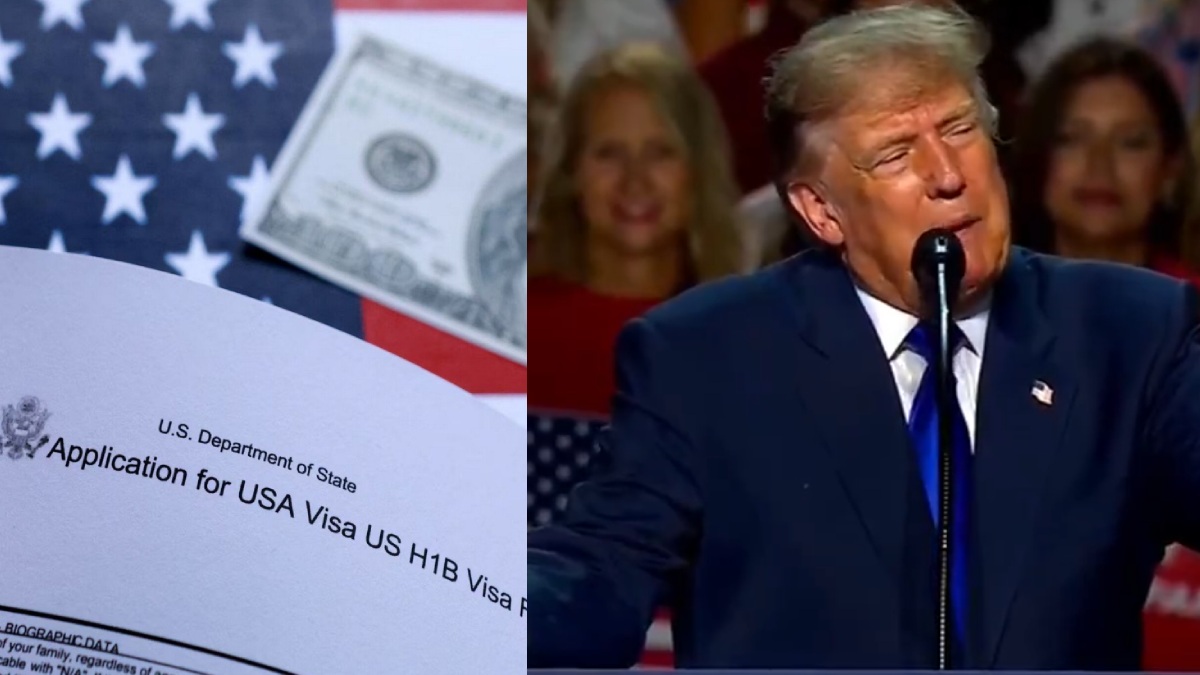
What Has Trump Extended?
The Trump administration first imposed the $100,000 payment requirement in September 2025. This proclamation extends the restriction for another 12 months.
Under the new policy, certain H-1B specialty-occupation workers who are outside the United States can be restricted unless the relevant petition is accompanied or supplemented with a $100,000 payment.
There are limited exceptions. The US Secretary of Homeland Security can exempt an individual, company or industry if hiring is determined to be in the US national interest.
It Is Not a $100,000 Personal Visa Fee
The measure has been called a "$100,000 H-1B visa fee" but the difference is important.
The payment is usually linked to the employer sponsoring an affected H-1B worker and not a $100,000 that every Indian or foreign professional must pay personally.
The White House’s previous guidance also said that the requirement does not apply to a previously issued H-1B visa or standard renewals.
Why Indians Could Feel the Impact
H-1B programme and Indian professionals are especially connected to the H-1B programme, especially in technology and other specialised professions.
According to US Citizenship and Immigration Services data cited by Moneycontrol, people born in India accounted for 71% of approved H-1B petitions in fiscal year 2024, making Indian professionals the largest nationality group in the programme.
So the higher employer cost could affect companies looking to hire people from India for new US jobs. Employers might have to weigh additional costs when deciding to sponsor an overseas candidate.
Policy is accompanied by wider H-1B changes.
The extension is part of a wider Trump administration effort to change how the H-1B programme works.
Along with the proclamation, Trump signed an executive order that requires federal agencies to consider an employer’s recent or planned layoffs of similar US workers when deciding on H-1B applications. The administration argues the measures are in response to abuse of the programme.
The White House has also claimed that registrations of major IT staffing and outsourcing companies fell sharply after the 2025 restrictions took effect. These numbers are administration claims, not a comprehensive assessment of the policy's overall effects.
Legal Challenges Continue
The extension comes while the $100,000 requirement remains tied up in legal challenges.
Reuters reported that a federal judge had ruled against the fee increase and that the administration’s appeal is being considered by a federal appeals court.
This is to say that the extension does not eliminate legal uncertainty about the policy.
What it means for Indian professionals?
For Indians planning to work in the US on the H-1B route, the extension means the additional employer-side cost and restrictions will persist with the immigration landscape through September 2027, pending the outcome of ongoing litigation.
But the policy does not mean that every Indian H-1B holder will suddenly have to pay $100,000. Its application depends on the type of petition, the worker’s circumstances and the exceptions outlined by the US government.