Trump is once again targeting India’s electoral system as he pushes for tougher voter identification and citizenship requirements in the United States. Trump also said Indian elections use photo identification and asked Congress to adopt the Safeguard American Voter Eligibility (SAVE) America Act, a bill that would make it harder to register to vote in federal elections.
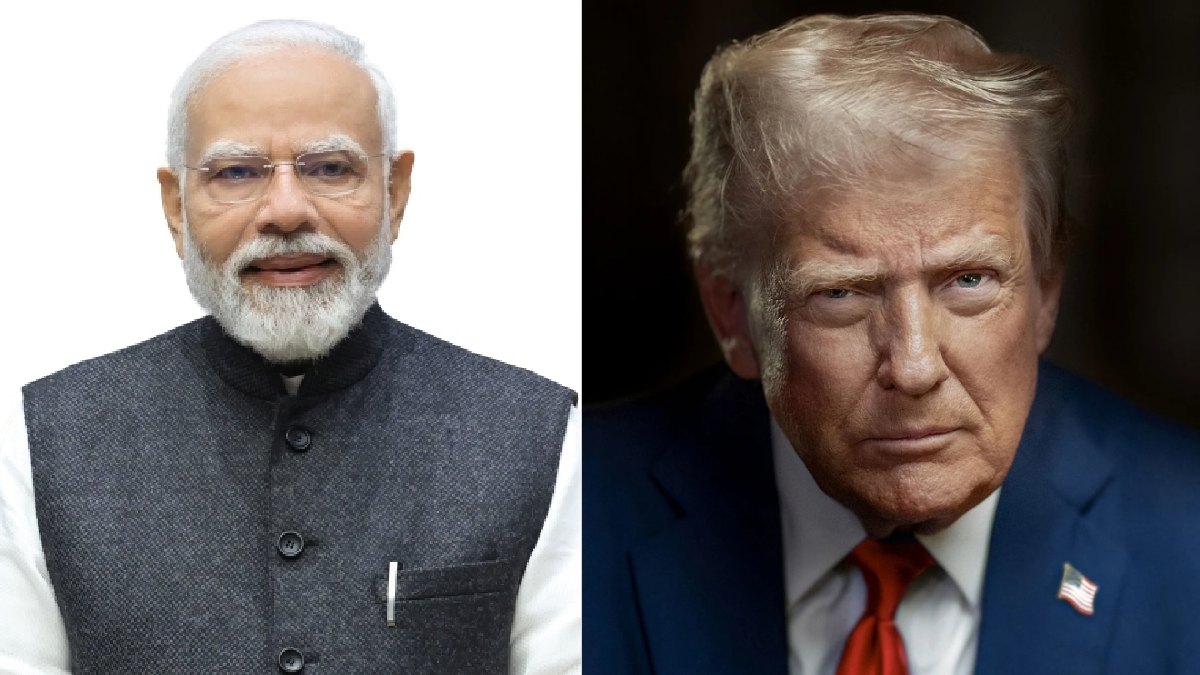
In a speech on his Truth Social platform, Trump referred to an incident of India’s Chief Election Commissioner Gyanesh Kumar interacting with the US administration. Trump said Kumar had asked why elections in the United States can go on without a universal and valid photo identification document. Trump used the comparison to back up his argument that American elections should come with better voter authentication measures.
“Earlier this month, India's Chief Election Commissioner, Gyanesh Kumar, asked our Administration -- How can you have Elections in the US without a valid Photo ID,” Trump wrote. He then pointed to India's 2024 general election, which is of such scope and is done with voter identification in mind.
Trump said India’s last general election was 646 million voters and less than one per cent of voters used postal ballots. He also stressed that voters were required to present valid photo identification documents. In a speech in the United States, Trump said the United States should have similar safeguards as a means to enhance election security.
The remarks are part of Trump’s larger effort to get the SAVE America Act passed. The legislation sets up proof-of-citizenship requirements for people that register to vote in federal elections. It would also mandate Voter Identification requirements for every state and significantly curb mail-in voting.
Sergio Gor Supports Trump’s Voter ID Push
US Ambassador to India Sergio Gor also backed Trump’s comments, specifically with regard to India’s 2024 Lok Sabha election. Gor said India’s voting system is an example of large-scale election administration involving voter identification.
Gor said Trump was “absolutely correct” and that the large number of Indian voters who participated in the election showed the feasibility of requiring identification. Gor asked the US Congress to approve the SAVE America Act.
However, the endorsement is only one more layer of the debate over how election procedures in America are done, with the different states having different voter identification laws, voter registration, and voting in a mail.
What Is the SAVE America Act?
The SAVE America Act would require proof of US citizenship before an individual can register to vote in federal elections. Trump and the White House are among those who support the bill, saying it also requires citizenship verification and stronger identification requirements in order to protect elections.
The White House has framed such legislation as a means to ensure that only American citizens take part in federal elections. Trump has repeatedly raised election security and has claimed stronger verification requirements could prevent electoral fraud.
The proposed legislation also would place restrictions on mail-in voting. In the administration’s plan, voting by mail would be limited to illness, disability, military service or travel, and other reasons. States would be asked to take steps to remove non-citizens from voter registration rolls.
Supporters have framed the proposal as a common-sense election safeguard while opponents have raised concerns about the potential impact of additional documentation requirements on eligible voters. The legislation has become part of the larger political struggle in Washington over voting access, election administration and federal oversight.
India-US Election Comparison
Donald Trump’s reference to India highlights a significant difference between the two countries’ electoral systems. India has a uniform voter identification system in place by the Election Commission of India, and voting rules for the United States vary dramatically across states.
India’s general election is also one of the world’s largest democratic exercises involving hundreds of millions of voters in different phases. Election authorities use voter identification documents and established procedures to authenticate voters at polling stations.
But the comparison is more of a larger American concern about how to strike a balance between security and access to voting. In favor of mandatory identification will say that uniform rules will increase public confidence in elections and against those who believe that additional documentation might put some voters at a disadvantage.
Trump’s latest remarks therefore place India’s electoral model at the center of an ongoing US political debate. With a focus on India’s voters’ identification processes and relatively low postal voting, the U.S president is attempting to generate support for a nationwide approach to voter authentication.
The future of the SAVE America Act will rest on the congressional negotiations and the extent to which lawmakers can overcome partisan differences on voting regulations. For now, Trump’s reference to India reflects his continued campaign to draw on international comparisons to buttress his calling for tighter voter identification requirements in the United States.