The U.S. House of Representatives has again voted to end military action in Iran with a war powers resolution to limit Trump’s power to go to war with Iran without the votes of Congress. The resolution passed by 220 to 204, with most Democrats and seven Republicans in favor.
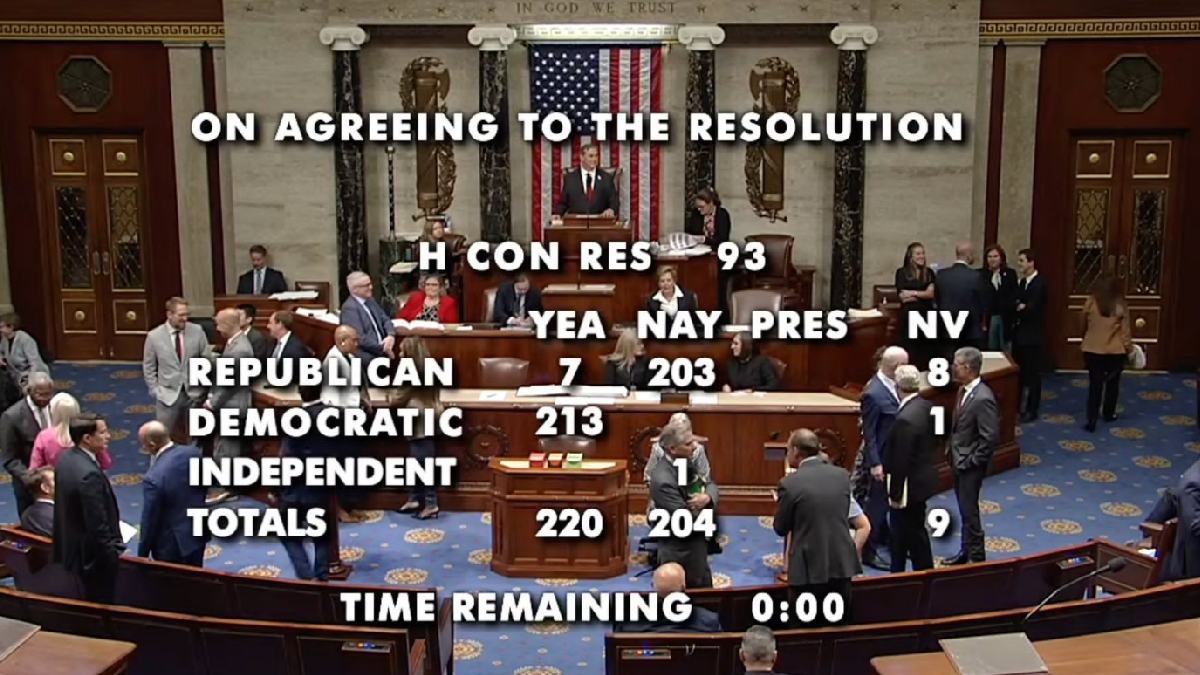
The vote is the third time the House has taken action to end or limit US military involvement in the Iran conflict. Under the resolution, US forces would be forced to withdraw from hostilities with Iran unless Congress provides specific authorization.
But the resolution has major hurdles. Similar measures approved earlier this summer failed to reach the president’s desk. And the latest House action is unlikely to lead to a significant change in US military policy—especially given the administration’s resistance to congressional efforts to limit the president’s power.
As a former Marine with military service in Iraq, Massachusetts Democrat Seth Moulton was among those who pushed for the resolution. Moulton questioned the continuation of the conflict and said that Congress has a constitutional obligation to determine the administration’s military decisions in the current situation.
Republican Representative Brian Mast of Florida, chairman of the House Foreign Affairs Committee, opposed the measure. Mast asked what military resources Democrats would try to remove from the region and argued that Iran is still a threat to America. He defended Trump’s approach by saying that the president was trying to put an end to decades of ongoing hostilities with Iran.
In the third House vote, a widening Congressional divide is also highlighted.
The vote is similar to previous House efforts last summer, but the number of Republicans who have been voting for it has gone up. Seven Republicans joined Democrats in the resolution’s passage, highlighting divisions within Congress over the extent of presidential powers of war and the US military presence in the region.
War powers resolutions are designed to reinforce Congress’ constitutional role in decisions involving prolonged military action. The Iran debate has extended beyond the immediate war and into a broader debate about the balance of power between the White House and Congress.
The House vote also comes as lawmakers return to their districts and campaign ahead of the midterm elections. With the elections coming, Iran has become an issue in the political culture and it is the domestic economy that is at the center of national security, the spending on energy and the role of America overseas.
Iran war adds pressure ahead of midterm elections.
Trump’s war started on 28 February and has continued for nearly seven months and new fighting and missile exchanges have spread across the region. The lengthy fighting and its economic effect has raised concerns.
One of the top concerns for Americans is the effect on energy markets. The Strait of Hormuz, a key route for global oil transportation, has been disrupted so fuel prices have been a concern. Higher gasoline prices could be a big deal for voters as lawmakers return to campaign scenes.
The war is also a huge financial burden for the US government. As of August 1, the conflict had cost more than $38 billion, according to the Congressional Budget Office. Military expenditure from the war was between $2 billion to $3 billion a month, depending on the intensity of military operation, the agency estimated.
CBO also predicted that the conflict would have broader effects on the economy. Inflation was expected to be 0.5 percentage points higher than previously projected heading into 2027 because of the war.
Congressional Challenge To Trump's Military Authority.
The House votes again show the continuing dispute over the president’s authority to conduct military operations without explicit congressional authorization. Even if the resolutions are not passed into law yet, they give a clear indication of opposition in the House.
The issue could be very important as lawmakers go into the midterm election campaign. Republicans control both Houses of Congress and Democrats are going for a gain. The Iran war, its financial toll and its effect on fuel prices could be among the issues during the campaign.
For now, the House resolution does not immediately end US military operations in Iran. Any change in policy would require more congressional action, the Senate and the administration’s response. But the vote brought back to attention the constitutional issue of presidential war powers and the US’s future role in the region.