After weeks of public exchanges that strained one of the closest political relationships between the West and Italy, U.S. President Donald Trump and Italian Prime Minister Giorgia Meloni appear to have softened their tone. At the NATO summit meeting in Ankara, both leaders appeared to take a significantly warmer tone, although the policy dispute that had led to the fallout hasn’t dissipated.
The rift began when Italy refused to support the United States’ military operations against Iran in a move that frustrated Trump and marked a rare foreign policy split between Washington and Rome. Since then, the dispute has turned into personal statements and political barbs about Italy’s relationship with America and how the United States is going to deal with that relationship in the future.
Trump: "It Became a Little Bad"
Trump acknowledged in a press conference alongside Turkish President Recep Tayyip Erdogan that his relationship with Meloni had deteriorated, but he did not escalate the dispute with Meloni.
"Oh, I don’t know. I think she’s a nice person. We’ve had a good relationship, but it became a little bad because she refused to help us," Trump said when asked about the Italian Prime Minister.
"I didn’t put a lot of pressure on her, but she refused to get involved with Iran. You can imagine I wasn’t happy with that."
Trump maintained that Italy had made “a mistake” in not taking part in the U.S. military campaign against Iran. But unlike in his prior comments, his tone was measured and left the door open for a better relationship.
Meloni Plays Down Rift
Meloni also sought to lower the political temperature.
While speaking to Italian reporters at the NATO Summit, she described her relationship with Trump as “cordial” and declined to respond to his previous personal criticism.
Although she didn't gloss over the policy differences between Rome and Washington, her words indicated she was keen to prevent those disagreements from becoming permanent diplomatic ruptures.
Her measured response comes at a time when NATO allies are already grappling with differences over security, defence spending and Middle East policy.
How the Dispute Escalated
Until recently, Meloni was widely seen as one of Trump's closest allies in Europe. Their conservative political outlook had built a good rapport and Italy had relatively direct access to the White House.
That relationship began to unravel when Italy refused to participate in the US military campaign against Iran.
The disagreement soon turned personal.
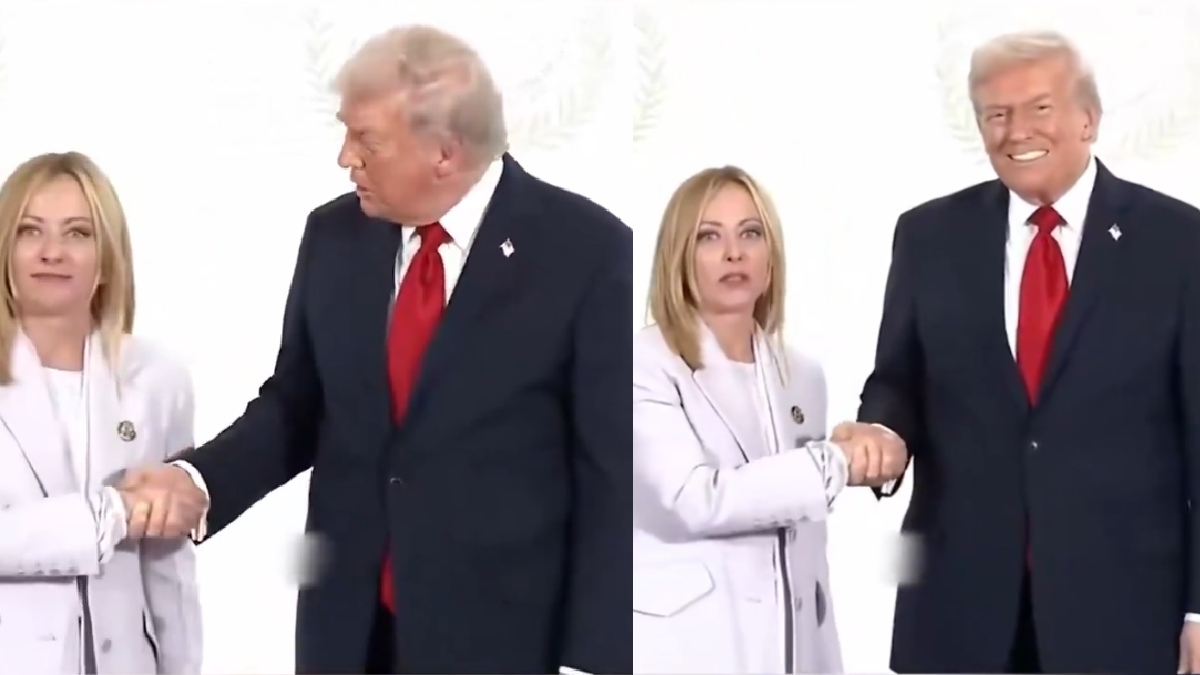
Trump then claimed in an interview that Meloni had “begged” him for a photograph in the G7 summit in France. Meloni responded by saying she was “appalled” by the remarks and criticised the US President for publicly attacking one of America’s allies.
Trump then went on to make the accusation that Meloni was trying to repair ties with Washington to boost her domestic popularity. He also posted a picture of himself with Meloni on Truth Social with the caption, “Restraining Order Needed” that’s also widely seen as a swipe at the Italian leader.
Diplomatic Differences Remain
Although both leaders have taken a less confrontational tone, the underlying disagreement over Iran has not gone away.
Italy is still holding its position that it should not have backed the US military campaign, and Trump has repeatedly argued that allies should have provided greater support during the war.
Whether the warm exchanges in Ankara show the beginning of a genuine reconciliation or just a temporary easing of tensions remains to be seen. With both leaders firmly entrenched in the Western alliance, the ability of both leaders to smooth political differences without turning them into a prolonged diplomatic dispute could be very important for US-European relations.