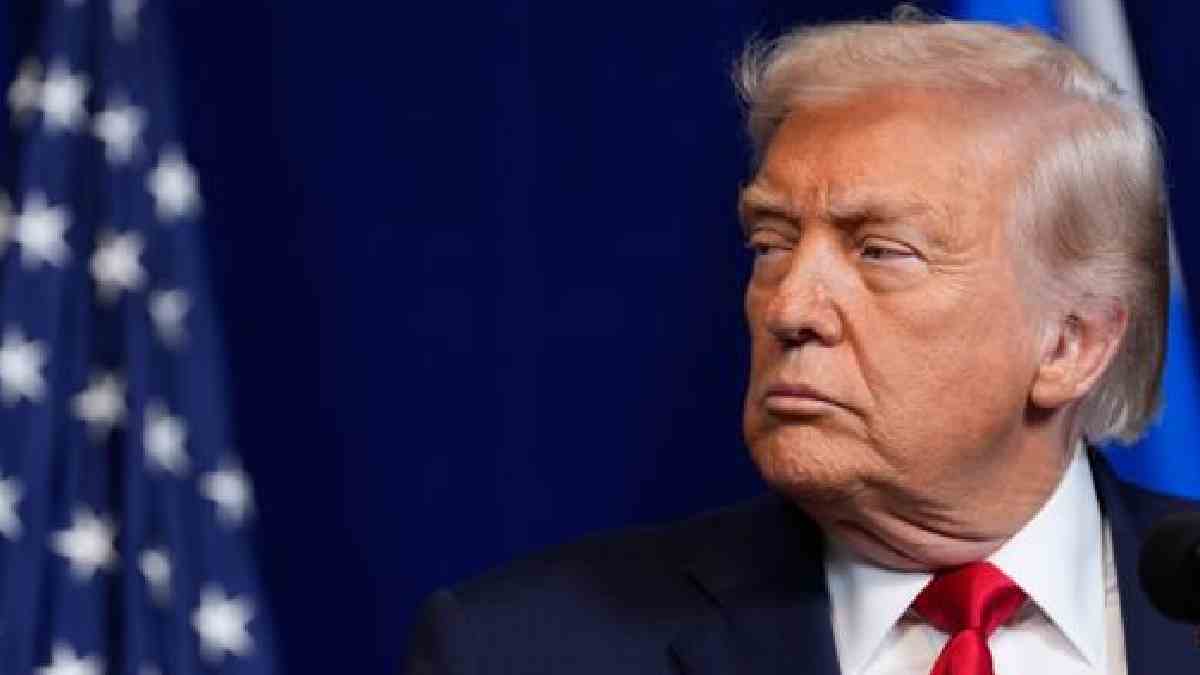
The tension between Iran and the United States has been reignited in recent weeks as US President Donald Trump declared that “1,000 missiles are locked and loaded” and ready to strike Iran if the country tries to assassinate him, as he warned of the likelihood that Iran would be killed if it tries to assassinate him.
In a post on his social media platform, Truth Social, Trump said the United States military had already been instructed to respond with overwhelming force if any threat against him materialized.
"1,000 missiles are locked and loaded and aimed at the Islamic Republic of Iran," Trump wrote, and added the US military was prepared to “completely decimate and destroy” targets across Iran if such an attack were to happen.
This is the latest escalation of rhetoric between Washington and Tehran and comes just as a matter of time for Middle East stability.
Iran Says it Honoured the Ceasefire
Trump's remarks came a day after he said that although the ceasefire with Iran was effectively “over,” he had agreed to continue negotiations with Tehran.
But Iran rejected the US President's characterization of the situation.
Iran's Foreign Minister Abbas Araghchi insisted Tehran had complied with its commitments under the existing MoU signed with the United States.
Araghchi said Iran has kept the agreed status of the nuclear programme and that Washington is violating the agreement by imposing more restrictions and reversing previous commitments.
The longer term of any agreement would depend on mutual compliance from both countries, rather than unilateral demands from them.
Diplomatic talks continue despite rising tensions.
While direct talks have fallen off now and again, diplomatic negotiations are still going on today.
Some media reports suggest that a delegation from Qatar that has mediated between the two countries has travelled to Tehran to continue the talks. Oman is also expected to hold more talks on maritime security in the Strait of Hormuz.
Trump acknowledged Iran had asked for continued talks but said that the United States no longer considers the ceasefire to be in place.
Strait of Hormuz remains a Flashpoint
Another major point of contention is the Strait of Hormuz, one of the world’s most important oil shipping routes.
According to media reports, Washington has urged Tehran to stop activity that is harmful to commercial shipping and to guarantee freedom of navigation in the strategic waterway.
Iran is claiming that it has legitimate security interests in the region and has taken greater control over maritime activity after months of military tension. It’s still a major obstacle to re-establishing normal diplomatic ties.
Regional leaders are calling for restraint
There are also several regional powers trying to prevent such a situation.
Qatar has continued to attempt mediation while Pakistan has pleaded with both sides to keep the fragile peace. Pakistani Prime Minister Shehbaz Sharif has also spoken with Qatar’s Emir and Iranian President Ebrahim Raisi to hold conversations and discuss the need for avoiding a major conflict in the region.
Meanwhile, Iran's parliamentary leadership has said that while the country would like peace, it is prepared to defend itself against any military action.
Uncertain Path Ahead
The current threats have illustrated the weak relations between Washington and Tehran. And although diplomatic channels are still open through regional mediators, both sides are now issuing vigorous public statements that can jeopardize the peace process.
With unresolved issues around nuclear commitments, sanctions, and the Strait of Hormuz still unresolved, international observers are worried that an additional military or political provocation could accelerate the regional conflict and therefore raise the risk of a wider regional conflict.