One major political development has been a catalyst for increasing the debate over the future of the United Kingdom, and leaders from Scotland, Wales and Northern Ireland have rallied around the political climate of that nation to demand greater self-determination and the right of the nations of Scotland, Wales and Northern Ireland to decide their own constitutional future.
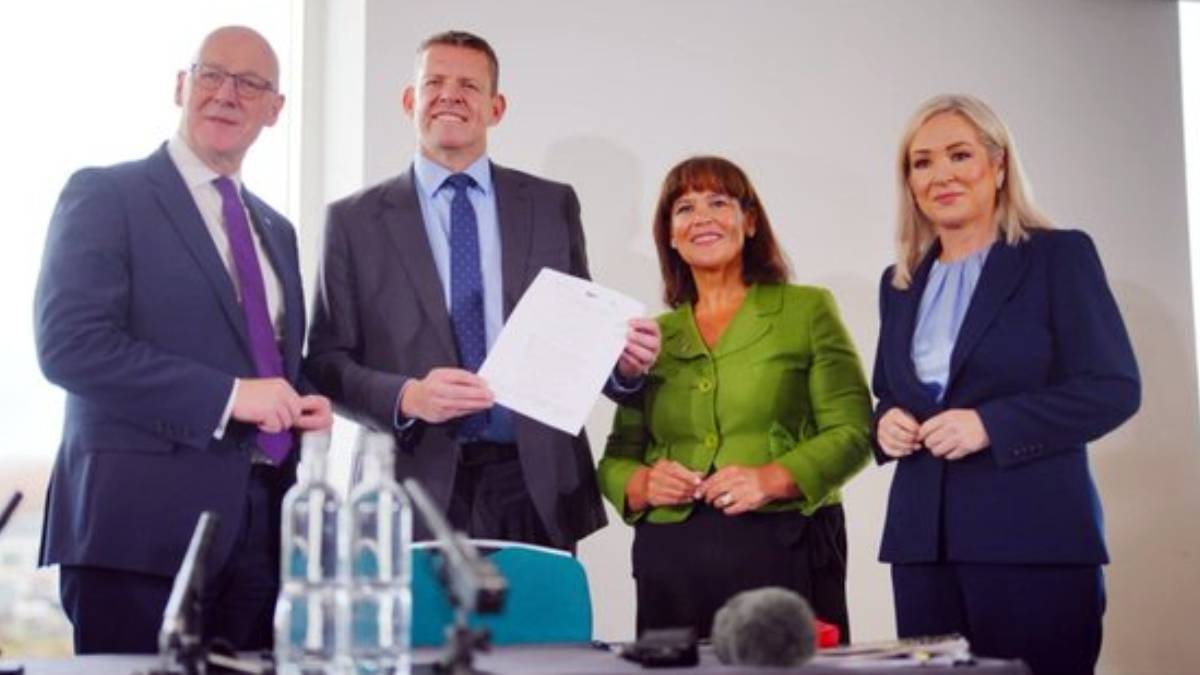
The leaders signed a joint agreement in Cardiff on 14 September in an unprecedented collaboration of the pro-independence political movements in the three countries. The agreement insists that the people of Scotland, Wales and Northern Ireland should have the right to decide their own futures without Westminster blocking it.
But the development does not mean that the United Kingdom is already a broken country. Scotland, Wales and Northern Ireland are still part of the UK. The declaration is not a political means of changing the constitution, and there will be more referendums.
The agreement was signed by Scottish National Party (SNP) leader John Swinney, Plaid Cymru leader Rhun ap Iorwerth and Sinn Féin's Michelle O'Neill, with Sinn Féin president Mary Lou McDonald also involved in the Cardiff discussions. The leaders sat as representatives of their respective political parties rather than as a joint government body.
The development is particularly important as pro-independence parties now run the governments in all three countries. They’re not the same in what they want, however. The SNP supports Scottish independence while Plaid Cymru advocates Welsh self-determination and independence, and Sinn Féin’s constitutional goal is Irish reunification rather than an independent Northern Ireland.
Scotland has already held an independence referendum. In 2014, Scottish voters rejected independence, with 55.3% voting to remain in the United Kingdom. The SNP is now seeking another chance to put the question to voters, but the UK government has been resistant to calls for a second referendum.
Northern Ireland has a different constitutional route. Under the Good Friday Agreement, a referendum on Irish reunification can be held if the required conditions are met. Sinn Féin has been calling for a future border poll as part of its broader campaign for a united Ireland.
Wales has a different situation. Plaid Cymru is in favour of Welsh independence, but it has yet to produce a timetable for an immediate referendum. The Welsh government has also emphasised greater powers, stronger devolution and the ability of the Welsh people to decide their own constitutional future.
But the Cardiff declaration still represents a major political change because the three movements have come to an agreement on the principle of self-determination and have agreed to work together. Their leaders say the decisions about constitutional arrangements should ultimately be made by the people living in the respective nations.
The agreement comes at a time of renewed debate over the British political direction after Brexit. The leaders have also rallied around stronger ties with Europe, saying Brexit has diminished economic and political opportunities for their countries.
The UK government, however, has not accepted that the three nations can simply leave the United Kingdom through the Cardiff declaration. An actual constitutional breakup would involve complex legal, political and economic negotiations, as well as democratic processes in the individual nations.
So, for now, the most accurate description is that the UK is facing a new and potentially historic independence push—not that the UK has already broken apart.
The Cardiff agreement could still represent a significant point if the support for independence grows in Scotland, Wales and Northern Ireland. It puts the UK’s constitutional future back on the political agenda and puts the region’s nationalist movements in partnership.
Whether the declaration eventually leads to independence referendums—or even the dissolution of the UK—will depend on future elections, public opinion, negotiations with Westminster and legal processes governing constitutional change.