In a major escalation of counter-terrorism efforts, the United States military launched a sweeping wave of airstrikes against more than 70 Islamic State (ISIS) targets across central Syria on Friday. The Pentagon characterized the mission, dubbed Operation Hawkeye Strike, as a "massive strike" and a direct act of "vengeance" following the deaths of three Americans in the region last week.
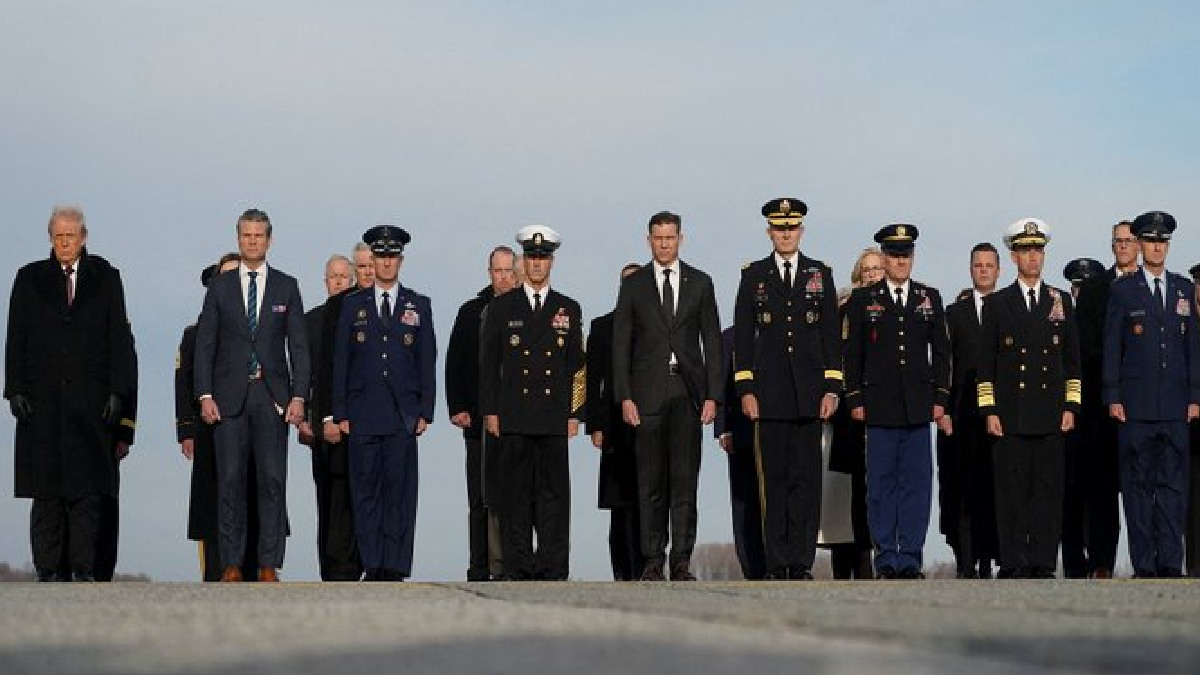
A Declaration of Vengeance
The operation was authorized by President Donald Trump in response to a deadly ambush on December 13, 2025, near the ancient city of Palmyra. That attack, carried out by a lone gunman with suspected ISIS ties who had infiltrated Syrian security forces, claimed the lives of two Iowa National Guard soldiers—Sgt. Edgar Brian Torres-Tovar and Sgt. William Howard—along with an American civilian interpreter, Ayad Mansoor Sakat.
Defense Secretary Pete Hegseth announced the start of the operation on social media, using firm language to signal a shift in U.S. posture.
"This is not the beginning of a war—it is a declaration of vengeance," Hegseth stated. "The United States of America, under President Trump’s leadership, will never hesitate and never relent to defend our people."
Precision Strikes Across Central Syria
According to U.S. Central Command (CENTCOM), the strikes utilized a formidable array of American airpower. U.S. Air Force F-15E Strike Eagles and A-10 Thunderbolt II "tank-busters" were joined by AH-64 Apache attack helicopters and HIMARS rocket artillery. Jordanian Royal Air Force F-16s also participated in the coordinated mission.
The targets included:
- ISIS Infrastructure: Command and control centers.
- Weapons Caches: Sites used for storing explosives and munitions.
- Training Camps: Facilities used by remnants of the extremist group to regroup.
More than 100 precision munitions were deployed during the initial wave, hitting targets stretching from the central desert of Palmyra to the Deir ez-Zor province and as far north as Raqqa.
Shifting Alliances in a Post-Assad Syria
These strikes are the first major U.S. combat operations in Syria since the fall of the Bashar al-Assad regime in December 2024. Under the new interim leadership of Ahmad al-Sharaa, the Syrian government has shifted from an adversary to a tentative partner in counter-terrorism.
President Trump noted that the Syrian government was "fully in support" of the strikes, reflecting a warming of ties between Washington and Damascus as both seek to prevent an ISIS resurgence in the vacuum left by the former regime.
Looking Ahead
While U.S. officials described the operation as a retaliatory strike rather than a new war, they warned that "more strikes should be expected." The Pentagon emphasized that the mission's goal is to ensure that ISIS remains incapable of launching further attacks against U.S. personnel or regional stability.