Warming seas are changing marine life around England’s south coast — octopus populations are surging in waters around Brixham and the contrast with some traditional fish species is stark.
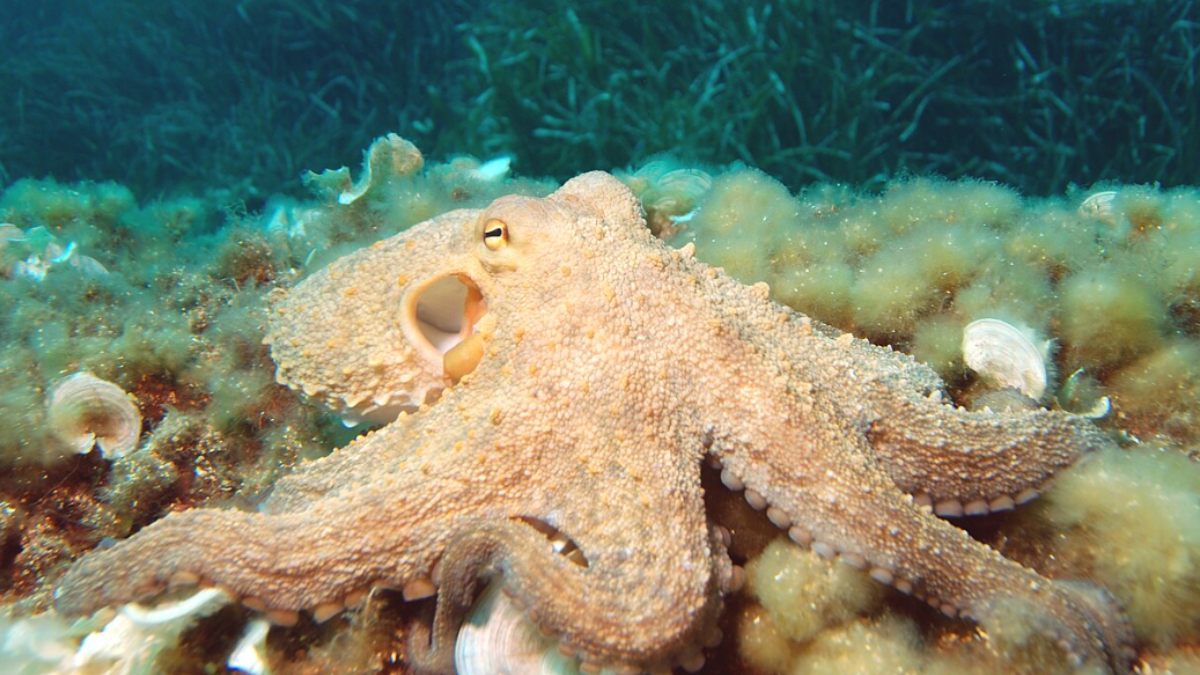
At Brixham’s busy fish market, large white boxes are carried around by workers in yellow overalls carrying the day’s catch of crab and hake and other seafood. But octopus — though becoming dramatically more abundant offshore — is kept separate from the rest of the catch.
More than 700 tonnes of octopus were landed at Brixham in the first seven months of 2026. That is more than six times the annual average between 2021 and 2024 — proof of just how fast things are changing.
Warmer Waters Favour Octopus
The rise is part of a bigger transformation happening under Britain’s seas. Warm water species are expanding their ranges into places where they previously weren’t suitable.
Octopus are adaptable predators and can respond quickly to changes in environmental conditions. Warmer water will increase their survival and reproduction but also decrease the availability of prey.
The increase is an economic opportunity for fishing communities but the sudden jump also raises questions about how sustainable the fishery will be and how the octopus population could affect the wider marine ecosystem.
Traditional Fish Face Pressure
While octopus are benefitting from warmer waters, fish species adapted to cooler waters have a very different future. Some may move northwards or into deeper cooler water in search of conditions more suitable for them as temperatures rise.
Such movements can have major consequences for fishing communities. Ports and fleets based on particular species may find their traditional catches less predictable; fishermen may be forced to travel farther or adapt to new species appearing in local waters.
The changing balance between species can also affect the wider food chain. An increase in octopus could have an effect on populations of crabs, shellfish and fish that they prey upon (further ecological change).
A Warning From Britain’s Seas
Scientists are increasingly using changes in marine species distribution as evidence of a warming ocean. The increase in octopus landings at Brixham is an example of how quickly marine ecosystems can respond to changing temperatures.
But climate-driven changes aren’t always easy. A species that benefits from warmer conditions today could have new pressures tomorrow as ecosystems change again.
Understanding these changes will become more important for Britain’s fishing industry. Catching data, ocean temperatures and species movements can all help fisheries prepare for a future in which the seafood along Britain’s coastline may look very different.
The octopus boom at Brixham is therefore not just a story about one unusually successful species. It’s a window onto a changing ocean – and a reminder that warming seas are reshaping life below the waves.