Images and videos of construction transport vehicles in China being fully covered and cleaned before leaving construction sites have attracted attention online, highlighting how much China is focused on preventing dust, debris and material spillage from construction activity.
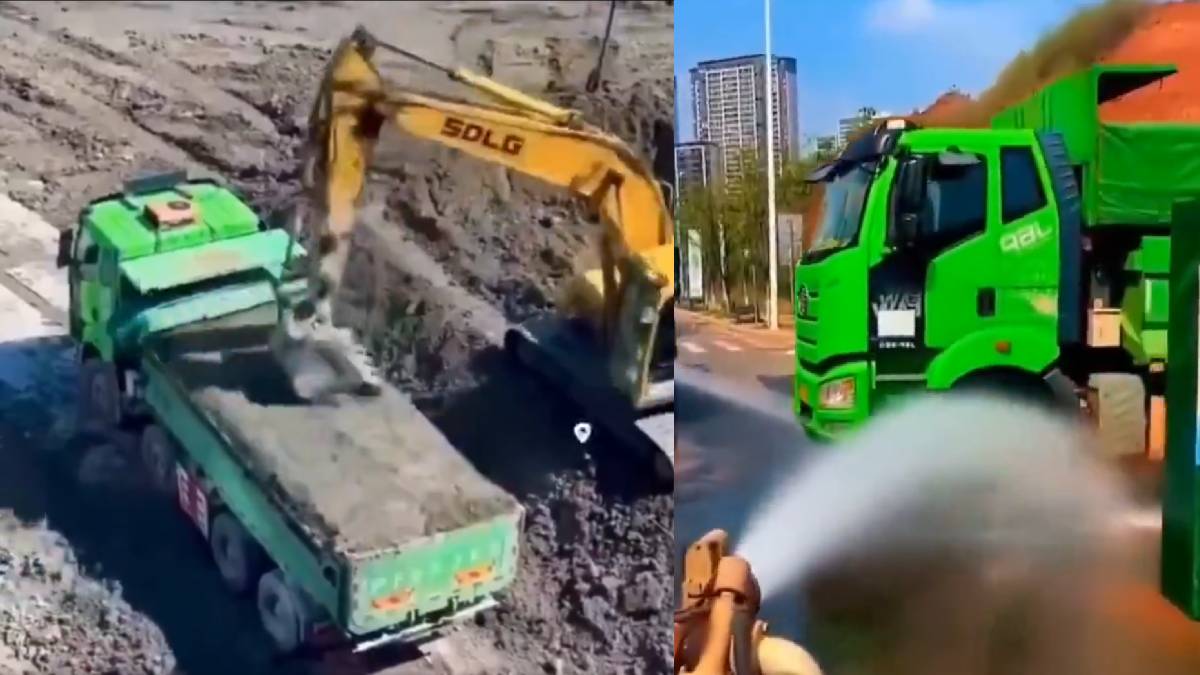
The practice is part of a wider construction site environmental management strategy. Rather than allowing trucks carrying soil, sand, gravel or other construction materials to enter the public road with uncovered loads, authorities in many Chinese cities and jurisdictions impose requirements to prevent materials from falling onto roads and to reduce dust generated during transportation.
Construction activity can be a major source of particulate pollution. Dust from the excavated soil, building materials, demolition work and vehicle movement can spread beyond construction boundaries, affecting nearby roads and communities. Managing dust at its source is therefore central to urban environmental management.
Covered Loads Help Prevent Spillage and Dust.
One of the most visible measures is the use of covers over trucks transporting construction materials. Keeping loads enclosed can reduce the possibility of loose material being blown away while vehicles are travelling.
It can also prevent soil, sand and other materials from leaking out onto the public road. Road contamination by construction vehicles can then create more dust when other vehicles drive over the material.
China has established extensive environmental standards and regulatory systems for transport, vehicle emissions and construction-related pollution. But there is always an important difference between national standards and local enforcement measures. Transport and environmental requirements can be implemented by national laws and provincial and municipal laws, but the exact requirements could differ from location to location. (China-certification.com)
In China, every construction transport vehicle must be fully covered to prevent spillage!
— Dominic Lee 李梓敬 (@dominictsz) September 5, 2026
And they all get thoroughly cleaned before exiting the site!
These aren't just suggestions, they're mandatory standards across the country!
It keeps the roads clean and the air fresh for… pic.twitter.com/ESKzSqAkWM
Vehicles Cleaned Before Entering Public Roads
Another highly visible measure is the cleaning of construction vehicles before they leave a site. Mud and dirt can be deposited on tyres and undercarriages of trucks as they pass through construction areas.
If that material is sent onto public roads, it can create muddy surfaces, dust and additional maintenance problems. So vehicle-washing facilities at construction site exits are used in some locations to remove accumulated dirt before trucks join normal traffic.
The idea is simple: control the pollution before the vehicle reaches the road.
This strategy is particularly useful in large cities where thousands of construction vehicles can be seen passing through rapidly developing districts. Construction material can be stored in designated areas, not on the highway, so road-cleaning services are not compromised and cleaning the city is more effective.
Construction Dust is a Major Environmental Problem
Construction dust is not only about the appearance of the particles. Fine particulate matter can lead to poor air quality, and large particles can settle on roads, buildings, and surrounding infrastructure.
Construction site dust control measures such as enclosure, water spraying, proper handling of materials and vehicle-related controls are important tools to reduce dust pollution. (mdpi.com)
China has also imposed increasingly stringent environmental requirements on mobile machinery and other equipment in construction and related sectors. Its entire environmental policy regime is increasingly focused on emissions and compliance.
A Broader Urban Management Approach
The truck-covering and vehicle-cleaning practices illustrate a much more general principle in urban environmental management: prevention is often more effective than cleaning up pollution afterward.
Instead of waiting for roads to get covered in mud or construction material, authorities can require companies to take preventive measures at the source. Covered loads, controlled exits and vehicle washing can work together to reduce the amount of dirt and dust reaching public spaces.
At the same time, claims that these exact practices are uniformly enforced as an identical mandatory standard “across the entire country” should be treated carefully. China’s regulatory framework contains national laws and local rules and enforcement practices that differ from one city to another, so implementation will be city-specific and project-specific.
However, the approach shows how construction site management is directly connected to road cleanliness, dust reduction and urban environmental protection.
For rapidly developing cities, where construction is inevitable, such measures can be the difference. Properly covering trucks and ensuring they are cleaned before they enter public streets will reduce spillage, minimize road dust from construction, and help keep cities clean.
The images circulating online have therefore sparked an important conversation about construction management: keeping roads clean does not begin with street sweepers—it can start at the construction-site exit itself.