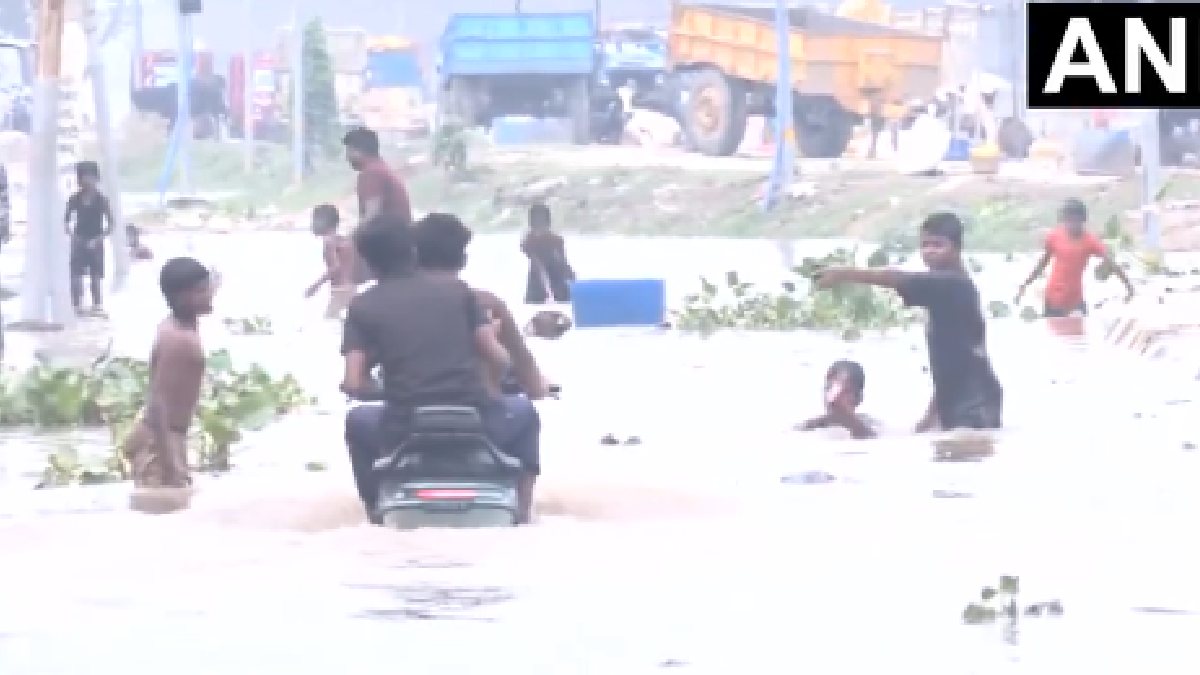
Heavy rainfall in Gurugram on September 4 and 5 brought several parts of the city to a standstill, with roads turning into waterlogged stretches and commuters having to cope with extreme difficulty. There was knee-deep water at MG Road and Rajiv Chowk and traffic was disrupted and drivers had difficulty in getting through flooded stretches.
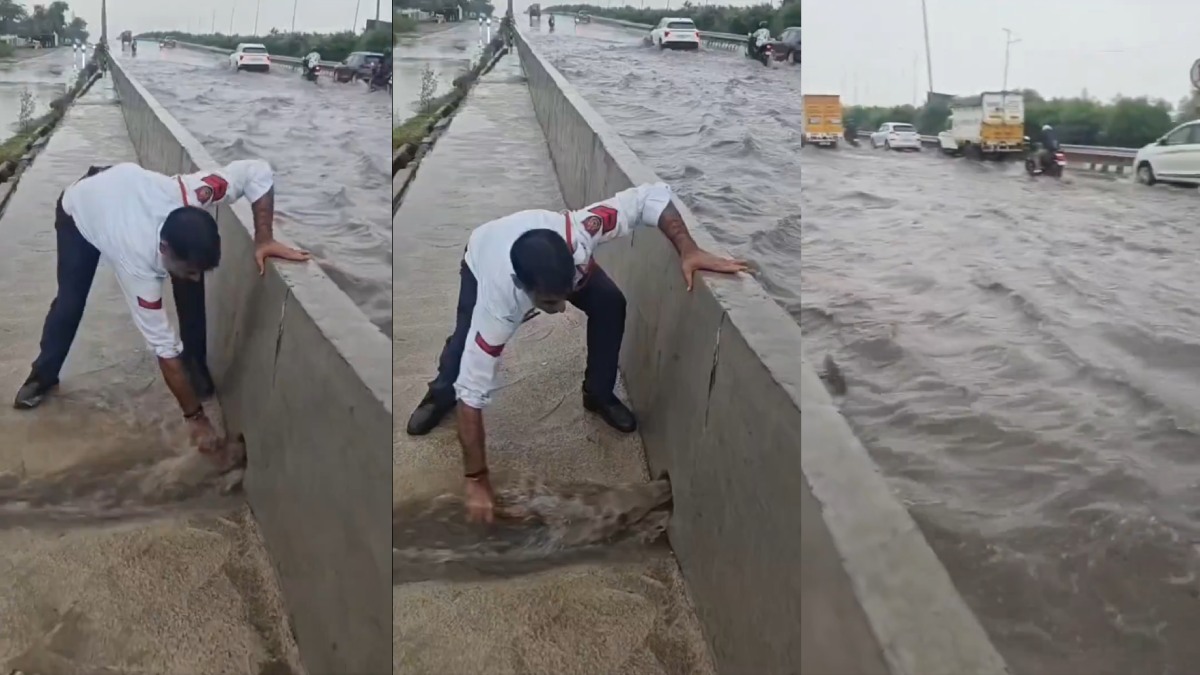
As water accumulated on the main roads, traffic police officers took charge of the situation. Officers were seen in various locations manually clearing blocked drainage points to let the stagnant rainwater drain and allow the cars to pass. Videos of traffic police working on flooded roads have been widely shared to give a sense of the work that they do in the bad weather conditions.
The situation was particularly difficult because of the heavy traffic on Gurugram’s main roads. MG Road, one of the city’s busiest roads and one of the major arteries of traffic between Gurugram and Delhi, saw water build up and affected the movement of cars, two-wheelers and other vehicles. Rajiv Chowk, another key traffic junction, was also affected by waterlogging and it caused long lines of commuters to wait for the road.
Traffic police personnel were also seen at other locations such as Manesar. Instead of just driving in traffic, they took action physically; officers intervened at drainage points where water had not been able to flow away and blocked water from flowing away. They helped improve conditions at some locations and provided temporary relief to commuters caught in the rain.
The images gave residents and commuters great appreciation that officers kept on working, even under such stressful conditions. Their efforts showed the frontline personnel's crucial role during emergencies when flooded roads create traffic bottlenecks and increase the risk of vehicles becoming stranded.
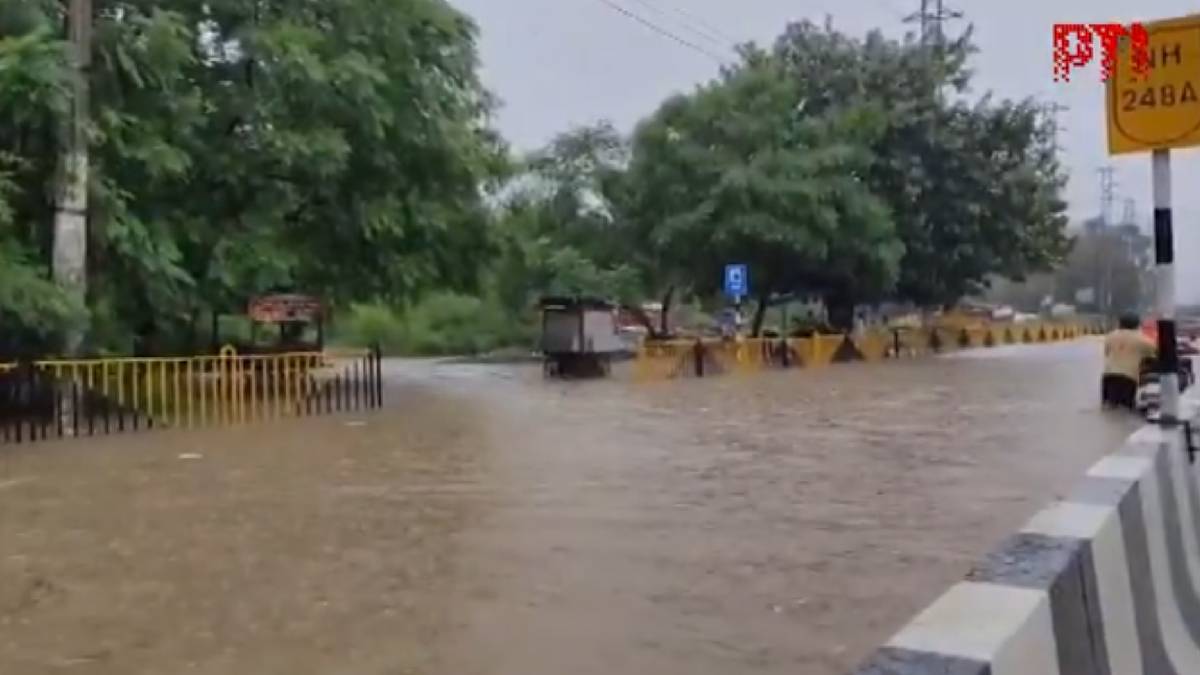
But the scenes also revived Gurugram’s perennial drainage problems. Waterlogging after heavy rain has become a common problem in several areas of the rapidly expanding city. Residents have often cited garbage and other waste blocking drains, preventing rainwater from being discharged efficiently. When heavy rainfall overwhelms the existing drainage network, blocked outlets can make the situation considerably worse.
Gurugram’s rapid urban growth has also raised questions about whether its drainage infrastructure is keeping pace with development. Over the past decade, Gurugram has seen massive construction, traffic volumes rise and residential and commercial districts expand. Although development has transformed Gurugram into a major corporate and business center, recurrent flooding during heavy rainfall still exposes civic infrastructure’s deficiencies.
For commuters, the immediate concern in these kinds of events is getting safely across flooded roads. Waterlogged roads can hide potholes, open manholes and other road hazards, and stalled vehicles can quickly contribute to traffic jams. Two-wheeler riders are also at greater risk when the water level rises and the depth of water is difficult to gauge, especially for water-filled roads.
Thus the recent rainfall episode has brought together two contrasting aspects of Gurugram’s response to urban flooding. Traffic police officers, on the one hand, have been hailed for taking immediate action and helping maintain traffic flow; on the other hand, waterlogging has renewed demands for better drainage, waste management, and infrastructure upgrades.
Rain. Flooded highway. Cars and trucks crawling through brown water.
— Raghu (@IndiaTales7) September 5, 2026
And one Gurugram Traffic cop on the concrete divider ~ first his hand inside the drain hole, then a stick….clearing the blockage so the water can actually leave the road. Uniform soaked. No umbrella. No… pic.twitter.com/wusx6V5X6z
Residents’ appreciation of the traffic police also reflects the expectations placed on frontline workers when extreme weather disrupts daily life. But repeated manual clearing of drains during heavy rainfall can only be a temporary solution. Preventive cleaning before the monsoon and better maintenance of drainage channels could help minimize the pressure on emergency responders.
As Gurugram continues to experience rapid urbanization, the challenge is not only to deal with waterlogging after roads have already flooded but also to strengthen the city's ability to handle heavy rainfall. Greater cooperation between city authorities, regular removal of waste from drainage systems, and improvements to vulnerable areas could help prevent future problems.
For now, Gurugram's traffic police have served to remind us once again of how frontline workers are the first line of response when heavy rain brings the city to a halt. At the same time, the widespread waterlogging has once again put the task of finding long-term solutions to Gurugram’s drainage and urban infrastructure issues in the spotlight.