Rec Limited (Maharatna Central Public Sector Enterprise) in West Bengal will launch 20 smart classrooms. The project is part of the Company’s Corporate Social Responsibility (CSR) programme and will give students access to modern teaching tools and technology-enabled learning environments.
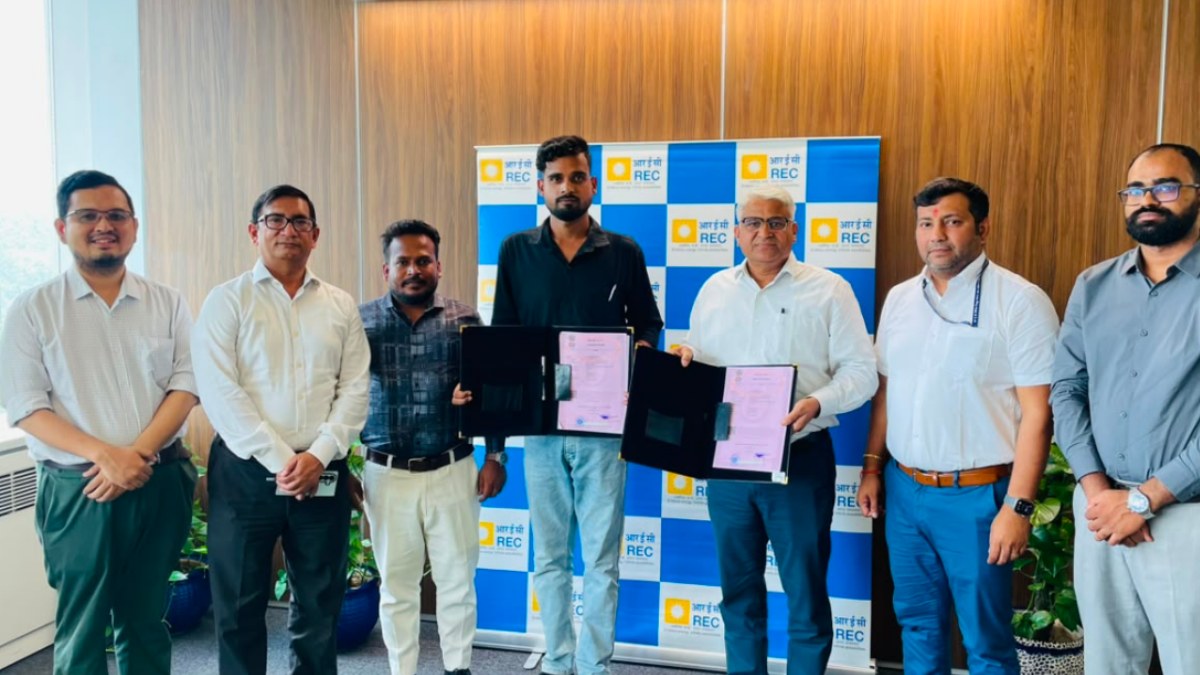
The project is evidence of REC Limited’s continuing commitment to quality education and digital inclusion in government schools. We want to provide interactive learning spaces where students are able to learn through multimedia content, digital presentations and technology-assisted teaching methods in classrooms where we can enable interactive learning.
Smart classrooms are the foundation of modern education and with digital boards, projectors, computers, audio-visual systems, internet connections and interactive educational software, are part of the contemporary education landscape. Such technologies make teaching very hard topics accessible through visual aids, animations, simulations, and real-time resources to students and can make a lesson more interesting.
Digital classrooms, education experts say, enhance student engagement, retention and conceptual understanding. Visual learning tools are particularly useful in science, mathematics, geography and languages where diagrams, videos, virtual experiments and interactive exercises can significantly enhance classroom instruction.
Rec Limited will be useful to teachers and students as it will promote innovation in teaching practices. Teachers get access to digital content that goes hand in hand with the textbook to better address the students' learning styles and therefore, to see and learn what is easy for students to understand. And students will see how technology would assist them in preparing for the digital world.
The project is in line with the Government of India’s broader goal of digital education in India and of better educational infrastructure in public institutions. National education policies such as the National Education Policy (NEP) 2020 call for technology in education to make learning more inclusive, flexible and effective. Smart classrooms are increasingly seen as a necessity to bridge the digital divide between urban and rural education institutions.
Government schools often serve students from economically disadvantaged populations with little access to digital devices or internet access beyond the classroom. Smart classrooms allow them to learn online and are useful for digital education for students who are so far from digital access. Such efforts do this to eradicate inequalities in education, and to make learning more equitable.
Digital classrooms also help students in life as well as work out the importance of technological literacy in higher education and the contemporary job market. Familiarity with computers, digital interfaces, multimedia content and online learning tools can increase students’ confidence for future education and careers.
REC Limited has been working on education, healthcare, rural development, sanitation, skill development, environmental sustainability, and community welfare as part of various CSR initiatives. Its investment in educational infrastructure is to ensure high quality education is a foundation for long term social and economic development.
School administrators have welcomed the initiative, with better infrastructure driving teachers and students to engage and develop a more dynamic classroom environment. Interactive learning environments tend to foster interest in students, classroom engagement and learning together, and critical thinking.
Experts also point out that smart classrooms’ success lies not only in the technology but also in teacher training and implementation. Teachers need to build capacity to integrate digital tools in the classroom and not just as presentation tools. Teachers can learn to use interactive technologies in a professional development programme and get the most out of them.
The initiative also hopes to build community confidence in government schools through better education infrastructure and demonstrate the benefits of public-private partnership in CSR programs. Better infrastructure will also help students stay longer, better learning and a greater parental involvement in children’s education.
As education is evolving in the digital era with the help of technology in place and in the classroom, smart learning infrastructure is becoming increasingly important to India. REC Limited's decision to establish 20 smart classrooms in West Bengal is an important step towards building technology-enabled schools that can offer students contemporary learning experiences and also the teachers innovative instructional resources.
Bridging the Digital Divide: REC Limited to Benefit 1,500+ Students with 20 Smart classrooms in Government Schools of West Bengal
— REC Limited (@RECLindia) July 17, 2026
REC Limited signed a MoA with Career Forum for implementation of the CSR project, “Establishment of 20 Smart Classrooms in Government Schools of… pic.twitter.com/MKeOWwx4Rl
The project will provide long-term educational benefits to more than 1,500 students and create a more positive educational experience for them, and help to bridge the digital divide and develop a more inclusive and future-ready learning environment.
And as similar programs spread across the country and more government schools are established with similar initiatives in government school education, they can transform government school education by combining traditional teaching with digital technologies in a better way to provide students with the knowledge and skills to tackle the future in an age of data-driven education.