Aam Aadmi Party (AAP) intensified its criticism of the BJP-dominated Municipal Corporation of Delhi (MCD) on Saturday during a House meeting at the Civic Centre and held an unusual protest to highlight the city’s waterlogging and sanitation problems. An AAP councilor arrived at the MCD House by boat and demonstrated how Delhi’s cleaning and drainage systems are in shambles in the name of its party.
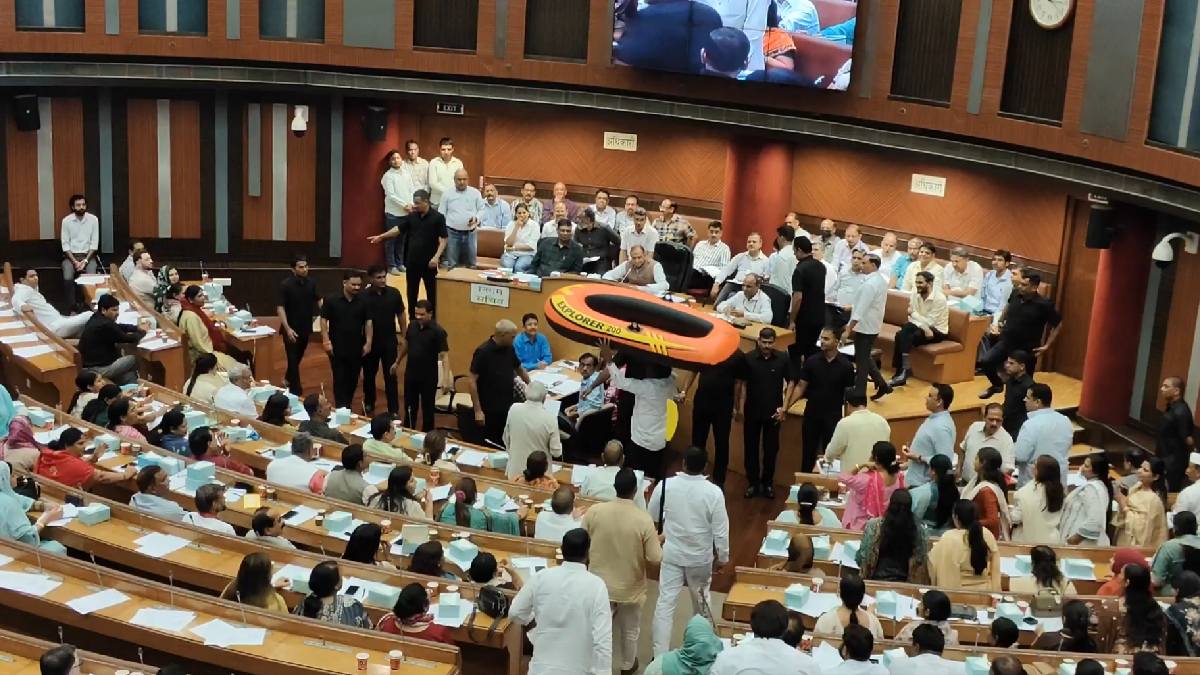
The protest was staged outside the House alongside a boat and garbage as an image showing waterlogged streets and waste. The symbolism was meant to bring the problems residents face during periods of heavy rainfall to the attention as many parts of the capital can be inundated, overflowing drains and there are challenges with waste management.
The AAP used the protest to question the functioning of BJP-led civic administration and claimed that the MCD has failed to adequately address basic sanitation and cleanliness issues. The councilor came by boat in order to make waterlogging a political point on the front line so we could have a discussion in the municipal house.
Waterlogging has been a perennial civic concern in Delhi for decades especially during monsoon season. Heavy rain can take a toll on drainage systems and blocked drains and garbage can make things worse. The AAP’s protest sought to connect these problems with the larger municipal cleaning system.
The presence of garbage alongside the boat outside the Civic Centre was also intended to raise awareness around waste collection and disposal. Healthy sanitation must consist of regular garbage removal, proper drainage, and proper action in those areas with water buildup, the party said. Failure in any of these areas would have a direct effect on the residents, they claimed.
The demonstration also reflects the bitter political battle between the AAP and BJP over the functioning of Delhi’s civic administration. Since the BJP took over the MCD, civic services and municipal performance have been at the center of political debate. AAP leaders have repeatedly raised questions about sanitation, roads, drainage, garbage management and other local issues, while the BJP has defended its administration and pointed to its efforts to improve civic infrastructure.
The MCD House meeting provided a platform for AAP to bring these concerns into the political spotlight. The boat protest was particularly striking because it made an otherwise ordinary civic complaint a visual demonstration that could attract wider public attention. The message was straightforward: if Delhi’s roads and neighbourhoods become severely waterlogged, residents should not feel that they have to navigate them as if they were waterways.
For Delhi residents, however, political symbolism is secondary to the practical implications of these issues. Waterlogging can disrupt traffic, delay public transport, affect pedestrians and make business and household lives miserable. Garbage accumulation can also cause unpleasant conditions and raise hygiene concerns when trash ends up blocking drainage channels.
नाव लेकर MCD सदन पहुंचे AAP पार्षद
— zingabad (@zingabad) August 24, 2026
सिविक सेंटर में MCD सदन की बैठक के दौरान आम आदमी पार्टी के पार्षद नाव लेकर पहुंचे. सदन के बाहर नाव और कूड़ा रखकर दिल्ली में जलभराव और सफाई व्यवस्था को लेकर प्रदर्शन किया गया. AAP ने बीजेपी शासित MCD पर दिल्ली की बदहाल सफाई व्यवस्था को लेकर सवाल… pic.twitter.com/NzEpdYV1uG
The protest also makes civic authorities more aware of preventive measures and that they need to do so before waterlogging happens. Regular desilting of drains, timely garbage collection, cleaning of vulnerable spots and coordination between different civic agencies could help mitigate the impact of heavy rain.
AAP’s boat arrival at the Civic Centre, then, was a political protest as well as a visual commentary on Delhi’s civic problems. By combining a boat with piles of garbage, the party sought to demonstrate the consequences of inadequate sanitation and drainage management under the BJP-led MCD.
Waterlogging and cleanliness are still politically sensitive issues in the capital as the monsoon continues. Residents will ultimately judge the civic administration not by demonstrations or political accusations, but by whether roads remain usable, drains function effectively and garbage is collected on time. The boat protest has once again brought those everyday concerns into the centre of Delhi’s municipal political debate.