Artificial intelligence is changing the way people work, learn and access information. Now, a former Google executive has made a bold prediction about what AI could do to traditional college education.
Mo Gawdat, who spent 12 years at Google and was Chief Business Officer at Google X before that, said colleges could become unnecessary in the next 10 years. He made the prediction while speaking on the Silicon Valley Girl podcast.
When asked whether parents should continue saving money for their children's college education, Gawdat gave a very direct answer. He said he did not believe traditional college would still exist in its current form a decade from now.
The future of universities and whether students will continue to need a traditional four-year degree in an AI-driven world is being debated by his predictions.
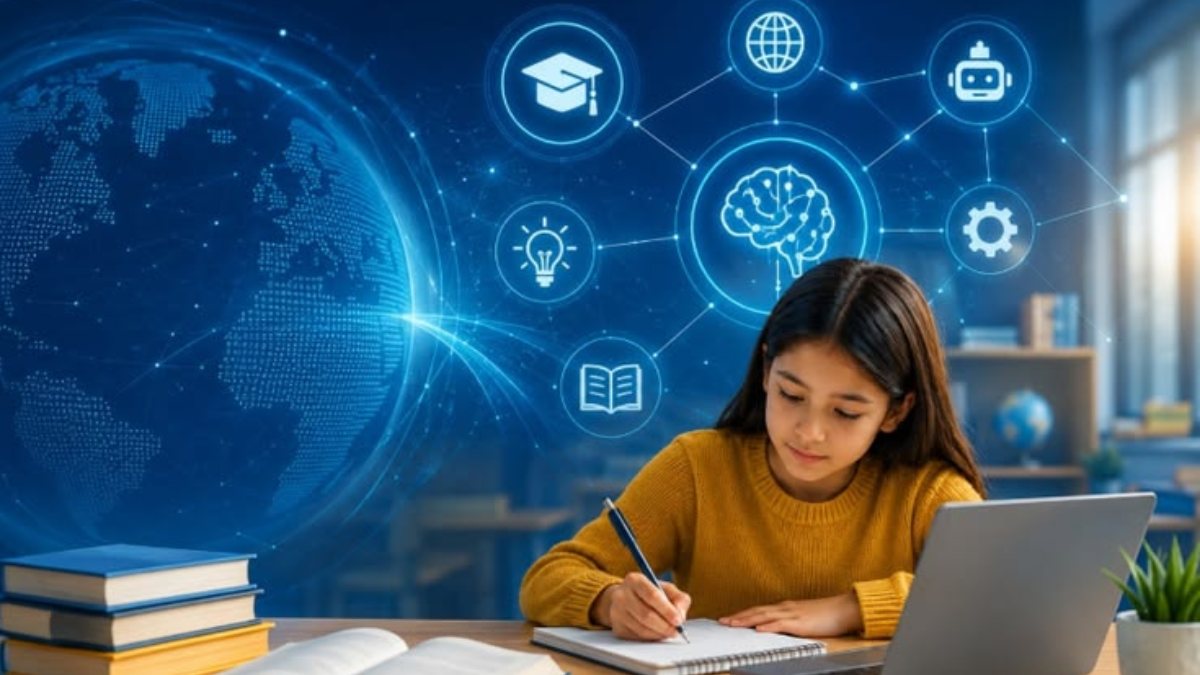
Gawdat’s argument comes at a time when AI tools can already explain complex topics, create study materials, answer questions, translate languages and help people learn new skills. And students can now access powerful learning tools from their phones or computers without sitting in a traditional classroom.
But to say that AI will completely end college education is a much bigger claim.
Why AI could change the way people learn
Classes are mostly done by teachers and exams are done as students go through the course. They get a degree that helps them land jobs.
AI could change some parts of this system.
An AI tutor can provide tailored explanations based on what a student knows and where they have difficulty. Instead of a whole class moving at the same rate, students would learn as they see fit according to their own needs.
AI can also give immediate feedback. A student working on a difficult topic does not necessarily have to wait for the next class to ask a question. An AI tool can explain the concept, provide examples and create practice questions almost instantly. This could make education more flexible and accessible.
Gawdat believes AI is becoming an extension of human memory and computing power. In the case of these systems becoming more intelligent, people may not need to rely on old-school methods of learning and may turn to technology that can give them what they need whenever they need it.
The change could also affect what employers expect from graduates.
Companies are hiring people who can use AI tools more than just remember information. Universities, to the best of their knowledge, need to teach students how to use AI effectively and also cultivate skills like critical thinking, communication, creativity and problem solving, the authors say.
That does not necessarily mean students will stop going to college.
Instead, colleges may have to change what they offer.
Will AI ever replace colleges?
Gawdat's prediction is certainly dramatic, but it remains a prediction rather than a fact.
Universities do so much more than provide information. They provide laboratories, research opportunities, professional training, social experiences, and networks. Professional qualifications and the recognition of those qualifications are critical to many careers.
A medical student, for example, cannot use an AI chatbot to become a doctor. The same holds true in many fields and many other professions where formal training as well as practical experience and certification remain needed.
Universities also provide an environment where students work with teachers and classmates. That experience can help build communication skills, teamwork, and professional relationships.
This is one of the reasons why some experts think AI will change colleges instead of eliminating them.
The debate about the value of traditional college is already growing. Some technology leaders have questioned whether a four-year degree remains the best route for everyone, especially as AI changes the skills employers want.
At the same time, alternative forms of education are more popular. Online courses, professional certificates, apprenticeships and specialised training can help people develop job-related skills without spending several years in a traditional university. AI could make these alternatives even more powerful.
A student could use online learning, AI tutoring, practical projects and work experience in the absence of college to develop a career without going through the traditional college route. But access to AI alone will not be sufficient.
Students are still learning to assess whether information is correct. They need to be able to understand basic concepts before they can use AI effectively. They also require human skills that technology can’t substitute for.
As a result, critical thinking would be more important, not less important.
If AI can generate an answer in seconds, students need to know whether that answer makes sense. They need to question the information, point out mistakes and make decisions based on evidence. That would mean universities would concentrate less on memorizing information and more on applying knowledge. The future may look very different from the college system people know today.
Instead of spending four years following a fixed curriculum, students would be able to take shorter courses, AI-assisted learning, internships and practical projects. Universities would become more research-oriented, specialist training and real-world experience-oriented.
It is uncertain at this point whether traditional colleges are going to disappear in the next 10 years.
But Gawdat's prediction raises an important question. If AI can provide personalised education at a much lower cost, what should a college degree offer that AI cannot?
That question will become more important for students, parents and universities. AI may not completely end college education, but it is already forcing the education system to rethink how people learn and prepare for work.
The biggest change may not be the disappearance of colleges. It may be the end of the idea that a single degree completed at the beginning of adulthood is enough to prepare someone for an entire career.