Portugal’s ancient Buçaco National Forest has gained rare international recognition. The forest has been certified as a Therapeutic Forest, the first one in the Iberian Peninsula and only the fourth in the world.
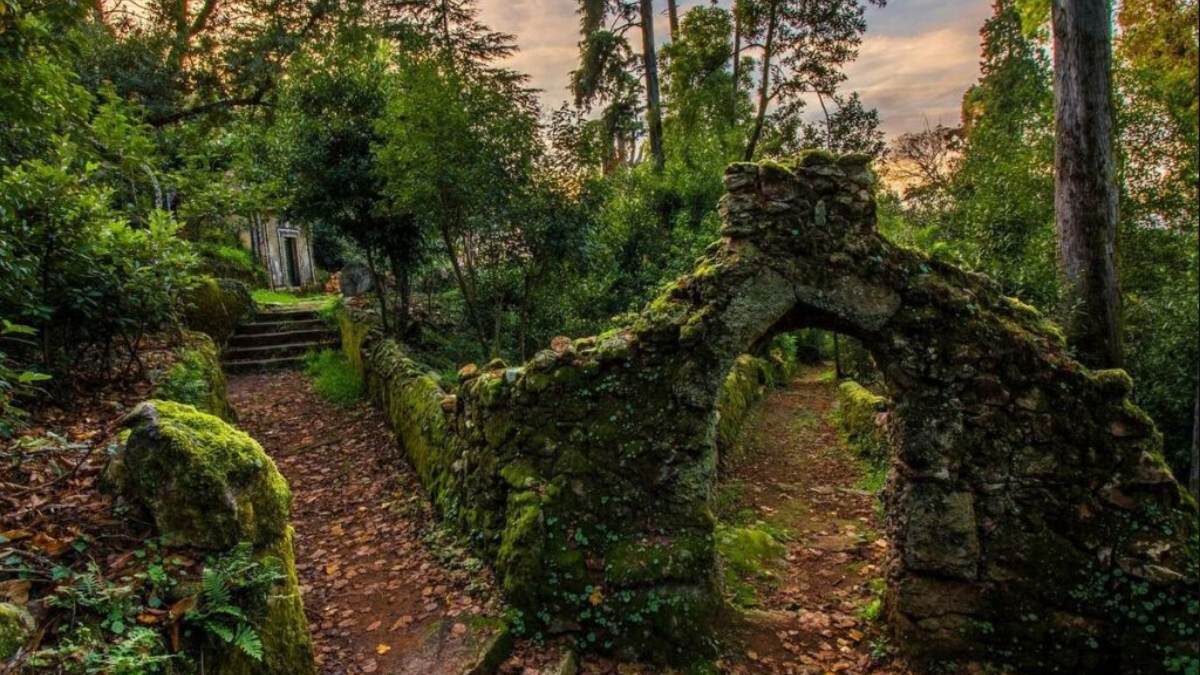
The certification was awarded on July 17 by the Healing Forest International Certification Office. Buçaco joins three other certified therapeutic forests in Austria and Germany: Benediktinerstift and Lahnstein and Bad Nauheim.
The recognition is more than just the beauty of the forest. It also recognizes that the area can be used to facilitate guided activities to promote relaxation, wellbeing and nature-based therapy; it also acknowledges the area to be utilized for recreation, wellbeing and physical and mental health care.
Buçaco Forest lies in Luso in Mealhada municipality, Portugal. It is around 105 hectares and is a whole collection of trees and plants with about 250 kinds of trees and shrubs.
It also has a long history with natural, architectural and cultural heritage. Its landscapes include an arboretum, gardens, the Valley of Ferns, the Relic Forest and the Pinhal do Marquês.
What makes Bucaco a Healing Forest?
A forest doesn’t get therapeutic certification simply for its beautiful trees or peaceful walking paths. The certification process looks for particular features that can support therapeutic activities.
Treatments and relaxation are in the natural environment of therapeutic forests, Healing Forest says. Those areas that filter out outside noise, protect from high winds and visual distractions, and trails can be very difficult. The forest also needs places to do therapy and relaxation exercises.
Buçaco worked for years to get the certification. Experts examined the forest’s features and potential for therapeutic use before the certification was given.
The idea behind forest therapy is simple. People spend time in a natural environment and engage in activities to promote physical and mental wellbeing.
One related practice is forest bathing. The word is taken from the Japanese practice of shinrin yoku that encourages people to slow down in the forest and observe everything around them. Forest therapy takes the idea further with guided activities and trained professionals. And it is possible that those programmes can be about relaxation and wellbeing and may complement medical care.
There are several benefits to spending time in nature (e.g., less stress, less anxiety, better mood, more sleep). There have been studies that have also linked time spent in nature with lower blood pressure and other physical benefits. Most of this work has been done in Asia, where forest bathing is well-known.
That is not to say that walking through a forest can cure an illness. Therapeutic forests are designed for specific programmes, usually with trained therapists. They cannot replace medical care and should not be substituted for professional healthcare if it is needed.
For Buçaco, the certification may provide new health and nature tourism opportunities.
A Forest With Centuries of History
Buçaco Forest is not a new wellness destination. Its history goes back centuries, and its natural environment has developed alongside some important religious and cultural sites.
The forest has one of Europe’s great collections of trees and plants. About 250 species of trees and shrubs grow around the area; it’s a lush landscape.
Visitors can walk through different areas of the forest and see the sights change as they walk through its trails.
The forest is also protected and has national heritage value. It is well suited to biodiversity and architecture and history - it’s much more than a typical woodland destination.
We have added another layer to that identity with the new certification.
Instead of seeing the forest as a place to visit when you go on a tour, the certification leads to visitors experiencing nature as part of wellbeing activities.
But for Portugal, that recognition would also help cement the country’s position in nature and health tourism. People are looking for ways to slow down and spend time away from crowded cities, and their time away from them is a priority. A quiet forest can provide just that.
The certification is valid until 2031, which gives the Buçaco Foundation a few years to develop and maintain its therapeutic programmes.
It’s that kind of development that would also make it easier for people to know the importance of preserving forests. Buçaco, for example, is more than a tourist destination; it’s a biodiversity asset and offers access to natural spaces.
As more research on the link between nature and health and wellness is conducted, forests may become more and more important in health and wellness programmes. Bucaco is now at the centre of that movement in the Iberian Peninsula.
And its new status is especially remarkable because only four forests worldwide currently have this certification. That makes the Portuguese forest part of a very small international group.
For travellers, the appeal is easy to understand. There are centuries-old trees and historical sights and not too much noise to be found, far away from the hustle and bustle of the city.
Researchers and therapists can find a carefully managed natural environment for therapeutic programmes in the forest. And for Portugal, the recognition adds another reason for international visitors to discover one of the country’s most unusual natural treasures.
Bucaco’s story shows us that forests can be so much more than a simple landscape. With the right environment and well-designed programmes, they can also become places where people slow down, reconnect with nature and support their overall wellbeing.
Portugal now has one of only four certified therapeutic forests in the world, giving the ancient Buçaco Forest a new role while preserving the qualities that have made it special for centuries.