India's development partnership with Palestine is set to receive a major boost with plans for an Indian-funded hospital in the West Bank expected to be completed in the next two years. The project is on its way to fruition now that the necessary order has been signed and paperwork has been finalized, said Palestine’s Ambassador to India Abdullah M. Abu Shawesh.
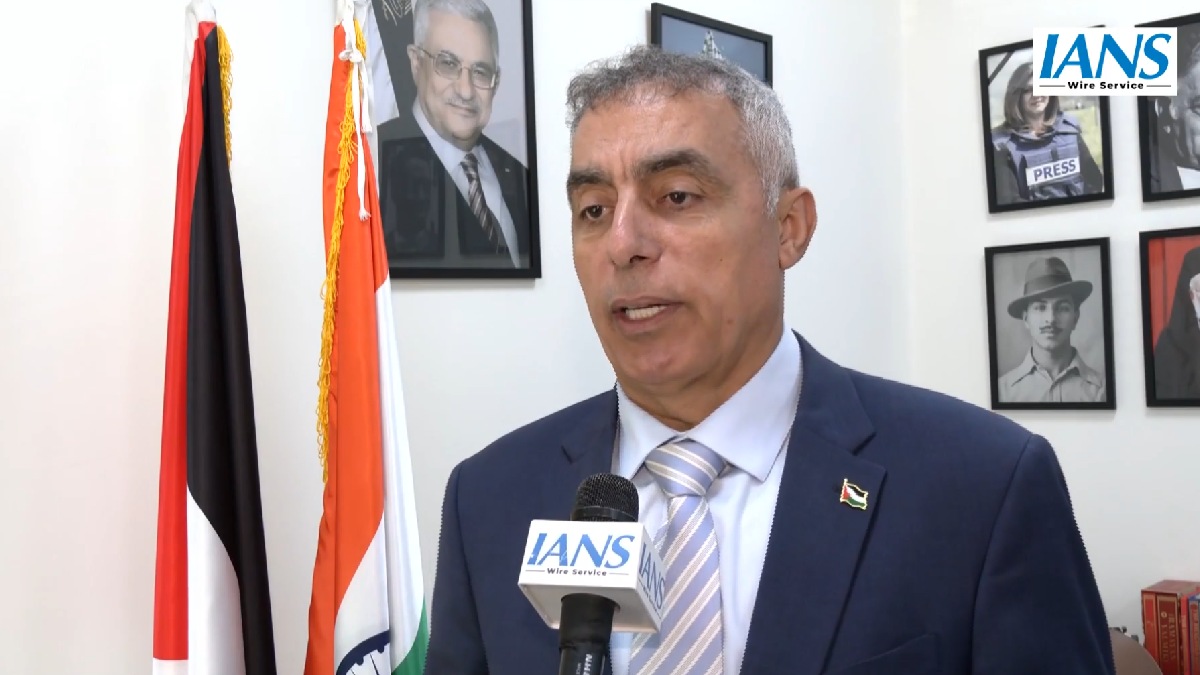
Abu Shawesh, speaking in an interview with WION, said India’s long-standing support for Palestine and that the proposed hospital is an important addition to that by New Delhi. He said a high-ranking Indian diplomat is currently in Palestine and has already talked to the Palestinian foreign minister. Secretary (CPV & OIA) Ambassador Sripriya Ranganathan is leading the Indian engagement, and more meetings are expected with an assistant to the Palestinian president.
The Palestinian ambassador said that the discussions are still going on regarding the details of establishing and building the hospital. He said that the project would be completed in two years; there are numerous logistical and security complications when implementing infrastructure projects in the region.
The proposed hospital will strengthen the healthcare system and provide medical services to people in the West Bank. Implementation might be affected by the difficult operating environment (i.e. restrictions and road closures), he said. But he told us that he remained optimistic that the project will continue and ultimately benefit the patients who need medical treatment and specialised care.
India’s assistance to Palestine goes beyond the proposed hospital. The two countries are also developing a vocational training centre, which the ambassador said he hoped would get operational soon. And such efforts are aimed at helping Palestinian people in terms of skills development, employment opportunities and capacity building.
Medical assistance has also become a vital area of cooperation, especially in light of the humanitarian crisis in Gaza. Talks with Indian officials are ongoing regarding sending essential medical equipment like dialysis machines, Abu Shawesh told reporters. His assurance was that very important assistance would be given and some such supplies would be sent to Palestine through Jordan.
The ambassador said there is talk of artificial limbs for people suffering amputations in Gaza. He also mentioned the many civilians - children and women - who have suffered severe injuries and amputations and have been injured and lost their limbs in the current humanitarian crisis, he added. The assistance of prosthetic limbs could thus assist in helping injured individuals to recover mobility and improve their quality of life.
India’s engagement with Palestine has traditionally been through development assistance, capacity building and humanitarian support. The proposed hospital is one more step in that longer-term relationship and comes at a time when healthcare needs across Palestinian territories are still high.
Abu Shawesh also expressed strong support for India’s bid for a non-permanent seat on the United Nations Security Council for the 2028-2029 term. He said Palestine would be more than happy to see India elected and indicated that Palestinians view New Delhi as an influential international partner.
The ambassador went further and said India deserves a permanent seat on the Security Council. His comments reflect Palestine’s larger recognition of India’s growing economic and diplomatic influence and its role in international affairs.
Abu Shawesh also expressed hope that India could use its influence to help to make progress in Israeli-Palestinian peace efforts. He also pointed out that New Delhi’s ties with Israel have been well-established and a diplomatic entity like India could also contribute in a positive way to peace.
The remarks come as India continues to have relations with Israel and Palestine as well as dialogue, diplomacy and a two-state solution. New Delhi has historically supported Palestinian development and has had deep strategic, economic and technological ties with Israel.
The proposed West Bank hospital, vocational training centre, medical equipment assistance and possible prosthetic support for amputees are the various areas in which India and Palestine are looking to deepen cooperation. If construction happens as planned, the hospital could become a significant symbol of India’s development partnership with Palestine and provide much-needed healthcare support to local communities.
The projects also reinforce India's role as a development partner in the region. For Palestine, the planned healthcare infrastructure and medical assistance could provide practical support at a time when humanitarian and healthcare needs remain exceptionally high. The bilateral dialogues are to proceed now to complete formal procedures and translate the commitments into projects on the ground.