Bengaluru’s proposed Hebbal short tunnel project has come under renewed scrutiny after experts raised questions over the methodology, traffic data and assumptions used in a recent IIT-Bombay study that supported developing the tunnel along with an elevated corridor.
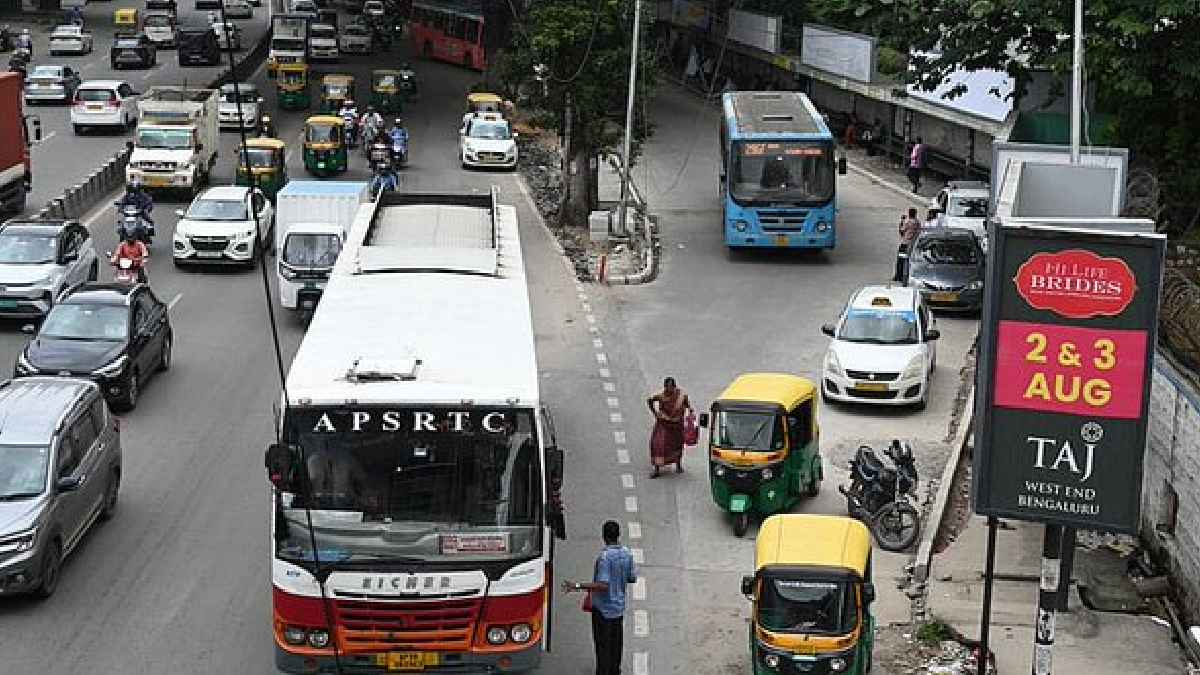
The traffic movement along Hebbal Junction, Mekhri Circle, Ballari Road, CBI Junction and Veterinary College area were studied in the study led by IIT-Bombay professor Archak Mittal for Rithwik Projects Private Limited.
He recommended treating the tunnel and elevated corridor as complementary projects for traffic during peak hours.
According to the study, about 32,770 vehicles pass through Hebbal Junction between 9 am and 10 am, while Mekhri Circle accounts for 28,493 vehicles in the same period.
The report also noted very low average speeds on some stretches, such as 4.29 kmph between Anand Nagar and Hebbal and 3.57 kmph between Esteem Mall and the Hebbal down ramp near Baptist Hospital.
The IIT-Bombay report said the proposed infrastructure could help spread traffic along different routes. It recommended an elevated corridor of about 1.78 km between Mekhri Circle and Veterinary College and a roughly 2.2-km tunnel connecting Hebbal Flyover Junction to the Veterinary College area via Gandhi Krishi Vignana Kendra campus.
But the findings have been questioned by experts from the Indian Institute of Science (IISc) and other mobility specialists. IISc Sustainable Transportation Lab professor Ashish Verma said the study relied on traffic data from Detailed Project Reports and questioned differences between the speeds reported in the IIT-B study and those recorded in the tunnel project’s DPR.
A former Directorate of Urban Land Transport technical adviser Satyajit Arikutharam also flagged concerns regarding the age of traffic data. He said that an additional ramp at Hebbal Flyover opened in January 2026, and traffic patterns could change once the DPRs used earlier had been collected.
There have also been questions over the use of older Passenger Car Unit conversion factors. Experts contend old conversion values could impact traffic congestion estimates, particularly those of two-wheeler traffic.
Lack of a detailed origin-destination survey was cited as another gap as we can use it to determine where vehicles are actually going and how they will respond to new routes.
The IIT-Bombay report itself called for more analysis, including an origin-destination survey, evening peak-hour traffic data and additional pedestrian and vehicle counts prior to final design decisions.
The debate comes as Bengaluru continues to face questions about the impact of the proposed tunnel on Bengaluru’s broader environment. An earlier IISc study had warned that congestion might move towards the tunnel’s entry and exit points and not disappear and also raise concerns related to flooding near Hebbal Lake.
With multiple competing assessments on the table, the Hebbal project is the subject of debate between the authorities, researchers and city mobility experts right now.
Recent controversies have added to the debate of whether traffic surveys and more comprehensive modelling should be carried out prior to major infrastructure decisions being made.