Bengaluru could soon see a major change in how parking violations are monitored and enforced, as the city is considering an enforcement agency for parking violations. It would be a mechanism to better control parking and how parking is regulated to manage parking needs, traffic, and solve another longstanding urban problem that Bengaluru’s most persistent problem— vehicles occupying valuable road space, in particular vehicles occupying valuable road space.
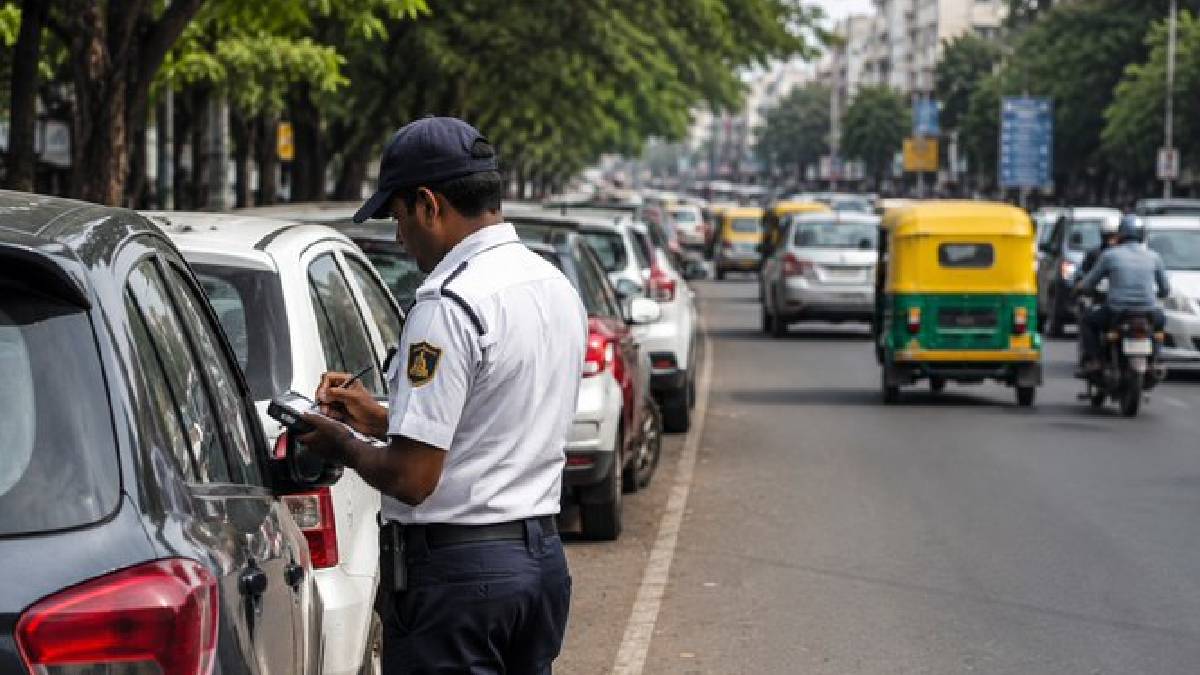
The proposal comes as the city is experiencing growing congestion. The Greater Bengaluru Authority (GBA) has said parked vehicles on the road network can take up as much as 60% of the road space in some cases. As Bengaluru already has heavy traffic volumes, we see indiscriminate and unauthorised parking becoming central to the city’s mobility debate.
The concept of a parking enforcement body is essentially to set up a dedicated system for parking enforcement. Parking enforcement would become a function rather than one of those responsibilities of existing agencies, and a dedicated organisation would be able to monitor parking zones, enforce parking conditions and take action against vehicles parked in violation of the law.
If implemented, then the proposed agency might even help the parking enforcement system be more uniform in different parts of Bengaluru. Commercial areas, residential neighbourhoods, busy arterial roads, markets and fast-developing zones are littered throughout the city, with different parking issues to be faced by different areas of Bengaluru. Centralised and localised enforcement mechanisms could help authorities implement different strategies in each area and ensure that parking regulations are applied consistently.
The problem is exacerbated when the city is in high-density commercial and residential areas where vehicles parked on roadsides will limit the size of roads. Even if a car is legally parked, long-term parking can impact traffic flow. Illegal parking also hinders traffic because it takes up lanes, junctions, pedestrian pathways and access points.
And for Bengaluru commuters, the consequences are often apparent during peak hours. A road that appears wide on paper can be much narrower when parked vehicles are in place, to the point that bottlenecks are created and traffic is slow and long.
The government’s decision to establish a parking enforcement agency is therefore a recognition that parking management is closely related to traffic management. But expanding roads would not be enough if existing road capacity continues to be reduced by poorly managed parking.
But effective enforcement would require more than the issuing of fines. A parking policy would also have to be in place for all the kinds of authorised parking spaces, clear signage, well-marked parking zones and convenient payment systems. With the enforcement in place, it will be difficult to enforce if there aren’t enough alternatives for parking; a lot of people, businesses in town and visitors have no options to park their car.
Technology could also be a part of any new enforcement system. Digital parking permits, automatic number plate recognition, mobile payment and real-time monitoring could help spot violations faster. This is, in other words, a system that will reduce manual enforcement and make enforcement more transparent.
The proposal would also encourage Bengaluru to move towards a more structured parking policy. The government could categorize areas based on demand, enforce parking restrictions and beef up enforcement in key traffic corridors and junction points. In high-demand locations like those in the vicinity of high-visibility areas, there could be pricing mechanisms to discourage long-term parking and maximise the use of the space in which parking is available, and then, in which case, the parking will be enforced.
If the arrival of a parking enforcement agency in the city would make parking rules stricter, there might be enforcement of parking violations; residents and drivers would have to pay attention. There might be a push for car owners to use designated parking instead of public roads as a parking haven.
At the same time, how the proposal will actually work and how it will be implemented will be key. Clear rules, adequate parking infrastructure, transparent enforcement, and reasonable penalties will be necessary for the public to accept it.
With Bengaluru growing so rapidly, managing limited road space is important. The parking police-style enforcement system proposed by the city would be a major change in the way in which parking enforcement is done and would move from scattered enforcement to a more systematic approach that keeps roads clear and promotes traffic flow.
If that plan is implemented, Bengaluru motorists might soon have to think twice before parking in unauthorised spaces, as parking enforcement could take on a central place in the city’s broader solution to congestion.