Non-vegetarian food lovers in Bengaluru may have difficulties getting fresh meat on August 3 and 4, as meat shop owners are threatening to close their shops and protest at Freedom Park.
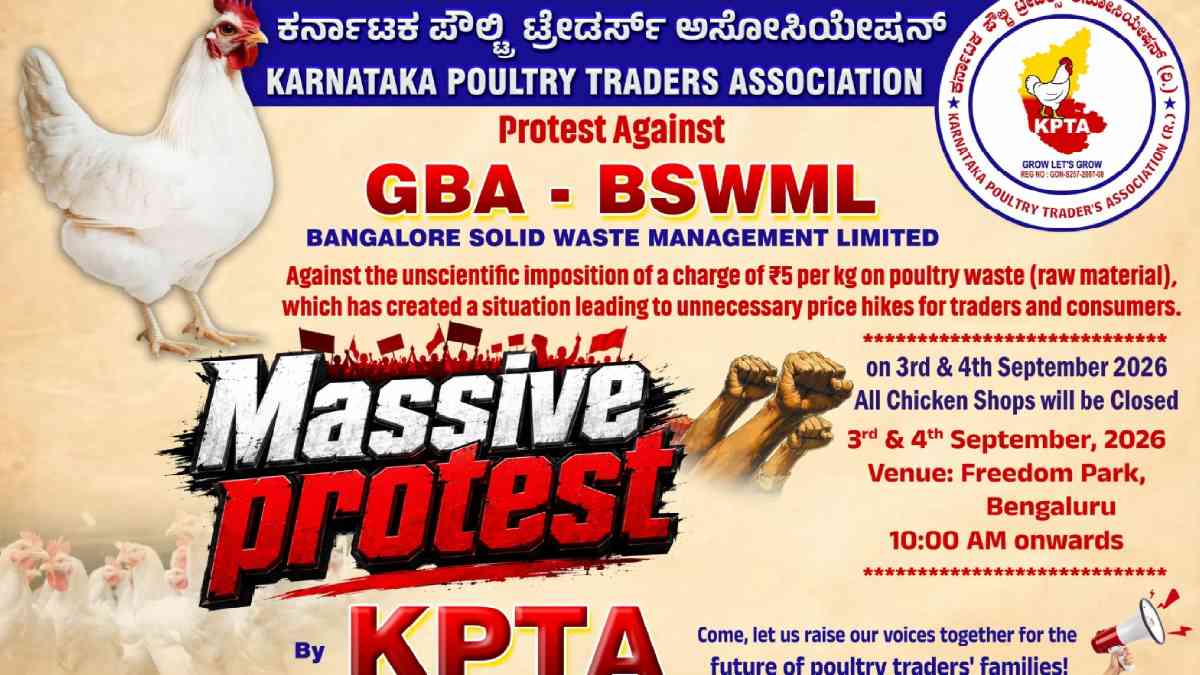
The proposed shutdown is connected to a dispute over the collection and disposal of meat waste generated by shops across the city. Shop owners have accused the authorities and private waste-management companies of imposing charges on them for collecting meat waste, while allowing those companies to commercially benefit from the same waste.
The problem has led to the shop owners closing their shops and taking their complaints to the streets, they say.
What is the meat waste dispute?
The meat shop owners claim that Bangalore Solid Waste Management Limited (BSWML) is responsible for the collection of meat waste generated in the city.
According to their allegations, BSWML has awarded contracts to private companies for collecting meat waste from meat shops.
The shop owners say that these private companies are charging about Rs 5 per kilogram for the waste.
The traders are wondering why they should have to pay for the collection of waste when the collected material can then be processed and used for commercial purposes.
Owners are concerned about Commercial Use of Waste
One of the main concerns of the meat traders is that the waste collected from their shops is being converted into commercially valuable products.
The owners say that meat waste can be turned into products ranging from pet food to manure, allowing private businesses to make money from the material.
The traders argue that if their waste has commercial value, they should not simultaneously be required to pay companies for taking it away.
They argue that companies that benefit financially from the collected waste should compensate meat shop owners for the waste.
The dispute has since grown to be one of a much larger question of who should pay for waste disposal and who should benefit from the economic value of waste processing.
Meat Shops Threaten Two-Day Shutdown
The meat shop owners are now planning to shut their stores on August 3 and August 4. The problem, unable to resolve the problem through their representations, on August 3 and August 4, meat shop owners are going to close their establishments.
The closure could affect customers in Bengaluru who have come to the meat shops for chicken, mutton and other non-vegetarian products.
The traders will take the two-day action to raise the issue with the authorities and put pressure on them to reconsider the current waste-collection system.
There is a protest planned in Freedom Park
The shop owners also plan to hold a demonstration at Freedom Park in Bengaluru.
They are going to say they want meat waste to be disposed of properly and stored and treated.
Their main demand is that meat shop owners should receive payment when their waste is collected, rather than being charged for the collection service.
Traders say they have approached the Greater Bengaluru Authority (GBA) and Karnataka Minister Krishna Byre Gowda on the issue. But they claim that their representations have not resulted in a satisfactory solution.
And still there is no resolution, the owners say, and they’re left with no choice but to shut down their shops and stage a protest.
What The Meat Traders Are Demanding
The shop owners' main demands can be summarised as follows:
They should not be charged for the collection of meat waste. Companies that collect the waste should pay traders if the waste is commercially valuable. The private waste collection system with its current arrangement should be reviewed by authorities. A transparent system for the collection, processing and commercial use of meat waste should be instituted by the government and civic authorities.
What it means for Bengaluru consumers
If the shutdown occurs, consumers could find many meat shops closed across Bengaluru on the specified dates.
Depending on how many businesses are participating in the protest, there could be disruption for customers if meat markets and other businesses reduce their operations during the two-day protest.
But for meat traders, the shutdown is intended to highlight what they say is an unfair waste-management system.
But the dispute raises broader questions about urban waste management and the increasing commercial value of waste materials. Recycling and processing waste can create economic opportunities, but traders say such a deal needs to be open and fair to the businesses that generate the waste.
The authorities’ response to the allegations and the demands of meat shop owners will determine whether the proposed shutdown and protest go ahead as planned or whether we can come to a settlement before the announced dates.