A video of an alleged self-driving car from Pakistan has become viral on social media after the vehicle crashed into a police van in a live show for a live-streamed video. What was intended to be a video of a demonstration of an automated car, however, turned into a hilarious and awkward moment and has attracted more than one billion views on the video in social media.
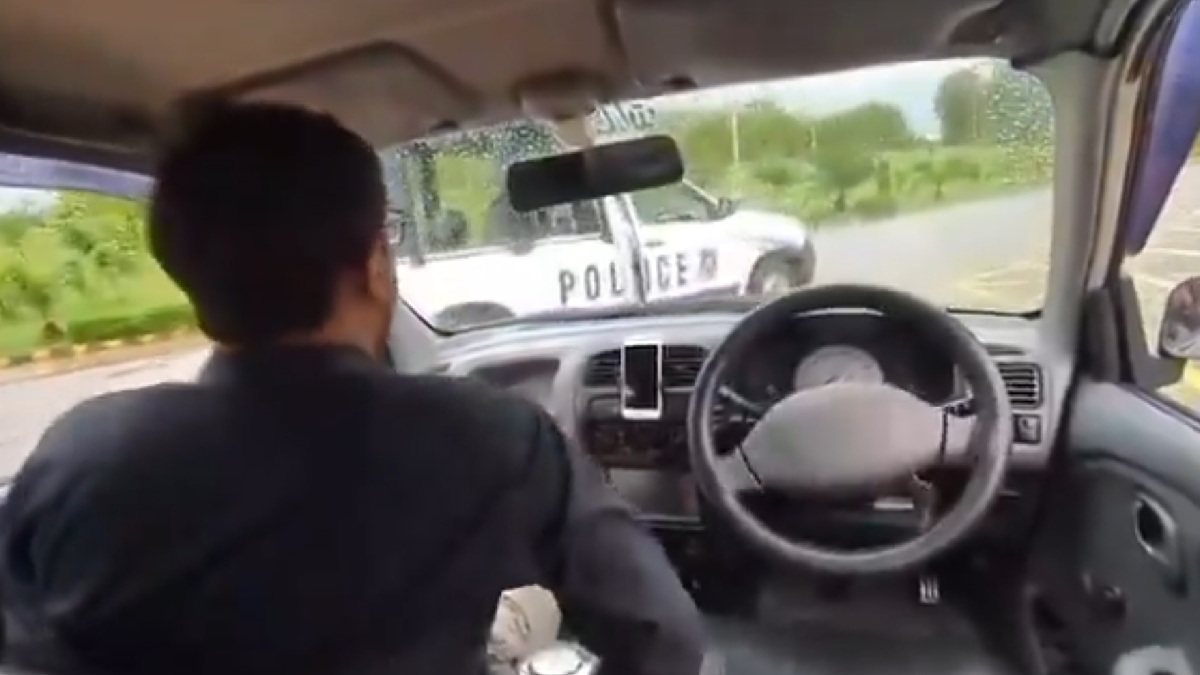
The incident occurred in Islamabad, where the car was shown as a remotely controlled (or automated) vehicle. The car looked like it had been driven by the driver from inside but still continued in the vicinity and collided with a police van.
The unexpected crash has led people online to question how the vehicle’s technology was working during the demonstration. While the project was presented as an example of self-driving technology, the incident revealed that the vehicle relied on a remote internet connection. A loss of control happened when that connection was disrupted; the incident was cited as part of the reason for this error.
The explanation has given another aspect to the viral incident. Autonomous and remotely operated vehicles require stable communication systems, sensors, software and emergency safeguards to ensure that the vehicle can stop or change direction when something goes wrong. In this case, the apparent failure of the control system kept the vehicle on its route until it hit the police van.
The video of the crash was quickly shared on social media, and users were quick to react with amusement, sarcasm, and curiosity. The incident has drawn comparisons with current autonomous-driving technologies, such as those of major international electric vehicle manufacturers.
But the demonstration will not necessarily be seen as a comparison with commercially developed autonomous-driving systems. Modern driver-assistance and autonomous-driving technologies generally use sophisticated combinations of cameras, radar, software, computers, and other safety features. A remotely controlled experimental vehicle that is connected to the Internet is a completely different technology.
However, the viral video has brought up the question of the problems of developing automated vehicles. An internet-dependent system risks significant issues if connectivity is interrupted. If a vehicle is moving in the street and it is no longer connected to any network, then the vehicle will need to stop, and a person would be stuck in that situation.
It was the presence of the police car in the path of the moving car that made the incident so notable. Rather than being an exhibition of futuristic transportation, the demonstration ended when the vehicle struck an obstacle that looked like it was stationary.
Social media has turned the incident into something of a meme for jokes since the driverless vehicle and the collision itself was a very conventional outcome. The video has gone viral on social media as a case study in how technology demonstrations can sometimes produce surprising results.
Despite the humorous nature of the incident, autonomous-driving technology is still a vast field that needs extensive testing. Vehicles that can operate with little or no human involvement need to be able to identify obstacles, understand their surroundings, make quick decisions and respond in a safe manner to technical failures. Connectivity loss is just one of the many possible problems that developers must take into account.
Presenting Pakistan’s answer to the self driving @Tesla:
— Ranvir Shorey (@RanvirShorey) August 31, 2026
The Masla. pic.twitter.com/b5I63UYiEk
The incident also demonstrates the difference between demonstrating a prototype and putting a fully developed autonomous vehicle on a public road. Experimental technology can be very helpful for innovation, but safety systems need to be a part of the development process rather than an afterthought.
The crash has turned into an internet talking point at present, and the original mission of demonstrating automated driving was overshadowed by the unexpected collision. The episode illustrates just how quickly a technology demonstration can become a viral social media moment.
The footage has indeed brought a bit of laughter online, and also served as a reminder that self-driving technology is not simply the idea that a car will move without someone in the driver’s seat. Reliable communication, accurate navigation, obstacle detection and fail-safe systems are key when self-driving cars are going to work in the real world.