Bengaluru: In a move aimed at protecting public health, Karnataka's Commissioner of Health and Family Welfare Services has issued new guidance on how pigeons should be fed to the public; that is, the new circular seeks to prevent large groups of pigeons in public spaces from being fed food in large numbers after the feeding of pigeons in Bengaluru and other local institutions with the help of food service delivery in Bengaluru and other urban local governments.
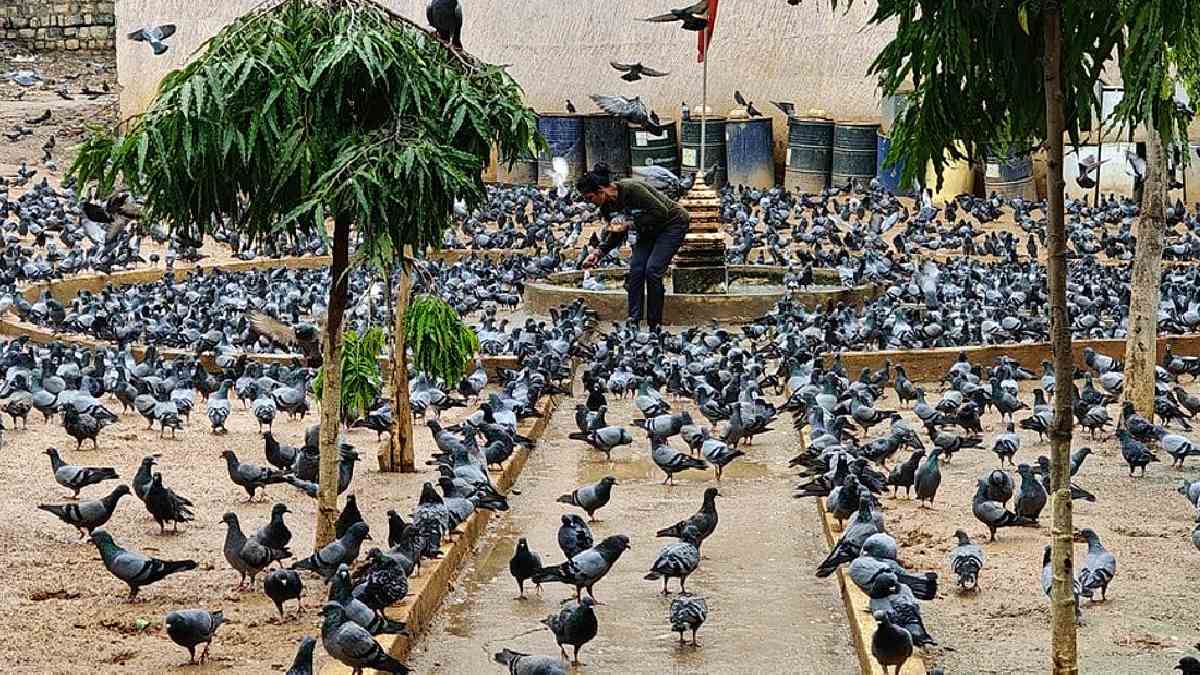
Health experts have warned that long-term exposure to pigeon droppings and feathers can increase the risk of respiratory illnesses like Hypersensitivity Pneumonitis (Bird Fancier's Lung) and other lung-related diseases. Children, senior citizens, and people with existing respiratory conditions may be at greater risk, they say.
The state government has directed the Greater Bengaluru Authority (GBA) Commissioner and commissioners and chief officers of other urban local bodies to implement the new regulations.
Key Guidelines Issued
Feeding pigeons is forbidden in any public place where it may create a nuisance or pose a public health hazard. Only officially designated feeding zones approved by the local authority can be used for pigeons. The operation and maintenance of feeding centres should be entrusted to an authorised charitable trust or NGO. Feeding is permitted only between 7:00 a.m. and 9:00 a.m. at designated locations. Feeding pigeons on footpaths, roads, public places, or private premises outside the approved feeding centres is prohibited. It is not legal for any feeding centre to be operated without an NGO or charity taking over its management. The organisation in charge of the feeding centre has to ensure cleanliness, proper waste disposal, and respond to public complaints. Residents and apartment associations are advised to keep terraces, balconies, rooftops, and surrounding areas clean to discourage pigeon congregation. Authorities have been instructed to prevent mass pigeon feeding that may endanger public health. No pigeon feeding centres will be allowed near airports or in areas where they could pose a threat to aviation safety. Local authorities need to coordinate with the Airports Authority of India (AAI), Directorate General of Civil Aviation (DGCA), and airport operators regarding pigeon control around airport zones. Awareness campaigns planned.
The government has also instructed civic bodies to launch awareness campaigns about the health risks associated with pigeon droppings and feathers.
Information boards, banners, and digital displays will be installed to educate the public about:
- The new regulations.
- Possible penalties for violations.
- Humane methods of bird conservation that do not compromise public health.
- Monitoring and Enforcement
Each GBA Zonal Commissioner will act as the Nodal Officer for pigeon feeding centres within their jurisdiction.
Authorities have been directed to:
- Maintain records of sanitation, maintenance, and waste disposal at designated feeding centres.
- Conduct inspections at any time to ensure compliance.
- Suspend or cancel permission granted to NGOs or charitable organisations that violate the guidelines.
- Permanently close or relocate feeding centres if they are found to pose public health, environmental, or aviation safety risks, with reasons recorded in writing.
The new measures aim to strike a balance between animal welfare and public health, ensuring that birds are cared for in a regulated manner while reducing health hazards for city residents.