Punjab has erupted into a political debate after the Congress leader Pramod Tiwari said it would be beneficial to the Congress if the Bharatiya Janata Party and the Shiromani Akali Dal come together.
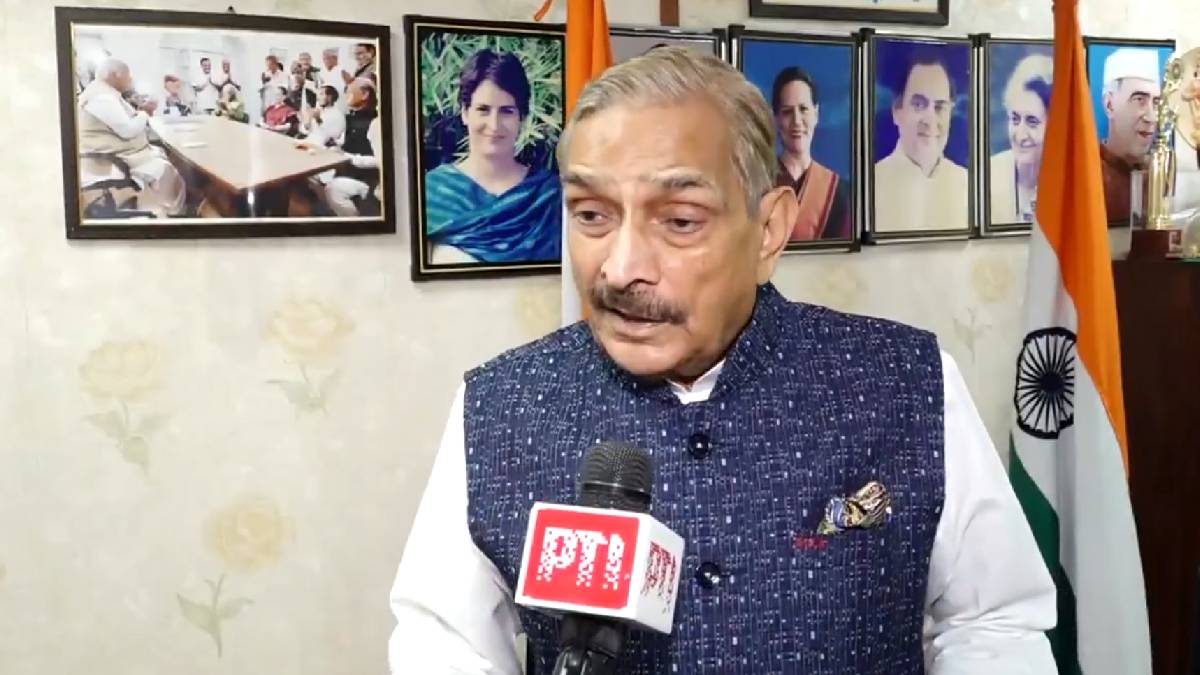
Tiwari’s comment has triggered a sharp counterargument from those who believe that the electoral impact of a BJP-Akali alliance cannot be assessed so simply. Critics of his assessment have pointed out that BJP candidates could contest seats like Jalandhar if the two parties enter into an alliance.
Tiwari said the BJP-Akali alliance would ultimately benefit the Congress. But such an alliance could significantly alter vote distribution in many constituencies, making it difficult to predict.
Political calculations are more complicated in Punjab, because the BJP and Shiromani Akali Dal have always been allies but their political paths also diverged in recent years. If the two parties can come to terms, then the state’s political environment would be as much affected.
Jalandhar is one of the major issues in the debate. The BJP could have a solid network of its own candidates in Jalandhar if it runs its own candidates in alliance with the Akali Dal, and could concentrate or expand its presence in areas where it has established itself.
This could come in and affect the Congress and other political parties' contests.
The criticism of Tiwari’s statement is particularly strong because he’s not entirely familiar with the nuances of Punjab politics. That Tiwari has “no idea of Punjab politics” is part of a wider political pushback against the assessment that leaders who do not directly have any connection to the state’s day-to-day electoral process.
Punjab’s political landscape is influenced by regional identity, rural and urban voting patterns, agricultural issues, religious and community issues, local politics, and the organisational strength of individual parties. So alliances among parties can result in different outcomes from one constituency to another.
A BJP-Akali alliance could also change the distribution of candidates and campaign resources. If these two parties are in sync on all electoral strategies, they would avoid splitting up votes in areas where they have complementary support bases.
But at the same time, there are challenges to an alliance. The supporters of one party may not automatically hand their votes over to an alliance partner if the two organizations are in political dispute.
This makes the impact of a possible alliance difficult to determine in advance.
The question is important for Congress in particular, because the party would have to consider how a BJP-Akali understanding could affect its prospects in urban and rural constituencies. Congress might find itself in the middle of a much more competitive contest if that alliance strengthens the combined opposition vote. If it leads to internal disputes or voter resistance, the party might benefit from this.
And the situation is also influenced by candidate selection. Local candidates can also affect Punjab's election outcome, in which personal networks and constituency-level politics can often be even as important as alliance calculations.
Jalandhar will be closely watched by all the parties because of its political significance and voters’ diverse nature. The decision on which party fields candidates and how local units respond to an alliance will have a real impact on the contest.
The BJP-Akali alliance is still a matter of political speculation and strategy, and its real electoral consequences will depend on the terms of any agreement, seat-sharing arrangements, and candidate selection.
Tiwari’s remarks have opened another round of discussion about the possible consequences of a renewed BJP-Akali understanding.
Although the Congress leader believes such an alliance could work for his party’s advantage, critics say BJP candidates in key areas like Jalandhar may have a very different outcome.
The voters of Punjab will ultimately decide whether an alliance benefits one party or another. And until parties have outlined a strategy and candidates, predictions about who stands to benefit from it are political feelings and not facts.