In a step forward on border security, India will fence almost 90 kilometres of the Sundarbans along the Bangladesh border for the first time. The BSF is in the process of conducting feasibility studies for the project to enhance surveillance and increase security in one of the country's most challenging border terrains.
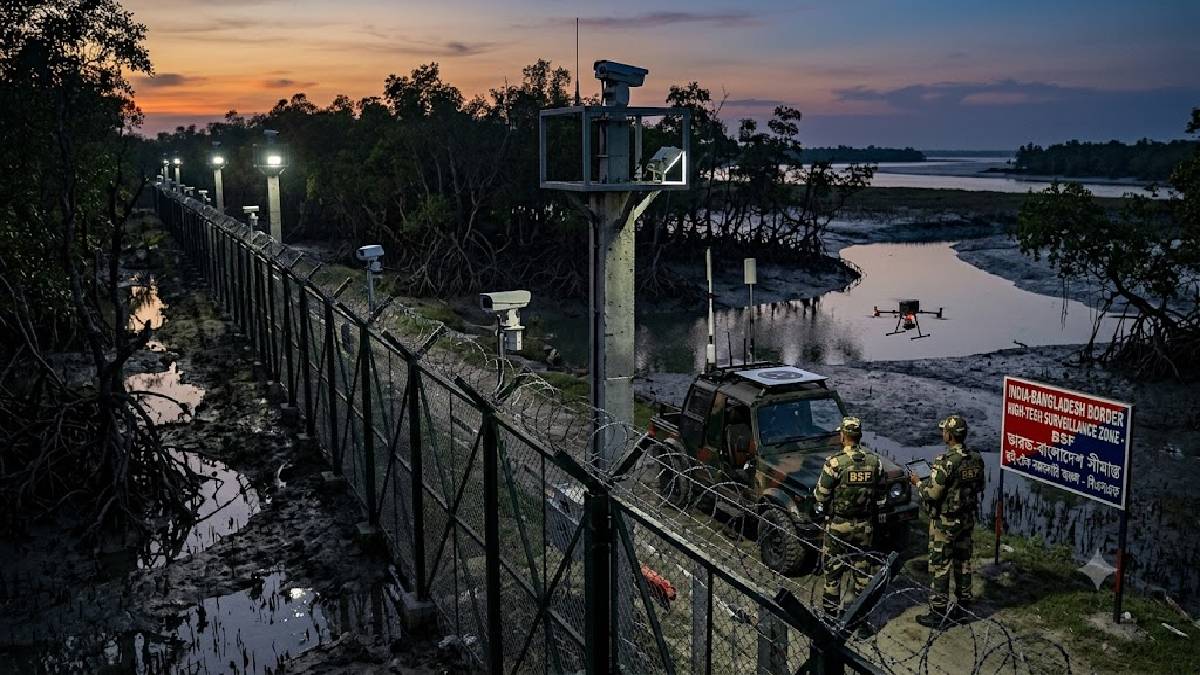
The Sundarbans, one of the largest mangrove forests in the world and a UNESCO World Heritage Site, has long been a unique border-management challenge due to its dense vegetation, tidal rivers, marshlands, and islands. Most of the Indo-Bangladesh border in the Sundarbans is unfenced due to its large number of islands, and land borders are mostly empty.
With that in mind, the security plan for the future will combine physical fencing with the latest technology to solve such problems and enhance monitoring of sensitive areas. Along with the border fence, authorities are going to install CCTV cameras, high-intensity searchlights, and strengthen marine patrols.
The BSF has started technical and environmental feasibility studies to identify the best methods for the construction of the fence without affecting the Sundarbans environment. The experts would need to evaluate the terrain, tides, and ecology before the project is implemented.
As a result, security officials hope that the integrated surveillance system will enhance the real-time monitoring of cross-border movement and regional border management strategy. CCTV cameras and searchlights will provide round-the-clock surveillance, while marine patrol teams will continue to patrol waterways that are critical transit routes through the mangrove forest.
With the Sundarbans border, the security system required specialized fencing because there are many rivers and creeks, and conventional fencing is hard to do. Security agencies have therefore been forced to depend on boat patrols and observation stations. The proposed project will take security infrastructure in the region to new heights.
It also represents India's broader efforts to enhance border management with technology. Smart surveillance systems, drones, thermal imaging devices, and integrated monitoring solutions across many international borders have been increasingly deployed by the government in recent years to enhance situational awareness and operational efficiency of the border control system.
Environmental safeguards will be a key consideration for the development of the project, they added. As the Sundarbans are an ecological resource, any construction should be conducted in accordance with the environmental regulations and through the process of getting the necessary clearances.
If approved following the feasibility assessment, the fencing project would mark a historic milestone in India's border security strategy by bringing a previously unfenced section of the Sundarbans under an integrated surveillance network.
The integration of physical barriers, modern surveillance technology, and enhanced marine patrols is expected to enhance security and increase the ability of authorities to monitor one of the most complex border regions in South Asia.