India's infrastructure landscape is in a state of transformation in the last few years with huge bridges, railways, airports, tunnels, museums, temples, convention centres and urbanization in which the country’s built environment has been transformed. From the Himalayan region to the southern coast, several projects combine engineering problems with large-scale public infrastructure, connectivity and tourism goals.
The focus on these projects comes amid the BJP’s month-long Seva Sankalp Abhiyaan in 2026 to mark Prime Minister Narendra Modi’s 25 years in public life. The campaign runs from September 17 to October 17 and includes programmes touching on development and public service activities associated with his political journey.
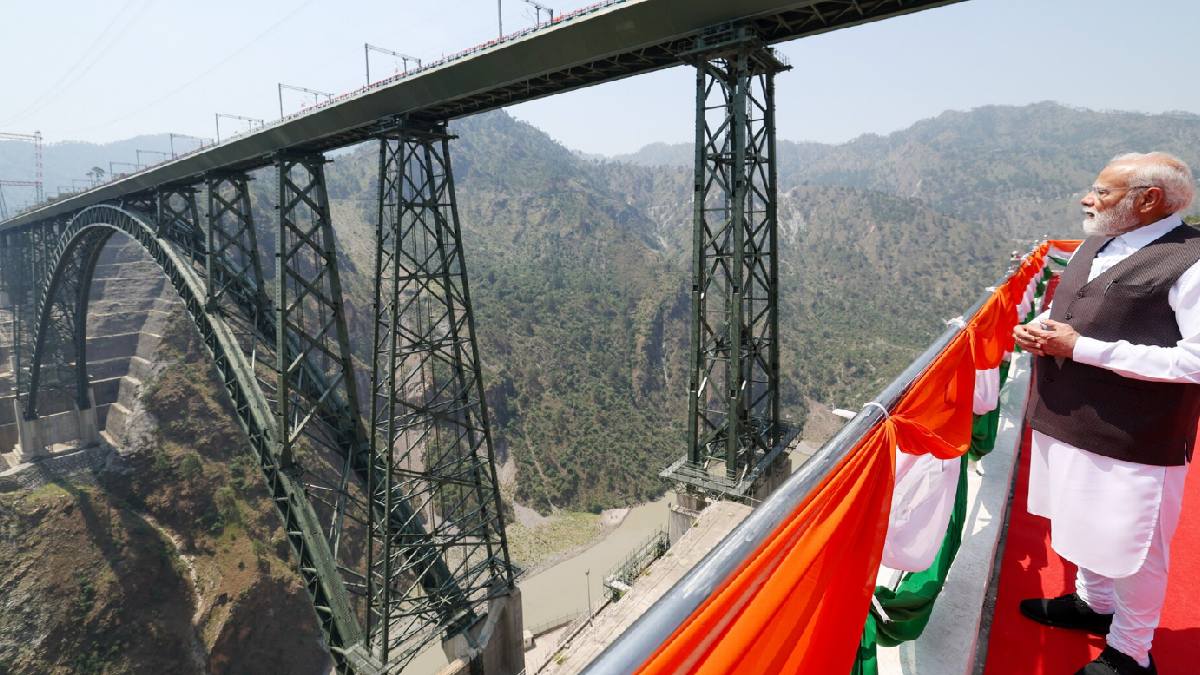
Chenab Rail Bridge is the world's highest railway arch bridge and it is built 359 metres above the Chenab River in Jammu and Kashmir. It forms part of the railway network connecting Kashmir Valley to the rest of the country and was opened in June 2025.
Another important railway engineering project is the Anji Khad Bridge, the first cable-stayed railway bridge in India. It crosses the Anji River valley and is a major engineering solution to difficult mountainous terrain.
The New Pamban Bridge in Tamil Nadu has introduced a vertical lift railway bridge to allow ships to move through the navigation channel and still have rail connection to Rameswaram.
India’s network of road and rail bridges also includes the Bogibeel Bridge in Assam, the Dr. Bhupen Hazarika Setu and Mumbai’s Atal Setu.
These projects have been developed to improve regional connectivity and cut travel time. Atal Setu connecting Sewri and Nhava Sheva is one of the nation’s most important sea-crossing infrastructure projects while Bogibeel is a key rail-cum-road link along the Brahmaputra.
Tunnel construction has also expanded India's connectivity options in difficult geographical areas. The Atal Tunnel below Rohtang Pass offers an all-weather route through the Himalayas, while the Sela Tunnel in Arunachal Pradesh increases road access towards Tawang especially in periods of high snowfall which may affect surface routes.
Airports, Ports And Urban Mobility
The transformation extends to aviation and urban transport. Bengaluru’s Kempegowda International Airport Terminal 2 has considerably increased passenger capacity, and the new terminal at Guwahati’s Lokpriya Gopinath Bordoloi International Airport has also increased the airport’s capacity to handle passengers.
The Noida International Airport at Jewar is another major aviation project that will serve the National Capital Region and western Uttar Pradesh. Vizhinjam International Deepwater Multipurpose Seaport in Kerala is being developed as a major container transshipment facility in the maritime sector.
Urban mobility has also seen new models. Kochi Water Metro uses battery-electric hybrid boats to connect multiple terminals, while the Delhi-Ghaziabad-Meerut Namo Bharat corridor is India’s first Regional Rapid Transit System.
Governance And National Institutions
The new Central Vista redevelopment in Delhi has brought another dimension to India’s evolving public architecture. The new Parliament building, inaugurated in 2023, has a larger seating capacity for both Houses.
Kartavya Path and new administrative facilities like Kartavya Bhavan and Seva Teerth are part of this larger transformation.
Seva Teerth, which is now home to the Prime Minister’s Office and other key government functions, was inaugurated in February 2026. The government has described the complex as part of a modern, citizen-centric administrative infrastructure.
Memorials And Museums
Several projects focus on India’s history, national memory and cultural heritage. The Statue of Unity in Gujarat, 182 metres tall, has become a great landmark. The National War Memorial and National Police Memorial in New Delhi honour those who died in service.
The Smritivan Earthquake Memorial and Museum in Bhuj commemorates the victims of the 2001 Gujarat earthquake, while the renovated Jallianwala Bagh complex in Amritsar celebrates the memory of the 1919 massacre.
New museums have also extended the country’s cultural infrastructure. The Pradhanmantri Sangrahalaya in New Delhi documents the journey of India's Prime Ministers, while the new Nalanda University campus in Rajgir is a modern academic institution connected with the legacy of the ancient Nalanda centre of learning.
Convention Centres And Sports Infrastructure
India's modern convention infrastructure includes Bharat Mandapam in New Delhi and Yashobhoomi in Dwarka. These huge venues are built to host international conferences, exhibitions and major events.
Narendra Modi Stadium is part of the Sardar Patel Sports Enclave in Ahmedabad. It is the world's largest stadium in terms of capacity at around 132,000.
The Sabarmati Riverfront has also transformed a large part of Ahmedabad's riverbank into public spaces, promenades and recreational areas; Kankaria Lake has also been transformed into a major civic and tourism site.
Temples And Pilgrimage Infrastructure
Religious and pilgrimage projects are another important part of the architectural landscape. The Shri Kashi Vishwanath Dham corridor in Varanasi was developed to make the temple connection to the Ganga more direct and accessible. Pilgrims and visitors are offered facilities and the area around the temple is very much developed.
In Ujjain, the Mahakal Lok development constructed a large ceremonial route which featured pillars and sculptures of Shaivite symbols. Kedarnath has been redeveloped after the 2013 floods and has been developed with infrastructure based on the difficult geography of the area.
The Somnath temple precinct in Gujarat, Ambaji temple development and projects associated with other pilgrimage centres also combine religious tourism with expanded visitor facilities. The Ram Janmabhoomi temple in Ayodhya is also one of the country’s most significant contemporary religious architectural projects.
Planned Cities And Clean Energy
India’s infrastructure story also includes planned economic and industrial development. GIFT City in Gujarat has developed as an international financial services hub, while Dholera Special Investment Region is being developed as a planned industrial city.
Another part of this transformation is the Charanka Solar Park in Gujarat which is a manifestation of the expansion of large-scale renewable energy infrastructure in Gujarat.
Together these projects showcase the breadth and diversity of India’s infrastructure development today— transport, governance, tourism, heritage, education, sports, urban planning and clean energy. The Seva Sankalp Abhiyaan has put a number of these developments in the public eye as part of its mission of service, governance and nation-building.