An emotional meeting was witnessed in Sringeri taluk in Chikkamagaluru district, where a woman broke down in tears as she tried to get a toilet constructed at her home in a Praja Seva programme. The woman said she had approached officials several times with a request for a toilet, but had not received the help she wanted.
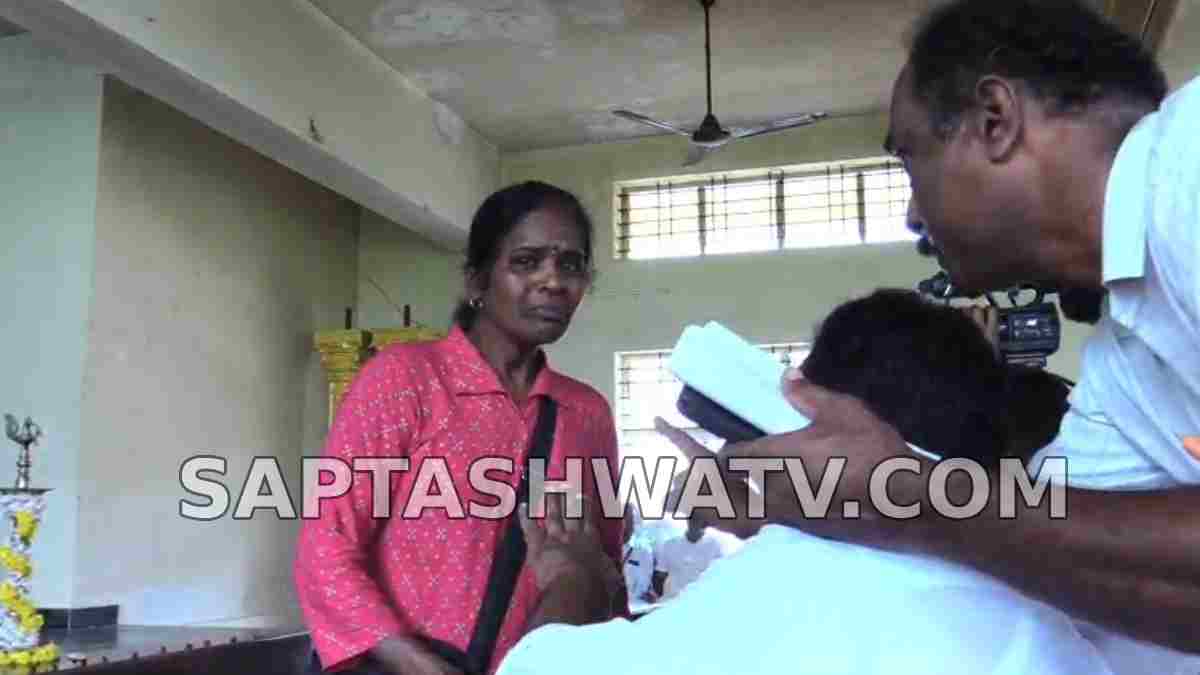
The incident took place in the presence of Sringeri MLA T.D. Rajegowda and turned the public grievance programme into an emotional one when the woman told them about the difficulties she had faced in gaining basic sanitation facilities.
She has been struggling to run her household with her 8-year-old daughter and has been talking to local authorities looking for a toilet. She said she had submitted an application and made multiple visits to government offices but was not able to get a solution.
The woman got emotional as she went on to describe her situation to the MLA and said she had become tired of going to the office every time she applied for what she described as a basic need.
Woman alleges caste-related questions
The most serious part of the complaint was the woman's allegation that officials had asked about her caste while discussing the possibility of providing assistance for the construction of a toilet.

She said officials asked whether she belonged to the Scheduled Caste or Scheduled Tribe category and indicated that something could potentially be done if she belonged to those categories.
The woman then said she belonged to the Brahmin community. She became emotional when she said she should not have to struggle for a basic sanitation facility because of her social background.
The allegation has attracted attention because sanitation facilities are a fundamental household need, and government welfare schemes often have specific eligibility conditions depending on the programme and beneficiary category. The exact scheme under which the woman had applied, as well as the eligibility criteria applied by the officials in her case, would need to be established through official records.
Emotional appeal before MLA
The woman spoke to MLA T.D. Rajegowda during the Praja Seva programme and told him about the difficulties she was having to cope with raising her eight-year-old child. Her plea for a toilet is reported to have been emotional and moved those who were at the meeting.
She said she had been requesting the authorities for a toilet and had already submitted an application. But she said despite repeated attempts, her request was not met.
The incident makes clear that to some people there is a lot of difficulty in getting what they want in terms of government welfare and basic civic services. Public grievance programmes such as Praja Seva events are meant to allow citizens to express their concerns directly to elected representatives and government officials.
Focus on basic sanitation
The incident has also highlighted the importance of having access to household sanitation facilities in rural areas. A toilet is a fundamental part of basic living conditions, especially for families with children.
The woman's allegations about caste-based questioning are very serious and would require clarification from the concerned officials. It is not yet clear from the available information what specific government scheme she applied under, whether she met its eligibility criteria, or why her application had not been processed.
The Sringeri incident has, however, opened up debate on how welfare schemes can be transparently implemented and how those who need government assistance can be informed about it without any inconvenience.
As the video or account of the woman’s emotional appeal circulates, the issue will continue to be a topic of conversation among residents in the area. Further clarification from the concerned department and officials could establish the circumstances surrounding her application and the alleged conversation about her caste.
But the episode is representative of a larger public concern: citizens who approach government offices for essential services expect their complaints to be heard and addressed transparently and non-discriminatorily.