Tamil Nadu's political debate over parliamentary delimitation has intensified after several opposition parties refused to attend a consultation meeting convened by Chief Minister C Joseph Vijay in Chennai. The meeting was to have the Members of Parliament together to discuss the proposed delimitation of Lok Sabha constituencies and its possible impact on Tamil Nadu's political representation.
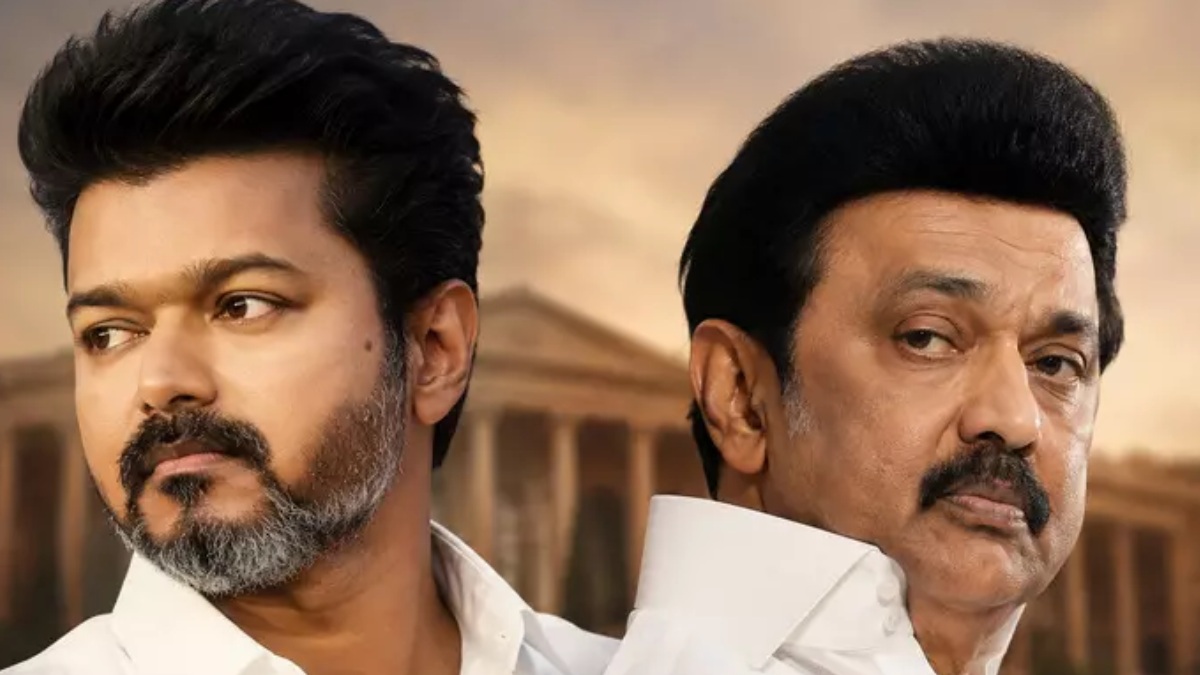
Vijay personally wrote to Tamil Nadu's legislators to invite them to participate in the consultation and give their views on the issue. However, the boycott of the meeting has triggered a political storm ahead of the proposed discussion with the major parties, according to the Indian media.
The delimitation issue has been politically sensitive in Tamil Nadu because any future redistribution of parliamentary constituencies could have a long-term impact on the state’s representation in the Lok Sabha. Population plays a key role in the calculation of or redrawing electoral constituency boundaries. Tamil Nadu and other southern states have previously voiced concerns that a population-based approach could change their relative representation after decades of population control efforts.
According to recent reports, the DMK and AIADMK have decided not to attend Vijay’s proposed consultation meeting. That is a surprise as both parties have taken strong positions on the delimitation question in the past. The decision will turn the meeting into a political flashpoint and the question will be raised whether a consultation with representatives from different parties can achieve a larger consensus without the involvement of the major political groups.
The invitations from Vijay were meant to allow MPs to put their ideas forward about delimitation. That kind of consultative meeting could have brought together people from various parties to share their views on parliamentary representation, population parameters, and the future distribution of Lok Sabha seats. However, the boycott means that the political response to the delimitation exercise is likely to be quite divided.
The DMK has been adamant in its opposition to the proposed delimitation in its present form. Reports emerged that the party had previously stated that it would not be comfortable with a delimitation bill based on population (as proposed by the present government) if it could affect Tamil Nadu's representation. The party has also said it wants to protect the interests of states that have executed population control measures successfully.
The AIADMK’s decision to skip the meeting adds another important element to the political developments. The DMK and AIADMK are rivals in Tamil Nadu, but the state’s parliamentary representation problem of delimitation has become a matter of common sense, and the AIADMK’s decision not to attend is telling us that the issue is not only political and one camp’s position.
The issue has also been addressed by other political parties and regional groups. The Makkal Needhi Maiam, for instance, has been involved in political activity against population-based delimitation, and the debate has drawn attention from parties of all political persuasions. Current reports should thus be taken into account as each party has not necessarily taken an overall position on delimitation at a particular meeting, and therefore they are not a full picture of the party's position on the constitutional issue.
The issue here is what is the way India should balance a democratic system of representation based on population with the federal interests of states. Proponents of population-based delimitation say electoral representation should reflect changes in population. Critics, especially in southern states, say states that have had the population growth to have to cope with should not be politically disadvantaged.
Tamil Nadu has always raised this concern in national political discussions. The state has been a world-class player in issues like population stabilization, health, and social development, and political leaders have argued that such achievements should not translate into a diminution of the state's relative voice in Parliament.
The argument is much larger than constituency boundaries. Delimitation can also affect the number and distribution of parliamentary seats and in turn affect the political balance in the states. And if anything major changes happen, political parties, elected representatives, and voters will have to deal with it for years to come.
The consultation meeting was expected to bring these concerns together. If all major parties were present, the parliament could have discussed their positions and discussed where they agreed. But the reported boycott may hinder Tamil Nadu's ability to form a cohesive political response.
For the ruling administration, the absence of major parties could also cause concerns about the effectiveness of the consultative process. A meeting designed to hear from elected representatives is likely to have greater political weight if a large share of the parties attend. At the same time, parties that choose to boycott may use the decision to make a statement that they disagree with the format of the meeting (or leadership) or the political approach of the party.
The delimitation debate is likely to continue beyond the immediate consultation meeting. The constitutional, electoral, and federal issues cannot be resolved in one political conference. Any eventual changes would have to proceed through the appropriate legal and constitutional mechanisms; political parties might still be trying to reach out and organize campaigns on the topic.
For Tamil Nadu, the most important concern remains to protect the state's political representation as well as to make sure that any future delimitation process is conducted in a transparent and legally valid manner. Population growth should not be the only measure for assessing whether a state is contributing to the country or determining its future political influence or to determine future political position, political leaders have said in the past.
The boycott also underscores the more competitive political scenario in Tamil Nadu at present. Vijay’s government is trying to define that approach on big state and national problems, while other political parties such as DMK and AIADMK continue to push for their position on issues that affect Tamil Nadu’s interests. Delimitation is hence another arena for political contestation.
As this meeting moves closer, attention will be on what MPs and parties will eventually take part and what positions they will take. The absence of the main parties in this process will bring more discussion about political unity, consultation, and the best way to defend Tamil Nadu’s interests.
The delimitation question will be important in the long term as it will impact many other activities beyond the current political life cycle. Changes in parliamentary constituencies can impact the representation for a lot longer, which is why the extent of consultation will be very important.
Whether Tamil Nadu's political parties will arrive at a common position or continue to pursue their own strategies will certainly be a matter to watch. The DMK, AIADMK and other parties’ decision in recent days to skip the meeting has added another dimension to the delimitation debate.
Vijay’s invitation to MPs was intended to set up a forum for discussion and the boycott means the proposed meeting might happen without some of the state’s most established political voices; this is not just a matter of the DMK but of Tamil Nadu as well as Tamil Nadu’s other people. The developments underline how much of a sensitive matter parliamentary representation has become, both in Tamil Nadu and in South India.