A shocking incident at the weekly market in Nehru Nagar, Bilaspur, Chhattisgarh, when a cobra was hiding behind a heap of bitter gourds bit a young man who was shopping for vegetables, caused panic among vendors and shoppers and it is important to be prepared for the snake to get loose in the market and the place where snakes can sometimes hide among produce or shaded areas. He was rushed to Sanjay Gandhi Memorial Hospital (SIMS) Bilaspur, where he is now doing well, the young man was admitted and is in good condition, medical officials said.
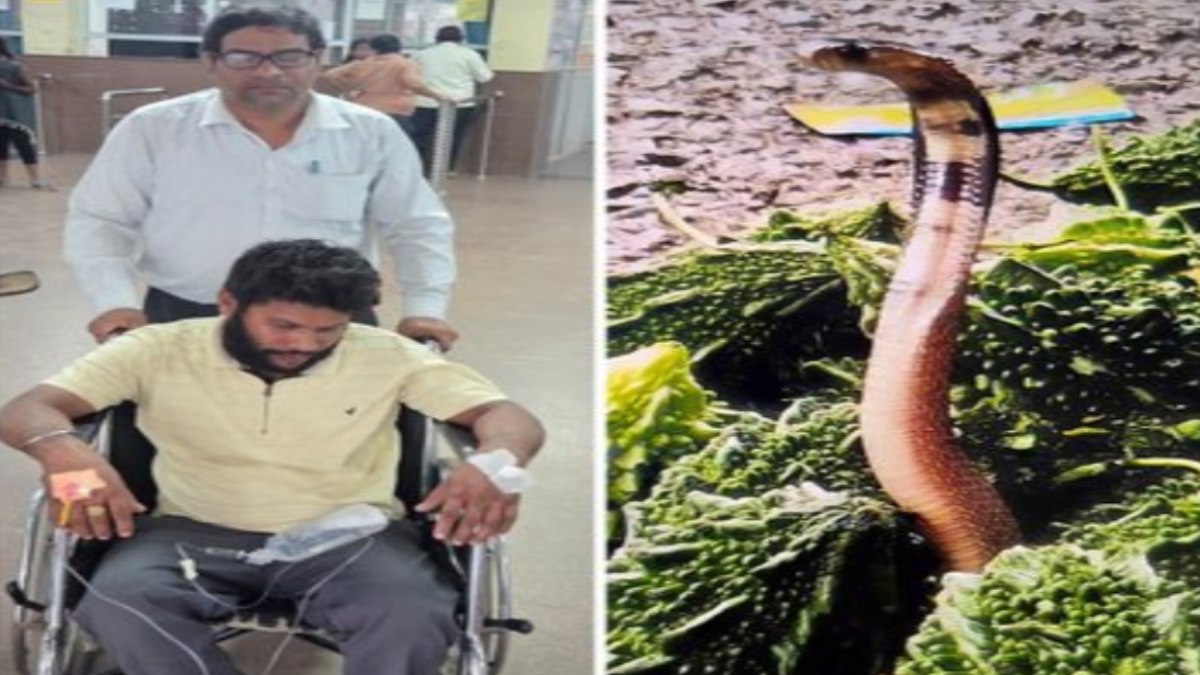
The man was looking at vegetables in the busy weekly market and, unaware of the cobra hiding among the bitter gourds, he reached and grabbed the cobra on top and the snake bit him. Witnesses said the victim screamed and vendors and shoppers rushed to help. As the snake emerged from the vegetables, panic spread and people began to run away in every direction from the snake, they said.
Local vendors quickly helped the injured man and arranged transport to the nearest hospital. Medical personnel at SIMS Hospital provided emergency treatment, such as the necessary medical evaluation and treatment normally administered in snakebite cases. Hospital officials later said the patient was in stable condition, but is under medical observation as a precaution.
Market vendors and residents informed local authorities of the incident, and snake rescue personnel were notified so the cobra could be safely removed from the crowded marketplace. Wildlife experts frequently say snakes go into markets, farms, or homes in search of food, water, or shelter— especially when there is different weather or if they are disturbed in nature.
The incident has once more raised issues of human-wildlife encounters in urban and semi-urban areas. Open vegetable markets— where produce is often stacked on the ground or in shaded corners— are often hiding places for reptiles and other small animals. Although so-called “catastrophic” situations are rare, vendors and shoppers are warned to keep watch when handling piles of vegetables, sacks, crates, or other stored materials.
The Indian cobra (Naja naja) is one of the most venomous snake species in India and is protected under the Wildlife (Protection) Act. Cobras tend to avoid humans and usually strike only if they feel threatened or accidentally disturbed. Scientists point out that snakes are important to maintaining ecological balance as they control rodent populations and should not be harmed. When a snake is seen in public, trained snake rescuers should be notified.
Medical professionals stress the importance of timely treatment for snakebite situations. Anyone bitten by a snake should remain calm and patient in the middle of the snake bite as much as possible, don’t try to get up and move around so as to slow the spread of venom; a snake bite occurs quickly if it’s a time to get to the medical field and seek immediate care at the nearest hospital. And the experts don’t use traditional remedies or try to catch or kill the snake, and it’s recommended to not use traditional remedies to save or catch or kill the snake as this is a cause of more bites.
Public health officials have suggested several preventive measures for marketplaces and agricultural areas. Store baskets, storage crates, and produce should be examined before they go on sale. Cleanliness, rodent control, and keeping market areas free of clutter can also reduce snakes’ chances of entering such sites.
The Bilaspur incident has generated a lot of discussion in the community among residents, many of whom have expressed concern about safety in crowded public markets. Some vendors have called for increased inspections and awareness campaigns to educate traders and customers about how to respond to wildlife.
The victim is stable and being treated properly, the authorities said. The public also needs to be wary of going to markets, farms, and other places where snakes may sometimes be present. Wildlife officials have also said they are asking people to report snake sightings to authorised rescue teams and not to touch the reptiles.
The unusual incident reminds us that even simple everyday activities (e.g., buying vegetables) can be dangerous. It also underscores the need for fast medical response, public awareness, and coordinated response from healthcare providers, wildlife rescuers, and local officials to the safety of humans and wildlife.