A Delhi court has acquitted 13 accused in a case connected with the 2020 Northeast Delhi riots and declared that the prosecution failed to prove their guilt beyond reasonable doubt. The court felt strongly about a key prosecution witness's testimony, observing that he had “suddenly become an eyewitness” and that his evidence was under a “shadow of doubt.”
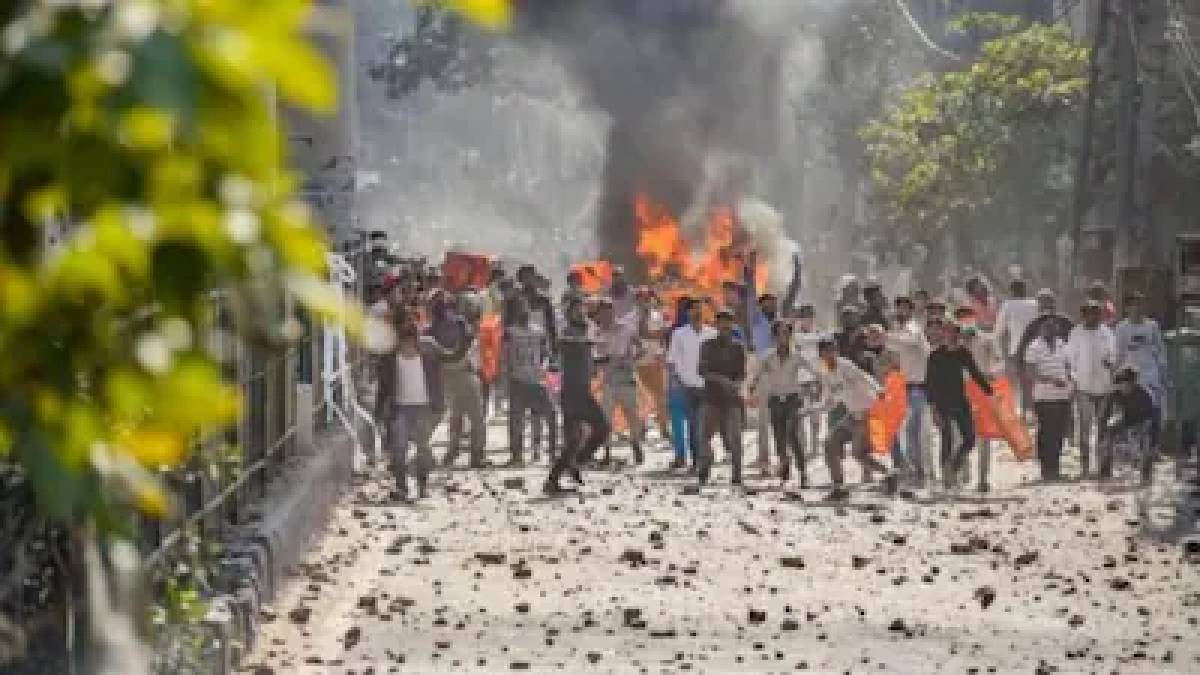
Additional Sessions Judge Parveen Singh was hearing a case related to an incident reported on 25 February 2020, in the jurisdiction of New Usmanpur police station. The case concerned the alleged attack on Raman Chauhan during the communal violence that affected several parts of Northeast Delhi.
The accused included Mohammad Anas, Mobin, Mohd. Javed Khan alias Shanu, Faisal, Shahjad Khan alias Montu, Imran Khan, Badshah Khan, Irfan Khan, Siraj Khan, Arman alias Arbaz, Aman alias Suhail and Iqbal Khan alias Sonu.
The accused were charged under several provisions of the then-applicable Indian Penal Code, such as rioting, rioting while armed with deadly weapons, attempt to murder, criminal conspiracy and disobedience of an order issued by a public servant.
Court Questions Change in Witness’s Version
A significant factor in the court’s decision was the changing version of a prosecution witness identified as PW8.
According to the court's observation, the witness first told investigators during the investigation that he had not seen what happened. His position later changed, and he was seen as an eyewitness during the proceedings.
The witness also identified two of the accused with the help of CCTV footage. But the court considered that the change in his account was a material improvement that raised doubts related to the reliability of his testimony.
The court said that, in the event that the witness later emerged as an eyewitness, it would be unsafe to rely on his evidence to convict the accused.
The judge noted that PW8’s testimony as an eyewitness had a shadow of doubt. The finding was key to the court’s evaluation of the prosecution case.
CCTV Footage Found Too Weak for Identification
The court also looked at the CCTV footage used by the prosecution to establish the identity of the accused.
The footage was black-and-white and grainy, making it difficult to identify the individuals in the recordings. The Forensic Science Laboratory (FSL) had been unable to give an opinion on facial identification because of the poor quality of the footage, the court said.
As a result, the CCTV material could not provide enough reliable corroboration for the prosecution's identification claims.
The court's observations highlight the need for reliable and clear evidence in the identification of accused persons based on video recordings. In this case, the quality of the available footage prevented forensic experts from conclusively identifying facial identity.
Weapons Recovery Not Enough to Establish Conspiracy
In addition, the court considered the prosecution’s accusations of criminal conspiracy.
It observed that the mere recovery of weapons could not, by itself, establish that the accused had participated in a criminal conspiracy. The prosecution had to provide evidence demonstrating when, where and how the alleged conspiracy had been planned.
According to the court, such evidence was not established in the case.
The court therefore found that the prosecution could not rely solely on recovering weapons to establish the more serious allegation of conspiracy.
Prosecution Also Failed on Procedural Requirement
Another issue that was considered by the court was proclamation proceedings against the accused.
The court felt that the prosecution had not established that the mandatory procedure of proclamation proceedings had been properly followed.
Among the doubts about the eyewitness testimony, shortcomings in the CCTV evidence, and the lack of sufficient material for conspiracy, procedural problems led the court to conclude that the prosecution case was not strong enough to sustain convictions.
Background of the 2020 Delhi Riots
The case is related to communal violence in Northeast Delhi in February 2020. The clashes were between 23 February and 29 February, and 53 deaths and hundreds of injuries were recorded, according to official figures frequently reported at the time.
The violence came as tensions and clashes between supporters and opponents of protests against the Citizenship Amendment Act (CAA). Several neighbourhoods in Northeast Delhi were affected as the situation deteriorated into widespread communal violence.
The 2020 riots subsequently resulted in numerous criminal investigations and prosecutions, with courts examining individual cases based on the evidence provided by the investigating agencies and the prosecution.
The latest acquittal is limited to the case before the court and reflects the evidence and legal deficiencies identified during its examination.
The court’s decision reinforces the principle that criminal convictions must be based on reliable evidence that can establish guilt beyond reasonable doubt. In this case, the prosecution’s evidence (namely, its disputed eyewitness testimony and poor-quality CCTV footage) was insufficient to safely convict the 13 accused.