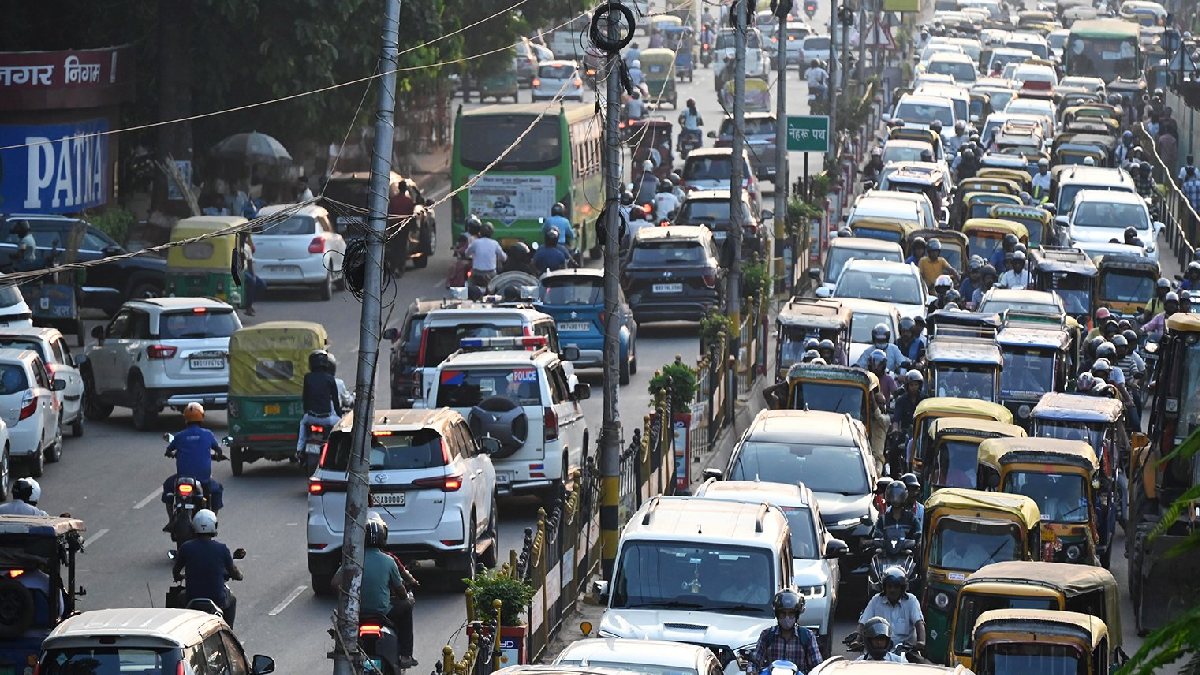
West-South Delhi travel is going to get much faster now that the Union Cabinet has approved the construction of a six-lane road tunnel connecting the Dwarka Expressway (NH-248BB) to Nelson Mandela Marg at Vasant Kunj. This massive infrastructure project is expected to ease congestion, improve airport connectivity and bring a seamless high-speed road network in the NCR.
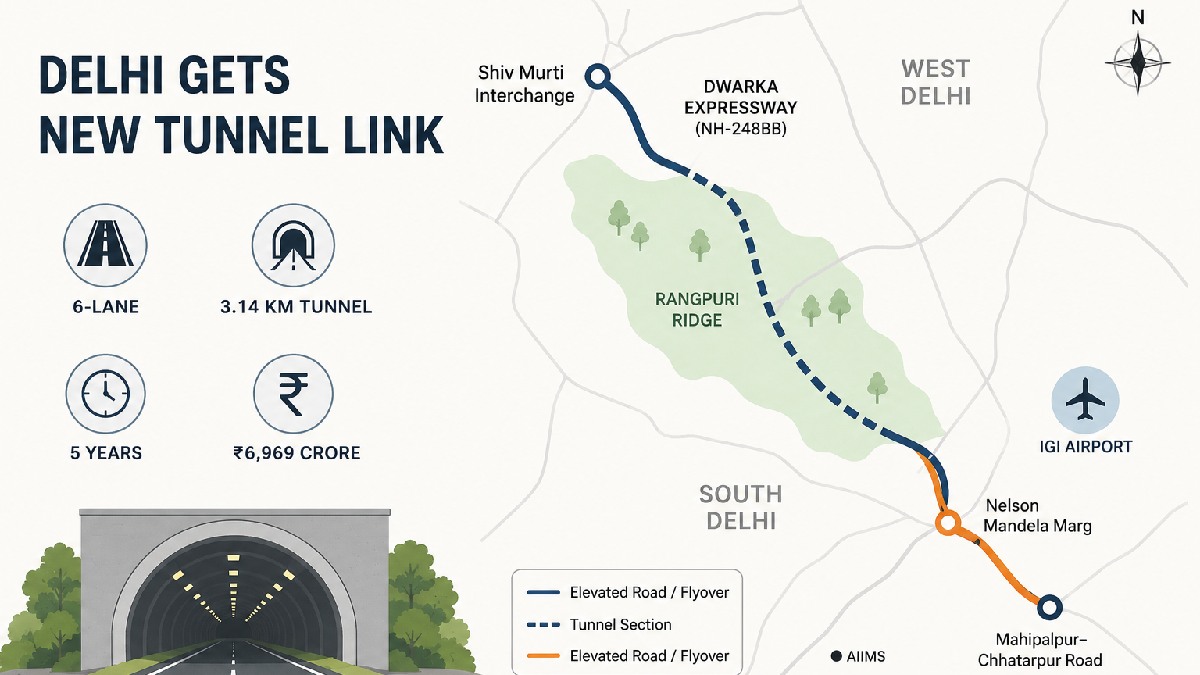
The project will cost ₹6,969.67 crore and will be developed by the National Highways Authority of India (NHAI) through Hybrid Annuity Mode (HAM) as part of the National Highways (Original) scheme. Construction is expected to be completed within five years.
Twin-Tube Tunnel Under Delhi Ridge
A key highlight of the project is a 3.14-km twin-tube tunnel that will pass beneath the ecologically sensitive Rangpuri (Southern Delhi) Ridge.
The tunnel will be built using Tunnel Boring Machine (TBM) technology, which allows for construction to be done underground while minimising environmental disturbance. More than 1.98 km of the tunnel will go through the forest, in order to preserve the Ridge’s natural landscape.
The entire corridor will stretch 8.1 km, beginning from the Shiv Murti Interchange and ending near the junction of Nelson Mandela Marg and Mahipalpur-Chhatarpur Road.
#WATCH | Delhi: At the Union cabinet briefing, Union Minister Ashwini Vaishnaw says, "The first project is the 2-lane Dwarka tunnel. This will prove to be a huge boon for Delhi. This 8-kms tunnel addresses a long-standing demand... As per the detailed map: starting from the Shiv… pic.twitter.com/CWtmuQ8flY
— ANI (@ANI) July 1, 2026
Other Flyovers and Elevated Roads Planned
To speed up traffic through the tunnel, the project also consists of various supporting infrastructure work:
A 1.8-km elevated road along Nelson Mandela Marg. A new flyover for vehicles travelling from Chhatarpur towards Mahipalpur. An elevated U-turn to better right-turn movements and reduce congestion at major intersections.
Also, NHAI is planning an elevated corridor between AIIMS and Mahipalpur, which will connect the new tunnel with the Barapullah Elevated Road, further strengthening Delhi's road network.
Great Relief for Daily Commuters
The corridor is expected to reduce travel time between West Delhi, South Delhi, East Delhi, Noida, Ghaziabad and Gurugram significantly.
The project will provide a signal-free, fast connection between the Dwarka Expressway, Urban Extension Road-II (UER-II) and Vasant Kunj, which will make daily commuting more efficient.
It will also improve access to Indira Gandhi International (IGI) Airport, which will benefit travellers from south and east Delhi and relieve some congested routes of arterial traffic.
The new link should also help to enhance the connectivity between key residential communities, commercial hubs and airport zones and make travel in the NCR more efficient and predictable, officials said.
Project Expected to Create Nearly 17 Lakh Person-Days of Employment
Apart from improving connectivity, the tunnel project is expected to generate considerable employment during the construction phase.
According to government estimates, each lane-kilometre of a National Highway creates an average of 264 person-days of direct employment and 55 person-days of indirect employment.
Based on these calculations, the project is expected to generate around 7.54 lakh person-days of direct employment and nearly 9.80 lakh person-days of indirect employment.
The improved road infrastructure also can help boost economic activity and create new long-term employment opportunities in areas around the corridor, officials said.
With Cabinet approval now in place, the project is also another step in Delhi’s growing transport infrastructure and will change how we travel around the capital once it is completed.