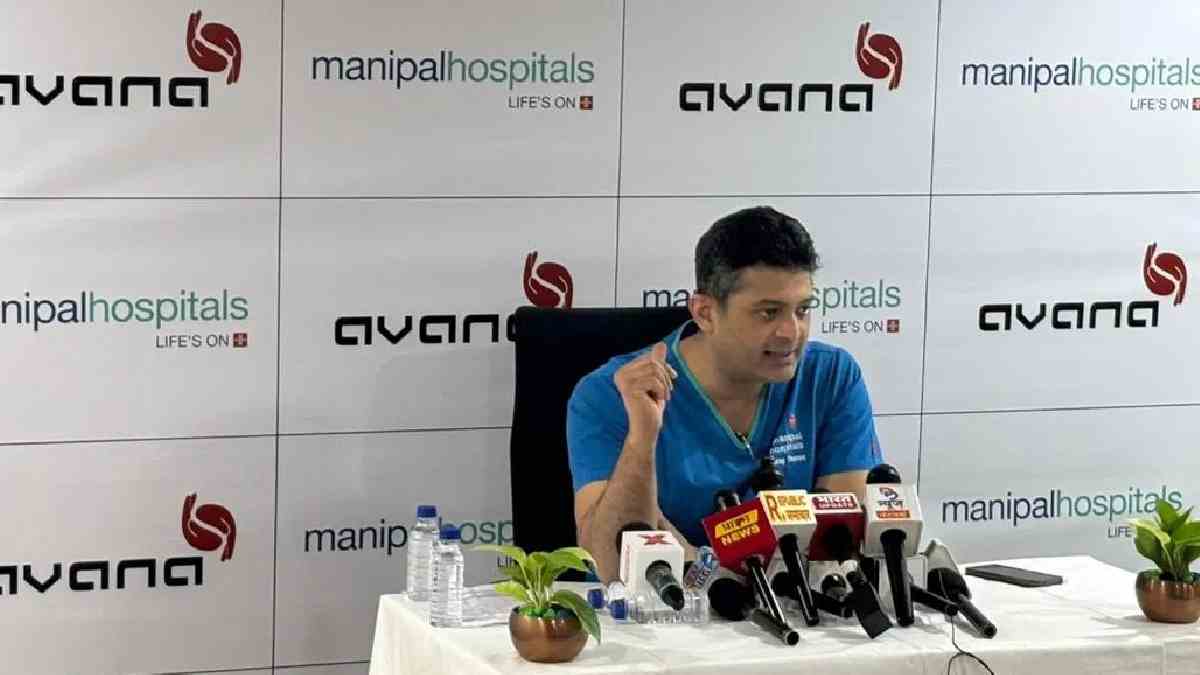
In a major step forward for orthopaedic care in India, Dr Chirag Thonse, Senior Arthroscopy Consultant at Manipal Hospital, Millers Road, Bengaluru, has successfully performed shoulder-preservation surgery using a Human Dermal Allograft (HDA) to reconstruct a severely damaged rotator cuff. The patient was able to retain their natural shoulder joint, and there was no need for the surgical removal of the entire shoulder.
The surgery is now recognised as a major step forward in biologic shoulder reconstruction, particularly for complex rotator cuff injuries which would normally be advised to undergo joint replacement.
I. A New Approach to Complex Rotator Cuff Tears
The patient had a massive rotator cuff tear, leaving the shoulder with extremely limited movement and function. In many of these cases, conventional treatment guidelines recommend total shoulder arthroplasty, where the damaged joint is replaced with an artificial implant.
Instead of joint replacement, Dr. Thonse opted for a joint-preserving biological reconstruction, aiming to restore shoulder function while preserving the patient’s natural anatomy.
The procedure used ArthroFlex, a human dermal allograft to support soft tissue repairs, as well as the FiberStitch 1.5 all-suture anchor system to secure the reconstructed tendon during surgery.
Focus on Preserving the Natural Joint
According to Dr. Thonse, the goal was not only to repair the torn tendon but to preserve the patient’s own shoulder as well.
"Our goal was never simply to fix the tear; it was to give this patient his own shoulder. ArthroFlex allowed us to do exactly that. This is the future of shoulder surgery in India," said Dr. Chirag Thonse, Senior Arthroscopy Consultant at Manipal Hospital.
The biologic reconstruction is designed to aid healing and mobility recovery, and minimize the need for more invasive joint replacement surgery for younger and active patients.
What is a Human Dermal Allograft?
Human Dermal Allograft (HDA) is a specialized kind of biological tissue produced from donated human skin. The cellular components are removed during processing, and the collagen framework that allows tissue healing is maintained.
In orthopaedic surgery, HDAs are used to:
Reinforce damaged tendons
Support tissue regeneration
Improve the strength of complex repairs
Enhance healing in large rotator cuff tears
As a biological scaffold, the graft is used to promote the patient’s own tissue to integrate with the repair over time.
Benefits of Shoulder-Preservation Surgery
In comparison to total shoulder replacement, biologic reconstruction may have the following benefits for a select few patients:
The natural shoulder joint preserved
Better range of motion
Better shoulder strength
Less need for artificial joint implants
Possible quicker return to daily activities
Maintenance of native anatomy
However, the most appropriate treatment depends on the patient’s age, activity level, extent of injury, and overall shoulder health, according to specialist comments.
A Milestone in Indian Orthopaedics
The success of the procedure underscores the acceleration of sophisticated biologic reconstruction procedures in orthopaedic centres in India. With the development of surgical technologies, shoulder preservation is also proving to be a new tool for patients who have chronic tendon injuries that were previously without treatment.
Medical experts think that biologic augmentation techniques like Human Dermal Allografts could play an increasingly important role in managing difficult rotator cuff tears while allowing patients to retain their natural joints whenever clinically appropriate.
The case also underlines the increasing importance of minimally invasive arthroscopic techniques and advanced biologic implants in improving patient outcomes and reducing the need for joint replacement surgery.