A photo of an alleged workplace notice has drawn heated debate on social media after it appeared to impose an extraordinary penalty on employees who exceed their lunch break by even a single minute. The notice, which has not been independently verified, has gone viral on X and other websites and reignited discussions about workplace culture, employee rights and employer expectations.
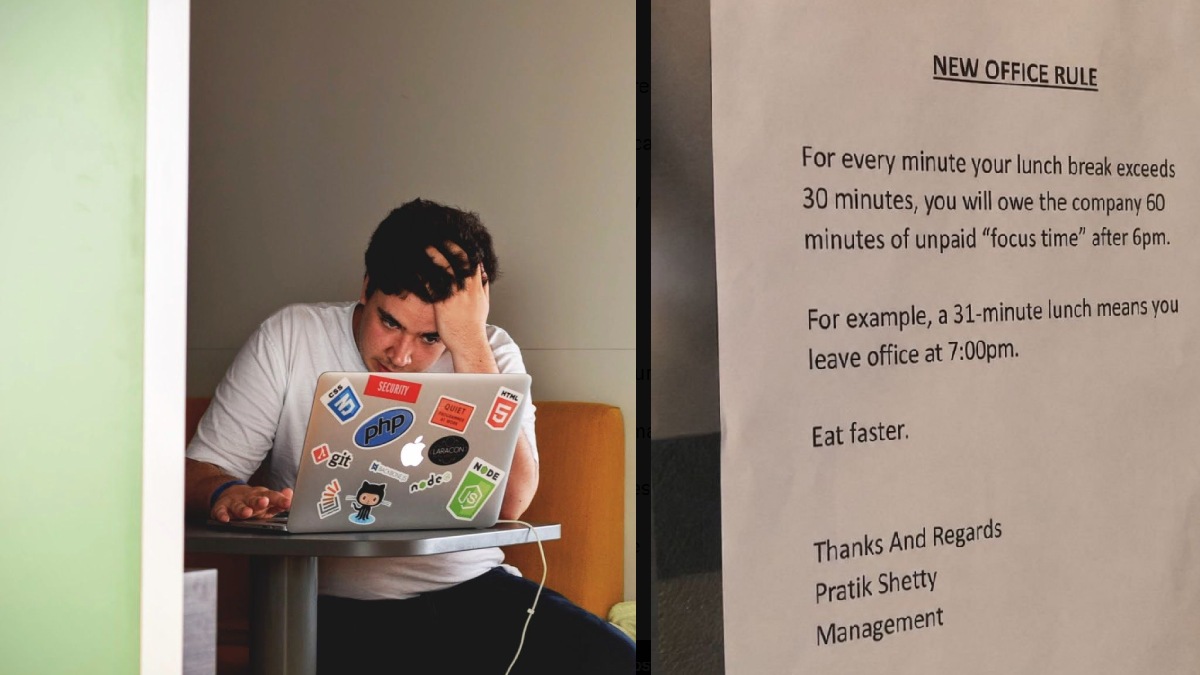
The circular outlined a 30-minute lunch break policy and warned employees that for every minute beyond that limit they would owe the company 60 minutes of unpaid “focus time” after regular office hours. For instance, an employee who would return from lunch at 31 minutes instead of 30 minutes would not be allowed to leave at 6 pm and would have to stay at work until 7 pm. The memo finished with a brutal two-word edict that quickly became the subject of controversy: “Eat Faster.”
If your management writes policies like this, don't be surprised when your best employees write resignation emails. pic.twitter.com/3v5jZGA3XS
— Nalini Unagar (@NalinisKitchen) June 22, 2026
The image went viral online very quickly after the picture was posted on June 22. Many users expressed reservations that the policy was micromanaging, saying the punishment was much worse than the offence. Some said that it was unfair to require an entire hour of unpaid work for a one-minute delay and that it would be labour-friendly and said you wouldn’t be able to do it if they were to demand it. Some users said if employers were to hold you responsible for each minute, then they should expect it from people who worked longer hours.
One of the most popular responses was: “employees should write for every minute worked extra; the company owes a salary of one hour. For example, if someone works until 6:01 pm, the company needs to pay an extra hour.” And others noted that harsh policies make morale worse and productivity worse -- not improve it. One user noted that if a company really wanted to grow, treating employees with respect was vital because workplace culture is at the very core of performance and retention.
But not all users disagreed. Some argued that the notion of enforcing agreed working hours is not only right, but businesses have a legitimate interest in preventing abuse of break times. They say the companies pay based on what they think employees are going to do and that employees should have to comply. Some said people fail to appreciate the operational problems employers are going to encounter.
The viral notice has since become a conversation about modern workplace expectations. Some see the need to monitor breaks as a necessary management tool and others see it as evidence of unhealthy corporate culture. Whatever it is (and no one is right about what it needs to be), it illustrates how productivity is at odds with health at the workplace today. Was this real or an act of protest?